Introduction
Vietnam is one of the most attractive locations for global trade because of its strategic location, growing manufacturing base, and involvement in various free trade agreements. Vietnam’s logistics service providers use an Exporter and Importer of record services for an easy and simple way to ship. For foreign logistics providers, Vietnam provides huge opportunities to support industries such as IT electronics, aviation, automotive, and medical devices. Also, to operate successfully, service providers must follow all the international export regulations, customs clearance support, and Vietnam’s specific laws on import export registration and export register requirements. With increasing demand for comprehensive import-export support and global supply chain services, understanding the regulatory environment is necessary for foreign logistics providers in Vietnam.
Legal Framework for Foreign Logistics Providers in Vietnam
Vietnam’s logistics sector is regulated under the Commercial Law, the Law on Investment, and the Law on Commerce. Foreign investors must frequently establish strategic partnerships to provide freight forwarding services and export customs brokerage solutions. Also, importer of record services and exporter of record services are critical for organizations that lack a local legal entity but wish to manage cross-border operations. The government also works with global trade facilitation standards, confirming that foreign companies can integrate smoothly with the import export business environment.
Import Regulations for Foreign Logistics Providers in Vietnam
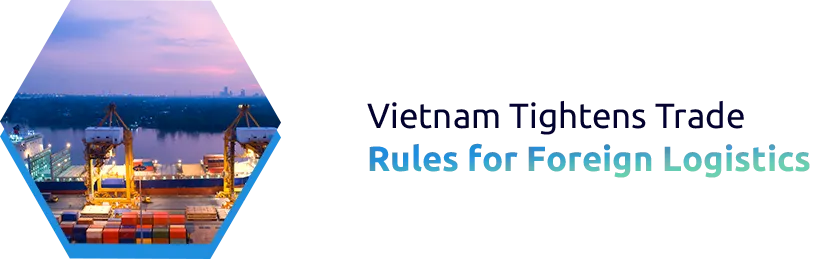
Foreign logistics providers must comply with rules concerning import export registration, customs duties, and inspection procedures. Products entering Vietnam require classification under the HS Code or HTS harmonized tariff, which determines applicable taxes. In some cases, delivery duty paid (DDP shipping) solutions and delivered duty paid logistics options are offered by providers to simplify import responsibilities for customers. Agreement with customs clearance support and adherence to Incoterms confirms that goods are processed effectively with international export regulations.
Export Regulations for Foreign Logistics Providers in Vietnam
For exports, Vietnam requires organizations to register through the export register system. Goods must be classified using the correct HS Code to prevent delays and penalties. Foreign providers frequently manage export customs brokerage services, confirming that shipments comply with international export regulations and meet the requirements of the country. By providing exporter of record services, providers help businesses handle the difficulties of licensing, documentation, and duties. Also, adherence to DAP and DAPs terms within Incoterms allows exporters to expand globally while reducing agreement risks.
Strengthening Vietnam’s Trade Ecosystem Through Advanced Warehousing & In-Transit Operations
To stay competitive in Vietnam’s fast-evolving logistics landscape, foreign service providers must prioritize efficient storage and movement of goods. Modern warehousing solutions and storage and warehousing services help businesses maintain better stock control, while optimized in-transit logistics reduces delays and improves delivery reliability. With rising demand for international e-commerce and high-value equipment imports, providers are adopting digital tools, such as AI-powered demand forecasting tools, to enhance planning accuracy and minimize downtime. Integrating strong customs clearance, trade compliance, and HTS/HS Code management further enables companies to achieve smooth, penalty-free operations across Vietnam’s import-export environment.
Benefits for Foreign Logistics Providers in Vietnam
Vietnam offers powerful opportunities for global logistics companies due to its expanding manufacturing base and increasing demand for advanced supply chain solutions. Foreign logistics providers can support fast-growing sectors like IT electronics, aviation, medical devices, and automotive manufacturing by offering specialized services such as Importer of Record, DDP shipping, and freight forwarding customs clearance. With Vietnam becoming a regional hub for warehousing services, multimodal transport, and in-transit logistics management, service providers can strengthen their presence through reliable compliance, optimized routing, and seamless end-to-end visibility. As the country continues to modernize its trade ecosystem, companies that deploy strong service offerings—such as supply chain solutions for the automotive industry and digitalized customs processes—gain a competitive edge and long-term growth potential.
Conclusions
Vietnam’s expanding economy and trade agreements continue to attract foreign logistics providers. By understanding the legal system, having knowledge about import and export regulations, and using services such as export customs brokerage, exporter of record services, and comprehensive import-export support, providers can grow in this market. Success lies in approval with HS Code classification, effective customs clearance support, and working with Incoterms. Vietnam is positioned as a local hub for global supply chain services. Foreign logistics providers who prioritize international export regulations and effective import export business methods will find themselves well-placed for sustained growth.
DID YOU KNOW?
Under the new VAT law, goods and services supplied by foreign sellers on e-commerce and digital platforms will be subject to a 10 percent VAT from July 1, 2025. Businesses should pay close attention to this change to ensure compliance with the new rules.
FAQs:
Q1. What is the legal framework for foreign logistics providers in Vietnam?
Foreign logistics providers operate under Vietnam’s Commercial Law, Investment Law, and Trade Law. Compliance with customs clearance and international trade facilitation standards is required.
Q2. Why are Importer of Record (IOR) and Exporter of Record (EOR) services important in Vietnam?
IOR and EOR services allow foreign logistics companies without a local entity to manage cross-border trade, ensuring smooth customs clearance and compliance with regulations.
Q3. What role does HS Code classification play in Vietnam’s import-export process?
HS Code or HTS Harmonized Tariff classification determines applicable taxes, duties, and inspection requirements, helping avoid delays and penalties.
Q4. Can foreign logistics providers use Incoterms like DDP and DAP in Vietnam?
Yes, terms such as DDP shipping and DAPs are commonly applied to simplify responsibilities between buyers and sellers, ensuring smooth global trade.
Q5. What industries in Vietnam benefit most from foreign logistics providers?
Industries such as IT electronics, aviation, automotive, and medical devices rely heavily on foreign logistics providers for freight forwarding, customs brokerage, and import-export support.