Introduction to AI and Automation in Global Trade
Global trade is growing fastly & becoming more difficult, particularly in industries like IT, aviation, healthcare, & automotive. Organizations now have to manage large amounts of goods & items, follow strict rules, & also manage operations across many countries at the same time. This can be challenging. This is where AI & automation help.
AI (Artificial Intelligence) allows your systems to learn from data & make smart decisions. While Automation allows for repetitive tasks without human effort. When used together, they make processes faster, easier, & more accurate.
These technologies are improving logistics, making customs processes smoother, & helping organizations to handle their supply chains better. From tracking orders to managing inventory, AI & automation are making international trade more efficient & easier to manage.
Key Applications of AI in Supply Chain and Cross-Border Trade
AI is widely used in global trade to make planning and decision-making easier and more accurate. One important use of AI is demand forecasting. It helps businesses to predict what products will be needed in the future. This way, organizations can avoid having too much stock or running out of products.
AI also helps with route optimization. It can suggest the best shipping routes by looking at factors like weather, fuel costs, & delivery time. This makes cross-border freight services faster & more cost-effective.
Another important area is customs and compliance. AI tools can automatically assign the correct HS code & follow the HTS (Harmonized Tariff Schedule). This reduces mistakes in product classification, which helps with smooth customs clearance and avoids fines.
Organisations also use the best trade compliance software for import export rules to stay updated with changing laws & regulations. This includes trade programs like the generalized system of preferences (GSP). These tools are very useful for businesses that provide exporter of record and importer of record services, where following the rules & regulation correctly is very important.
Role of Automation in Improving Efficiency and Reducing Costs
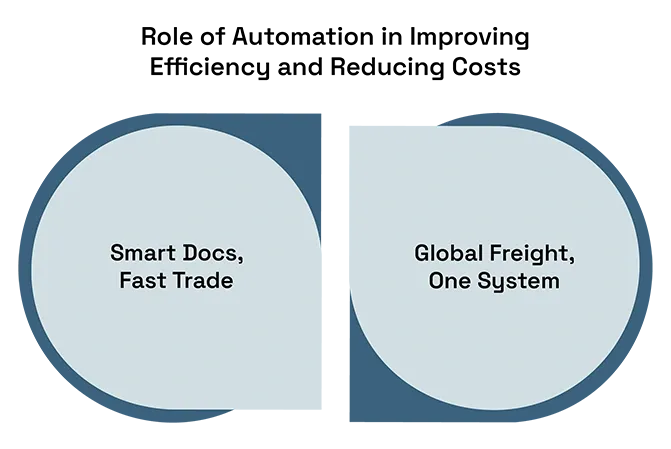
Automation plays an important role in making international trade easier, faster, & more cost-effective.
In warehouses, automated systems help with picking, packing, & sorting goods. This reduces human mistakes & speeds up the whole process.
When it comes to documentation, automation fastly creates invoices, shipping labels, & compliance documents. This is very helpful in cross-border shipping, where paperwork can be difficult & time-consuming.
Automation also improves coordination in global freight forwarding & international logistics services. It can track shipments, update delivery status, & handle communication in real time by keeping everything organized.
In industries like the automotive sector, automation makes sure that parts reach exactly when they are needed. This supports a well-planned supply chain, where timing & accuracy are very important.
Benefits of AI-Driven Supply Chains for Global Trade
AI & automation give many benefits in global trade and make the process smoother and more efficient.
First, they improve speed. Shipments move faster, and delays can be reduced because of better planning & live tracking.
Second, they increase accuracy. Automated systems reduce human mistakes in paperwork, product classification, & compliance. This helps to ensure smooth customs processes & fewer disruptions.
Third, they give better visibility. AI tools give live updates on shipments, inventory levels, & overall supply chain performance. This helps the organisation to make better decisions.
For organisations providing importer of record & exporter of record services, AI & automation help to ensure that all rules and regulations are followed correctly & on time.
They also help to reduce costs. AI can find better routes, minimize waste, & use resources more efficiently. This is specifically useful in industries like IT equipment logistics, aviation parts supply, & medical device distribution.

Challenges, Future Trends, and the Road Ahead
AI and automation have many benefits, but they also come with some challenges. One big challenge is the high cost of setting up these systems. Small & medium-sized companies may find it hard to invest in such advanced technology.
Data security is another concern. Supply chains deal with important & sensitive data across many different countries, so organisations must keep their data safe with strong security systems. There is also a demand for experienced employees who know how to use these technologies. Companies need to train their employees so they can work efficiently with AI and automation.
In the future, global trade will depend even more on technology. AI will help businesses to make better predictions & plans, while automation will become more advanced with the use of robotics and smart warehouses.
Technology will also make it easier to use trade terms like Incoterms, including DAP and DAPs, so businesses can clearly understand their roles & responsibilities in international shipping. As international trade continues to grow, organizations that use AI-driven logistics service & digital tools will have a strong advantage over their competitors.
Conclusion
AI and automation are changing how global supply chains and cross-border trade work. They help businesses to become faster, more accurate, follow rules easily, & minimize costs. Because of this, these technologies are now very important for modern businesses.
In industries like IT, aviation, healthcare, & automotive, using smart services is no longer a choice; it is a must to stay competitive in today’s fast-moving international market. By using AI, automation, & advanced compliance tools, organizations can create supply chains that are stronger, faster, and more reliable.
Did you know?
Companies using AI in supply chains have seen logistics costs drop by around 15% while improving service levels. This makes AI a key driver for efficient international logistics solutions.
FAQs
- How is AI improving international supply chains?
AI helps businesses predict demand, optimize shipping routes, and improve decision-making. It also improves inventory and order management and minimizes delays in international trade. - What role does automation play in cross-border trade?
Automation minimizes manual work by managing tasks like paperwork, warehouse services, & shipment tracking. This improves speed, accuracy, & performance in cross-border shipping services. - How do AI tools help with customs clearance and compliance?
AI-powered systems can automatically assign HS code and follow the HTS harmonized tariff schedule, ensuring correct paperwork & smoother customs clearance while minimizing compliance risks. - Why are Importer of Record and Exporter of Record services important?
Importer of Record services and exporter of record services make sure that all legal & regulatory requirements are met when moving goods across borders, helping businesses avoid fines & delays. - What are the key benefits of using AI in global logistics?
AI improves performance, reduces costs, enhances visibility, & supports better supply chain optimization. It also helps businesses stay competitive in industries like IT, aviation, medical, and automotive.