Freight forwarding is now growing in every logistics industry. The industry is going through a big development. Global trade is improving, & customers expect faster deliveries with full visibility. Delays, errors, & lack of updates are no longer acceptable. Because of this, companies are changing their work.
Automation, artificial intelligence (AI), & real-time tracking are starting with this change. These technologies are helping freight forwarders move goods faster, minimize mistakes, & stay in control of every shipment. The result is a smoother & more easy supply chain.
The Role of Automation in Freight Forwarding
Automation is very useful in everyday tasks. In past years, many processes were done manually. This is added with paperwork, shipment updates, & inventory checks. These tasks took time & often led to errors. Now, automated systems cover all work in just minutes. Documents can be created & processed in minutes. Customs paperwork is completed faster & with fewer mistakes. The role of AI in shipping moves without any delays.
Warehouses are also becoming more developed. Machines are used to move goods, organize storage, & prepare shipments. This not only saves time but also improves accuracy. Workers can focus on more important tasks instead of repeating the same actions every day. Automation also helps in planning shipments. Systems can select better routes & use space more easily. This means faster deliveries & lower costs.
AI-Driven Decision Making
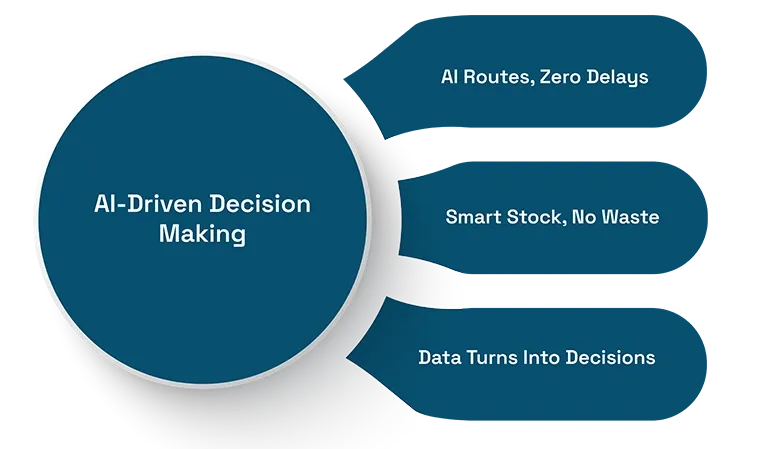
AI is helping industries to make smart and time saving decisions. It works by studying large amounts of data and finding useful patterns. This data can include weather updates, traffic conditions, shipping history, & demand trends.
With this information, AI can predict problems before they happen. If a route is likely to face delays, the system can suggest a different path. This helps avoid any fines & disturbance & keeps deliveries on time.
AI is also useful for planning materials. It can predict how much stock will be needed & when. This helps businesses avoid having too much or too little inventory. Another benefit is cost savings. AI can find areas where money is being wasted & suggest improvements. Over time, this leads to easier operations & better results.
Real-Time Tracking: Enhancing Transparency & Customer Experience
In today’s developing words everyone has to be updated. They want to know where their shipment is and when it will arrive. Real-time tracking and live location tracking make this possible.
Using GPS & smart sensors, companies can track goods at every step of the journey. This information is shared instantly. If there is a delay, it can be seen right away. This allows quick action to fix the problem.
This is especially important for sensitive goods. Items like medical equipment & electronics need special care. Real-time tracking makes sure that all products stay in the right condition during transport. Customers also benefit from this visibility. They receive updates without having to ask for them. This builds trust and improves the overall experience for customers. It also minimizes pressure & risk on customer support teams.
Integration of Technologies for a Smarter Supply Chain
These technologies are powerful on their own. But they are even better when used together.
For example, real-time tracking provides live data. AI analyzes this data & makes quick decisions. Automation then carries out those decisions without delay. Everything works as one system.
This creates a smooth & connected supply chain. Companies can react quickly to changes, whether it is a delay, a sudden order, or a change in demand. This level of flexibility is important in today’s fast-moving market. Businesses need to adapt quickly, & technology makes that possible.
Benefits Beyond Efficiency
The impact of these technologies goes beyond saving time. Companies that adopt them gain a clear advantage. They can offer faster services, reduce errors, & keep customers informed at all times.
This leads to stronger relationships and better business growth. Reliability becomes a main strength.
There is also an environmental benefit. Better planning means fewer unnecessary trips. This helps reduce carbon use. Many companies are now focusing on greener logistics, & these technologies support that goal.
Challenges
When the benefits are clear, there are also some challenges. The main challenge is overcosting. Setting up new systems requires investment, which can be difficult for smaller businesses.
Another issue is transforming to change. Many companies still use past old systems that do not easily connect with new trending technology. Developing these systems takes time & effort.
Training is also important. Employees need to learn how to use new tools properly. Without proper training, the full benefits cannot be achieved.
Data security is another concern. With more digital systems in place, protecting information becomes very important. Companies must take steps to keep their data safe.
Conclusion
Freight forwarding is developing a new, growing phase. Automation, AI, & real-time tracking are changing how the industry works. These technologies make operations faster, more accurate, & more transparent to customers. Companies that adopt these tools are better prepared for the future. They can manage challenges more easily & meet customer expectations with confidence.
Did you know?
Rising operational costs and ongoing supply chain disruptions continue to challenge logistics functions globally. These pressures are straining traditional systems, reducing service reliability, and limiting organizations’ ability to scale.
FAQ
- How is automation changing freight forwarding operations?
Automation is reducing manual work by handling tasks like documentation, customs processing, and inventory updates. This helps companies save time, reduce errors, and speed up shipments, making the overall logistics process more efficient and reliable. - What role does AI play in modern freight forwarding?
AI helps analyze large amounts of data to improve decision-making. It can predict delays, suggest better routes, optimize costs, and forecast demand. This allows freight forwarders to operate more efficiently and provide faster, more accurate services. - Why is real-time tracking important in global logistics?
Real-time tracking provides full visibility of shipments from origin to destination. It helps businesses monitor goods, respond quickly to delays, and ensure safe delivery—especially for sensitive or high-value cargo. It also improves customer trust through regular updates. - How do these technologies improve customer experience?
Automation, AI, and real-time tracking provide faster deliveries, fewer errors, and better communication. Customers receive accurate updates and estimated delivery times, which increases transparency and reduces uncertainty in the shipping process. - What challenges do companies face when adopting these technologies?
The main challenges include high initial costs, integration with older systems, employee training, and data security concerns. However, with proper planning and investment, these challenges can be managed, and the long-term benefits outweigh the risks.