Introduction
International trade has developed very quickly in recent years. It connects businesses, markets, & customers worldwide. But this growth also creates more difficulties. One of the greatest difficulties today is compliance. It is no longer just about moving goods between countries. Businesses must also follow many laws, rules, & standards. Compliance now plays a direct role in efficiency, cost, & overall success in global trade.
Law & regulations are becoming stricter across many countries. Even small mistakes in documentation or processes can lead to delays & fines. Businesses must stay updated & keep up with constant changes. Managing compliance well has become key to smooth & successful international trade.
The development of Global Regulations
Increasing difficulty of Trade Laws
Organizations such as the World Trade Organization set such rules for global trade. Each country has its own laws. These are added with import-export rules, tariffs, duties, & licensing needs. The challenge is that these laws change often. Governments update policies based on economic needs, political shifts, & trade agreements. This makes it hard for businesses to stay updated.
Frequent Policy Changes
Even small changes in trade policies can create huge problems. A small update in tariffs or documents can delay shipments or cause fines. Businesses must keep tracking these changes & adjust quickly. This increases both workload & cost.
Impact of Sanctions & Export Controls
Sanctions & export controls are being used more often by governments & global bodies like the United Nations. These rules can limit or completely block trade with such countries, companies, or individuals. Because of this, businesses need to be very careful about who they work with. They must check their partners, customers, & suppliers in detail, including screening restricted lists & confirming how the products will be used. This process takes time & effort, but it is important to avoid legal problems & keep operations running easily.
If verification is not done properly, shipments can be stopped, goods can be stopped, & companies may face heavy fines. Businesses may also lose access to many markets. Keeping proper records and following the correct process is important to reduce risks. Regular verification & clear internal systems can help businesses manage these rules more easily.
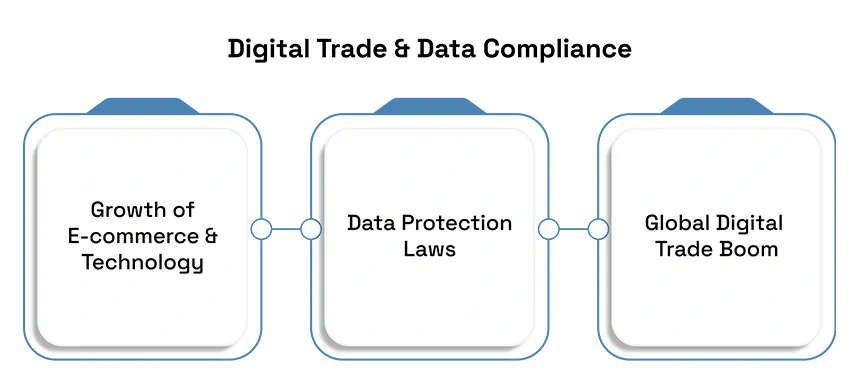
Digital Trade & Data Compliance
Growth of E-commerce & Technology
Digital trade is growing fast. This includes e-commerce, cloud services, & online transactions. With this growth comes new compliance challenges. Businesses must now cover cross-border data flow, cybersecurity rules, & privacy laws.
Data Protection Laws
Each country has different data protection rules & regulations. Some require data to stay within the country. This is called data localization. Because of these differences, companies struggle to create one standard process for all markets.
Customs & Documentation Challenges
Complex Classification Systems
Correct product classification is very important. Businesses use Harmonized System (HS) codes to determine duties & taxes. But mistakes are common. Wrong classification can lead to fines or shipment delays.
Rules of Origin & Valuation
Businesses must also confirm where goods come from & their correct value. These factors decide tariffs & trade benefits. Errors can cause compliance issues & financial loss.
Geopolitical Uncertainty
International trade is strongly affected by political conditions. Trade wars, sanctions, & global problems can quickly change rules & create challenges mainly for businesses. A sudden policy change can increase costs, delay shipments, or block trade routes. Because of this, companies must stay flexible & ready to adapt at any time. They need to plan, keep alternative suppliers, & manage risks carefully. If businesses are not prepared, these changes can disrupt supply chains & lead to financial losses.
Lack of Global Standardization
Different Rules Across Markets
Groups like the International Chamber of Commerce try to standardize trade practices. Still, each country follows its own system.
Increased Operational Burden
Because of this, businesses must create different compliance strategies for different markets. This increases difficulties & cost.
Role of IOR & EOR in Compliance
The Importer of Record & Exporter of Record play an important role in global trade. They manage legal responsibilities & make sure all rules are followed, added with proper documentation, taxes, duties, & approvals. Their work helps ensure that goods move easily across borders without delays or issues. Many companies select to outsource these roles to experienced service providers to minimize risk & avoid many problems. Businesses still need to manage these services closely to stay updated & manage full control over their compliance processes.
Impact of Non-Compliance
Not following trade rules can create major problems for businesses. Companies may face costly fines, shipment delays, & legal action, & in some cases, they can even be banned from trading in many markets. Goods may be held at customs or rejected completely, leading to financial losses & missed deadlines. Non-compliance can also damage a company’s public image. This loss of trust can minimize customer confidence & weaken long-term business relationships. It can also affect partnerships with suppliers & investors, making future business opportunities more critical.
Technology as a Solution
Automation & AI
Businesses are using automation, artificial intelligence, & data tools to manage compliance. These tools improve accuracy & minimize manual work.
Investment Challenges
However, these systems require a high investment. This can be difficult for small & medium-sized businesses.
Conclusion
Following rules is now the biggest challenge in global trade. The rules are complicated, they change often, & global conditions are not clear. It mainly affects paperwork & customs, data & ethical practices. Businesses need to stay updated, use the correct tools, & follow the update rules. Strong compliance is no longer optional; it is necessary for growth & long-term success.
Businesses must cover these changes quickly & carefully. Even small mistakes can make delays, fines, or rejected shipments. Teams need clear processes & regular training to avoid many issues. Working with experienced partners can also make things easier. Good planning & strong systems help businesses manage trade more easily.
Did you know?
critical shift from previous years: the survey found that 72% of trade professionals identified U.S. tariff volatility as the most impactful regulatory change, a dramatic increase from just 41% the previous year.
FAQ
- Why is compliance important in international trade?
Compliance ensures that businesses follow all legal rules and regulations when trading across borders. It helps avoid fines, delays, and legal issues while ensuring smooth operations. - What makes compliance challenging in global trade?
Compliance is challenging because rules differ by country and change frequently. Businesses must keep up with new laws, tariffs, and documentation requirements. - What happens if a company fails to follow compliance rules?
Failure to follow rules can lead to penalties, shipment delays, extra costs, or even bans from certain markets. It can also damage a company’s reputation. - How can businesses manage compliance effectively?
Businesses can manage compliance by staying updated on regulations, using technology, training their teams, and working with experienced partners. - What role does technology play in trade compliance?
Technology helps automate processes, reduce errors, track regulations, and improve overall efficiency in managing compliance.