Over the last ten years, global trade has grown fast, connecting industries & markets all around the world. But this growth has also created environmental problems, like more pollution from shipping goods & items, extra packaging waste, & higher energy use in warehouses.
Because of this, green logistics & sustainable trade have become very important. They help organisations to minimize their impact on the environment while keeping services running easily. Industries like IT, aviation, healthcare, and automotive are leading the way by finding smarter, eco-friendly ways to handle their supply chains.
Understanding Green Logistics
Green logistics is all about making supply chains more eco-friendly. This means using less energy, reducing emissions, & creating less waste during shipping. For example, IT and medical equipment organizations are using energy-efficient warehouses & eco-friendly packaging to make sure their goods & items reach their final destination safely while causing less harm to the environment.
At the same time, sustainable trade practices help organisations to run international operations responsibly. By using customs compliance, Importer of Record services, & following Incoterms, organisations can avoid delays in shipping, stay legally compliant, & save energy during the transportation of goods.
Key Drivers Behind the Shift to Sustainable Trade Practices
There are many reasons why organisations are moving toward green logistics & sustainable trade practices.
One big reason is regulatory compliance. Governments and global trade authorities have set stricter environmental rules for transportation, packaging, and supply chain operations. Companies use the best trade compliance software for import export rules to stay updated and avoid fines.
Another reason is corporate social responsibility (CSR). Industries like the automotive manufacturing supply chain are under pressure to minimize emissions & show they are using eco-friendly practices. Using EOR and IOR services helps companies to stay clear & compliant in international trade.
Consumer requirements are also important. Many customers prefer brands that care about the environment. IT and medical logistics businesses are responding by using eco-friendly packaging & energy-saving transportation methods.
In the end, operational efficiency drives sustainability. By optimizing delivery routes, reducing packaging waste, and saving energy, businesses can lower costs. Combining supply chain optimization with an international logistics service provider & global freight forwarding helps organisations to minimize both their environmental impact and operational fines.
Innovations Driving Eco-Friendly Logistics
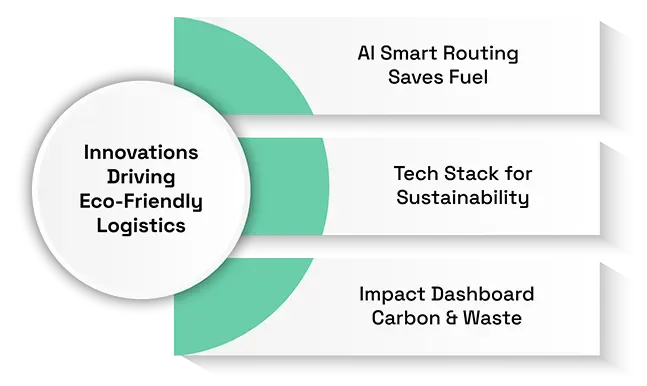
Technology is making green logistics easier and more effective. One important trend is the use of EVs. Automotive and aviation logistics organisations are switching to these vehicles to minimize carbon use.
Another strategy is smart routing with AI. Using AI to plan delivery routes will save fuel & ensure that sensitive products, like IT equipment or medical devices, reach their final destinations on time.
Companies are also focusing on reverse logistics and sustainable packaging. Recycling & reusing packaging materials help cut waste. When these practices are combined with inventory and order management systems, organizations can handle returns easily while minimising its environmental impact.
Trade compliance supports these efforts. Following proper tariff classification, ensuring smooth customs clearance, and complying with international rules like HS code and HTS harmonized tariff schedule help organizations stay fully compliant while running sustainable operations.
Challenges in Implementing Green Logistics
Even though green logistics has many benefits, it also comes with some challenges. In that, the large initial investment is one of the main challenges. Upgrading warehouses, switching to environmentally friendly vehicles, or using energy-saving technology can be costly at the start.
Another challenge is limited infrastructure. In some regions, particularly for international shipping, the facilities & systems needed for green logistics may not be fully developed yet.
Difficult rules and regulations are also a hurdle. Understanding trade terms like DAP and other frameworks can be confusing. This is why using customs compliance tools is so important to avoid delays or fines.
Despite these challenges, organizations that invest in sustainable practices usually see long-term benefits, including lower operating costs & a stronger reputation with customers and partners.
The Future of Sustainable Trade Practices
The future of global trade depends a lot on being environmentally friendly. Industries like automotive, IT, aviation, & healthcare are planning supply chains that combine efficiency with eco-friendly operations.
Many organizations are working toward carbon-neutral operations by using energy-efficient warehouses & supporting carbon offset programs. Tools like blockchain & digital tracking help organizations to keep track of products & make sure they come from responsible sources.
Using trade compliance tools, like the best trade compliance software for import-export rules, makes international shipping smoother & prevents unnecessary waste. Importer of Record services & international freight services will continue to play an important role in managing global trade efficiently & sustainably.
By combining green logistics with proper compliance, businesses can meet environmental rules while gaining a competitive benefit. Companies that adopt these techniques not only help the environment but also set themselves as leaders in responsible and sustainable trade

Did You Know?
The transport sector is responsible for nearly 24% of global CO₂ emissions from fuel combustion, with freight transport playing a major role. This is why green logistics is becoming so important for sustainable trade.
FAQs
- What is green logistics?
Green logistics means using eco-friendly methods in transportation, warehousing, and supply chain operations to reduce environmental impact. - Why are sustainable trade practices important?
They help reduce pollution, save energy, lower costs in the long run, and improve a company’s reputation. - What are the main challenges of green logistics?
Some common challenges include large initial investment, limited infrastructure, and complex international trade regulations. - How can businesses adopt sustainable logistics practices?
Businesses can use energy-efficient warehouses, eco-friendly transport, digital tracking systems, and compliance tools to improve sustainability. - What role do compliance tools play in sustainable trade?
Compliance tools help businesses follow international trade rules, avoid delays or fines, and reduce waste in global shipping processes.