Introduction
Recent changes in the tariffs and the customs codes represent significant challenges facing global trade in 2026. The import-export business, which involves specialized equipment such as aviation parts, IT/data center equipment, automobile parts, and healthcare equipment, is affected by these changes. These updates are crucial to understand so that expenses can be effectively managed and regulatory complexities navigated successfully in a rapidly changing trade environment.
The recent tariff changes on major trade routes
Changes in tariff rates have been introduced in several key trade routes, resulting in high import and export rates. The U.S. proposed new base tariffs of approximately 10% on most goods. At the same time, some countries, such as India, Brazil, and Canada, have higher mutual tariffs of up to 50%. The trade between the U.S., Canada, Mexico, the EU, and Asian countries has different tariff policies. These changes affect landed costs by impacting sourcing and logistics plans for air shipments of high-value, sensitive equipment.

The New Customs Code Revisions
These modifications in the customs code in 2026 will entail the reworking of the regulations of the Harmonized System (HS) classification and the development of new customs procedures in an effort to improve compliance. The roles of importer of record and exporter of record have been expanded to ensure proper classification and documentation. The adoption of Electronic Data Interchange – EDI – is rapidly gaining traction, which eases customs freight forwarding at the expense of new processes. The correct freight forwarding paperwork and volumetric weight calculation are essential to the effective process of customs clearance and reducing delays.
Sectors Most Impacted by the New Tariff & Customs Rules
The greatest impact is felt by the automobile, aviation, IT, and healthcare industries under the new tariff and customs regulations. The cost of the supply chain is rising due to the increasing tariffs on production materials and parts. Businesses with highly complicated logistics, which operate on a global scale, are the ones that face the greatest strain. In the latter, the professional freight forwarding services and correct customs processing are of great significance. The security of sensitive and expensive equipment during transit might be ensured with the help of white glove delivery and efficient warehousing services. The effectiveness of trade with the increased regulations is due to these cautious logistical adjustments.
How can businesses respond to recent changes?
The existence of stricter regulations of trade demands a more aggressive and compliant approach. Business facilities are supposed to keep proper import-export records, classify products appropriately, and even make sure that they file customs in time. When collaboration is done with a seasoned freight forwarding service provider, compliance becomes easier and quicker. Shipment with the use of the Delivered Duty Paid terms will also help specify the costs and duties associated with the shipment. Integrating digital customs clearance systems simplifies the approval process and minimizes delays at the border. Maintaining the change in tariffs and enacting the required systems would significantly aid in streamlining the supply chain & controlling the cost.
Global Supply Chain Impact
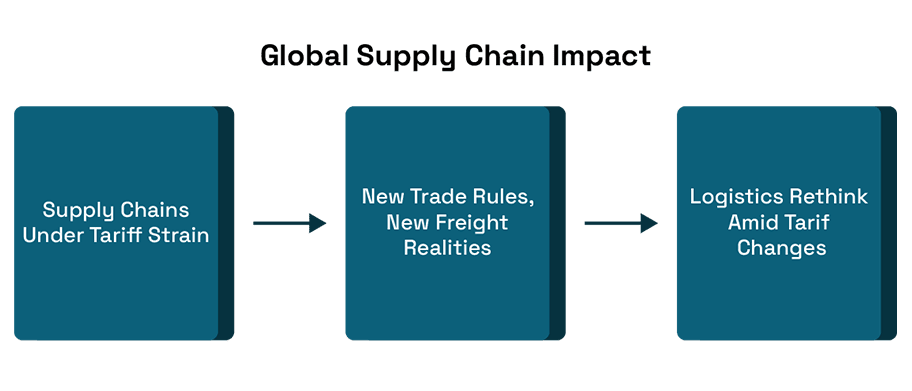
Increases in tariffs and new customs requirements make companies spend more and reduce shipment speed in the short run. Many of them are rethinking their sourcing systems and restructuring transport channels to stay competitive. This renders logistics planning and effective warehousing as a requisite in order to have smooth operations. In the long run, firms investing in the development of sophisticated freight forwarding logistics and risk management systems would do better. The collaboration with the logistics companies that have many years of experience in the field of freight forwarding aids in preserving the high global contacts and stable supply chains, and safe port-to-port delivery, even under the difficult circumstances of the trade.
What recent tariff changes are affecting major global trade routes?
Recent tariff changes in 2026 include new U.S. sector-specific duties on selected pharmaceuticals and revised metals tariffs, while several countries are also adjusting customs duties to protect domestic industries and respond to supply chain disruptions. These updates are impacting trade costs on major Asia–U.S., Europe–U.S., and transatlantic shipping routes.
Major Global Ports, Airports, and Climate Impact
The major airports and ports are at the center of administering these tariffs and customs alterations, particularly in areas that demand accurate handling, such as the aviation and IT equipment. Efficiency is enhanced by investments in sophisticated warehouse management systems and the use of digital customs clearance in such hubs as Singapore Changi and Frankfurt. The problems of climate change put strain on infrastructure and put the need to adopt sustainable logistics and warehousing that would guarantee the continuity of delivering equipment in the world.
Conclusion
The latest tariff and customs code changes in 2026 are not only a challenge to enterprises but also an opportunity for those dealing with aviation, automobile, Information Technology, and medical equipment. It is imperative to learn about these changes and collaborate with professional freight forwarding, customs clearance, and warehousing service providers. Here in this dynamic environment, we have customized port-to-port solutions, which go around the evolving laws & regulations to bring your equipment to your destination in One Union Solutions, safely and efficiently.
Did You Know?
Research indicates that tariff escalations and customs updates contributed to a 7% increase in landed costs for healthcare equipment in 2026, emphasizing the importance of expert customs freight forwarding and freight forwarder shipping services.
FAQ’s
What are the new tariff regulations that import-export companies need to know about in 2025?
Most countries are subjected to higher tariffs, where the U.S has a minimum tariff of 10% with some reciprocal tariffs of 50 percent depending on trade relations.
What impact does the update of the customs codes have on international shipping?
New customs and amendments of the harmonized system need proper classification and documentation of the importer of record and exporter of record in order to facilitate easy clearance.
Which industries will be affected by these changes in the tariff and customs the most?
More expenses and accountability criteria are associated with aviation equipment, IT/data center equipment, automobile components, and medical connection supply chains since they consist of complicated global value chains.
What can be done to enhance adherence to new trade regulations for businesses?
Collaboration with the customer of the freight forwarding services and the use of digital customs clearance and real-time tracking of the shipment will help reduce delays and mistakes.
How will these changes impact the global supply chains in the long run?
The resilience of the supply chain relies on the flexible sourcing, strong warehousing, and strategic freight forwarding logistics that adjust to changing tariffs and regulatory risks.