Introduction
When nations buy and sell products across borders, they follow to the same legal trade regulations. For companies, these regulations support balanced, open, and predictable international trade. In a multipolar world, multiple large economies share global economic power rather than be controlled by one. Global trade and international markets continue to change in 2026 because of new local deals, shifting trade regulations, and global events. New customs regulations, shifting supply chains, and different trade plans between countries represent issues that many businesses are faced with. Thus, to avoid delays and extra costs, companies have to understand the most recent trade laws and improve trade compliance. Businesses can make smarter decisions when growing globally or entering new markets by being informed of how the global trading system is changing. Businesses that remain informed and follow to the proper trade rules are more able to handle future changes and may safely continue growing.
What Is Rule-Based Trade and Why Does It Matter?
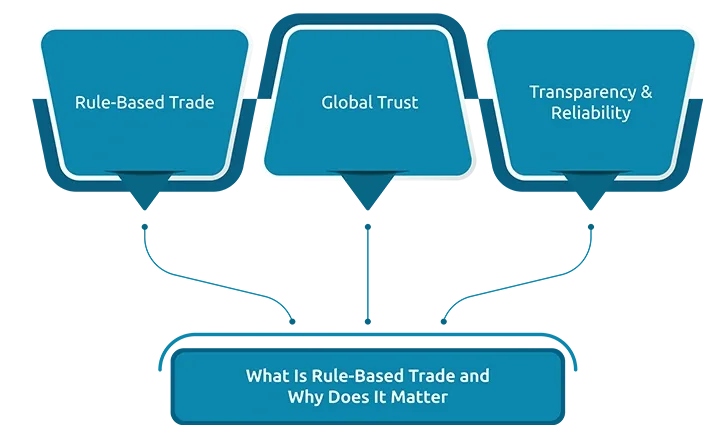
In a rule-based trade system, countries agree to follow by common international trade rules when doing trade with each other. These rules define how goods and services should be shipped over global borders, how customs processes should be handled, and how trade-related issues could be solved in the right way. They help to making the system of international trade more secure for all. Because they increase the transparency and reliability of international companies, countries follow by these common trade regulations. It is easier to trade, there are few mistakes, and trading ally trust is increased when all countries follow to the same trade laws. Rule-based trade has multiple benefits for companies. It helps companies in knowing import and export regulations, planning shipments with more safety, and reducing the risk of unexpected trade issues. Additionally, it allows easier access to foreign markets, supports company growth, and improves international business relations. As global trade evolves in 2026, following to specified trade regulations remains important for companies of all sizes.
What Is a Multipolar World in Global Trade?
A multipolar world is one in which multiple countries play important roles in the world economy rather than a single country controlling most of international trade. Global business and trade policy are shaped by large economies like the US, China, the European Union, India, and other developing countries. International markets get more connected and efficient as more countries share economic power. In order to support company growth and improve economic relations, countries are developing new trade deals, and multiple companies are moving into new markets. By growing manufacturing, exports, and funding, developing economies are also becoming more part of global trade. Global trade relations are changing as a result, and new trade chances are being developed. Companies can look into new global markets, reduce risks, and make smarter decisions for long-term success by understanding these changes.
Why the Global Trading System Is Changing and the WTO’s Role in a Multipolar World
Countries are facing new challenges in global trade, which is causing the global trading system to change. International trade is now more difficult than ever because of political tensions, changing trade laws, supply chain delays, and rising global issues. In addition to investing in technology and digital trade, countries are competing to improve their economies. Supply chain safety, green practices, & global economic interests also receive more focus from many governments. The World Trade Organization (WTO) is important because it develops common trade rules that support equal trade between countries. By increasing partnership and helping members in solving trade issues through a mutually approved process, it also supports trade governance. However, the WTO is facing difficulties because member countries may find it difficult to reach a majority on new rules, and some of its regulations are no longer in pace with the quickly changing global economy.
Many experts think that WTO reforms are required to support and improve the entity as a result of these changes. A more stable trading economy can be built by changing trade regulations and improving the decision-making process. Businesses may trade across global markets with more confidence when they have strong trade deals and fair dispute resolution.

How Regional Trade Agreements and Global Trade Challenges Are Shaping Rule-Based Trade
As regions work closely with nearby economic partners, regional trade deals are becoming more crucial. Many free trade deals, like the USMCA, CPTPP, and RCEP, help in reducing trade challenges, improving cross-border trade, & building global ties. These agreements improve faster delivery of goods and make it easier for companies to reach new markets. Companies must learn about & follow to different trade rules, however, as each agreement has its own set of rules. Maintaining rule-based trade is getting difficult at the same time. To protect their own economies, many countries have implemented new national trade policies, export controls, fines, and higher tariffs. Trade challenges, higher risks to international trade, and more trade issues between countries are possible results of these changes.
Businesses may find it difficult to plan foreign shipments or enter new markets because of these changing trade regulations. Companies can reduce risks and maintain smooth global trade by keeping up with trade deals and following to the most recent trade standards.
Conclusion
International trade is kept transparent and fair for everyone because of rule-based trade. Global trade is evolving with new deals and trade rules as the world grows more multipolar. Companies should maintain current understanding of trade regulations, improve their compliance with them, & get ready for future changes. This reduces risks, avoids delays, & allows confident growth in global markets.
Did you know
The World Trade Organization (WTO) has 166 member countries, covering about 98% of global trade, making it one of the world’s most important organizations for international trade.
FAQ
Can small businesses benefit from rule-based trade?
Yes. Common trade rules make it easier for small businesses to trade with other countries and reduce problems.
Are regional trade agreements useful for businesses?
Yes. They can reduce trade barriers, improve cross-border trade, & open new international markets growth.
Can new trade agreements create business opportunities?
New agreements often give businesses better access to global markets and support cross-border trade.
Can different trade policies affect business planning?
Different national trade policies may change costs, shipping plans, and getting entry in global market for businesses.
Is staying updated with trade regulations a good business practice?
Keeping track of changing trade regulations helps businesses avoid risks and support smooth global trade.