Overview
Border brokers play a vital role in governing cross-border shipments while securing trade, economic, and customer interests. Their independent systems allow them to focus on responsibilities such as security control, revenue collection, regulatory execution, and trade tracking. This independence becomes mainly important when dealing with difficult global trade systems that involve international shipping terms, Incoterms, approval programs like the generalized system of preferences (GSP), and technical categorizations such as HS code and HTS harmonized tariff schedule.
How Do Border Agencies Work Independently and Affect Trade?
The way border agencies work independently directly shapes international trade performance. Their separate roles improve documentation flow, inspection procedures, and trade approvals, which impact businesses using international freight services, exporter of record services, and importer of record services.
Improves operational efficiency
When agencies work independently, they bring specialization into the system. One agency may validate tariff categorizations using the HS code and HTS harmonized tariff schedule, while another evaluates licensing, safety, or taxation requirements. This systems division improves accuracy and reduces systemic risk.
Relationship with international shipping systems
Independent border bodies also confirm that declared Incoterms and international shipping terms work with regulatory problems. Whether shipments move under DAP or other delivery arrangements, agencies verify that responsibilities, cost allocations, and risk transfers are correctly documented.
Impact on trade support services
Businesses working with freight forwarding companies near me, international freight services, and cross-border facilitators must share information to meet the expectations of multiple independent authorities.

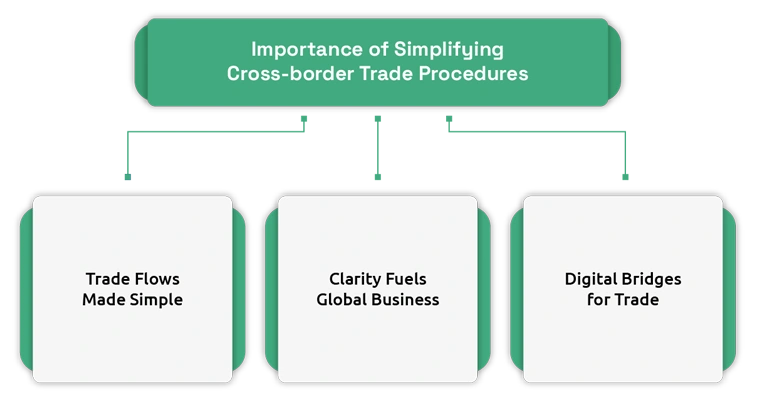
Importance of Simplifying Cross-border Trade Procedures
Although independence improves execution, simplification is necessary to have trade flow. Simplified procedures reduce duplication, shorten processing cycles, and improve transparency for organizations working in global distribution, inventory and order management, and supply chain optimization.
Supporting businesses through procedural clarity
Simplified systems help companies submit standardized data that multiple agencies can access. This is specifically valuable when shipments involve preferential schemes such as the generalized system of preferences (GSP), where proof of origin and tariff documentation must be consistently verified in trade.
Role of technology and integration
Digital platforms allow independent agencies to exchange data securely, allowing faster reviews and some manual interventions. This supports smoother work between trade documentation, regulatory checks, and customs clearance.
Consequences of Independent Work for Border Agencies
Independence increases responsibilities, increases regulatory integrity, and supports specialization. Agencies can focus deeply on valuation methods, categorization accuracy, security risk assessment, and agreement enforcement. This benefits businesses that depend on systematic trade processes, international freight services, and advanced supply chain optimization strategies.
A clear breakdown of duties improves traceability, making it easier to audit transactions and detect problems connected to miscategorizations, incorrect HS code usage, or misapplied trade programs.
Operational challenges
Also, independence can sometimes create procedural separation. Differences in documentation formats, inspection timelines, or review criteria may slow processing, mainly for organizations operating premium delivery service methods that depend on speed and predictability.
How One Union Solutions Help You Trade Across Borders
One Union Solutions supports businesses in guiding the difficulties created by independently operating border agencies. Their services combined regulatory understanding with operational coordination across exporter of record services, importer of record services, and agreement preparation. They support in aligning documentation related to HS code, HTS harmonized tariff schedule, generalized system of preferences (GSP) claims, and declared Incoterms. This alignment reduces discrepancies and improves approval timelines. We also support shipment planning combined with international freight services, systems delivery responsibilities such as DAP, and business systems that require dependable customs clearance. Their advisory approach increases inventory and order management, strengthens supply chain optimization, and supports organizations seeking dependable premium delivery service outcomes across borders.
Conclusion
Border agencies work independently to secure national trade and regulatory standards clarity across international trade. This independence allows objective enforcement of categorised systems, tariff systems, and shipping responsibilities. Understanding how independent border agencies operate and by working with experienced partners like One Union Solutions, businesses can manage approval more effectively, improve global operations, and build flexible trade systems that support long-term growth.
DID YOU KNOW?
Due to these phased product-level promotions, for the year 2024-25, approximately 47 percent of India’s exports to the European Union, valued at $35.6 billion, are now outside the scope of the GSP scheme, and only 53 percent ($40.20 billion) of exports remain eligible for these benefits.
FAQs:
1. What does it mean that border agencies work independently?
It means each authority operates under its own legal mandate, systems, and review processes, focusing on specialized regulatory responsibilities.
2. How does border agency independence impact international trade?
Independence improves specialization, regulatory accuracy, and accountability, but it can also increase procedural complexity, documentation requirements, and coordination challenges for businesses.
3. Why are HS codes and HTS classifications important for border agencies?
They determine how goods are categorized, what duties apply, and which regulatory controls are triggered, making them central to valuation, compliance, and tariff enforcement.
4. How do independent agencies affect customs clearance speed?
Multiple agencies reviewing the same shipment can improve security and accuracy, but without integration, it may extend inspection times and approval cycles.
5. How can businesses manage the complexity of independent border authorities?
Working with experienced trade partners like One Union Solutions, companies can align documentation, regulatory filings, and shipping terms to reduce delays and compliance risks.