Introduction
The total cost of imports includes more than the ocean freight. The good costs, insurance, import taxes, customs duty, port charges, and internal transport can all be included in the landing cost. Rising maritime freight costs may increase the total cost of delivering goods to their location in 2026.
Increased ocean freight costs can have an effect on buying choices, sale prices, profits, & shipment timing. Because of this, importers should consider the total landed cost of imported goods rather than just freight rates.
What Is Landed Cost?
The entire cost of shipping goods from the provider to the final location is known as the “landed cost.” The good purchase cost, ocean freight, marine insurance, customs duty, import taxes like VAT/GST, port and port charges, customs clearance costs, handling and document costs, inland shipping, and storage costs, if required, can all be included in the landed cost of imported goods. If depending on just the cost of international shipping, this provides importers with a clearer view of the total import cost. Companies can easier understand the total cost of logistics and the cost of importing goods by using a proper import cost calculator.
What Is Causing Ocean Freight Costs to Rise?
Several factors can cause ocean freight rates to rise. Higher bunker and operating costs can increase the cost of running vessels. Shipping route disruptions, such as changes around the Red Sea and Suez Canal, can make ships take longer routes and add extra costs. Port congestion can delay vessels and containers, while limited vessel capacity can reduce the space available for cargo. Blank sailings, where carriers cancel planned services, can further reduce available space.
Container shipping rates may also be affected by changes in the supply of containers. An increase in shipping costs may result from increased demand for shipment space during peak times. Ocean shipping prices can change with time due to freight rate change based on by these changes. For importers, the total cost of a shipment and its landing cost can be affected by even small changes in freight rates.
How Rising Ocean Freight Changes Landed Cost
The cost of the goods, freight, insurance, customs, taxes, port and handling costs, inland delivery, & other related charges are all included in the landed cost. The freight part of the total import costs increase in response with increases in ocean freight rates. This means the importer may pay more to bring the same goods to the final destination.
The effect does not stop at the freight charge. Freight may be included in the customs value in certain nations, which may have an effect on how import taxes or customs duty calculate. The exact effect is defined by the tax laws and customs values of a destination country. Therefore, rather than focusing only on the cost of international shipping, importers should to check a complete landed cost of imported goods.
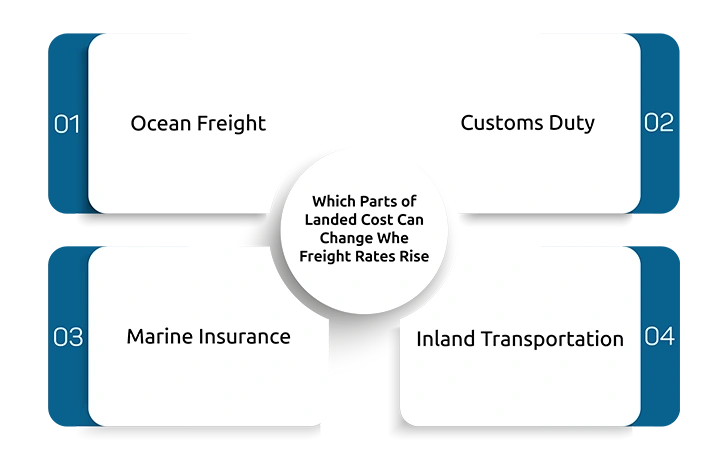
Which Parts of Landed Cost Can Change When Freight Rates Rise?
Ocean Freight
This is the most direct cost affected by rising ocean freight rates. When the freight rate goes up, the cost of moving goods by sea also increases. This can directly increase the total import cost.
Marine Insurance
When shipment value or insurance terms change, marine insurance may change. The value of the products being shipped, the insurance policy, and coverage levels all affect the correct cost.
Customs Duty
Customs duty may be affected when freight is included in the customs valuation used by the destination country. The rules can differ by country, so importers should check the local customs requirements.
Import VAT or GST
Import VAT or GST may also change if the tax calculation includes customs value, freight, duty, or other taxable costs. The calculation depends on the tax rules of the destination country.
Port and Terminal Charges
Port and terminal charges can include container handling, storage, and other destination services. These costs may increase when there is port congestion, delays, or longer storage at the port.
Inland Transportation
Although it is usually different from ocean freight, inland transport is also included in the total landing cost. The distance, location, type of vehicle, & delivery demands can all affect the cost.
How Freight Forwarding and Customs Coordination Affect Landed Cost
Freight forwarding helps manage the movement of goods from the supplier to the destination. It can include freight planning, carrier coordination, shipping documentation, destination handling, and inland delivery. Customs coordination helps make sure the shipment has the required documents and follows import compliance requirements. When these activities are planned properly, importers can get a clearer view of their landed cost and total import cost. For some shipments, IOR requirements may also apply when a company needs an Importer of Record in the destination country. However, freight forwarding and customs coordination do not automatically make the freight forwarder the legal importer.
Conclusion – Rising Freight Rates Can Increase the Total Cost of Imports
Since freight is an important part of the landed cost, increasing ocean freight costs can increase the total cost of imports. The impact on import taxes and customs duties is decided by the destination country tax laws and customs value. Importers should calculate the total landing cost of imported goods before choosing whether to ship or sell them. Checking freight, Incoterms, customs, taxes, and inland delivery together may use a reliable estimate of the actual cost of delivering products to their location.
Did you know
The 2026 Section 301 structure means two factories making the same product can carry different duty rates. Moving production from a 12.5% economy to a 10% economy may lower landed cost for importers.
FAQ
How do rising ocean freight rates affect landed cost?
Higher ocean freight rates increase the freight part of the landed cost. This can make the total cost of bringing goods to the destination higher.
Why can landed cost rise even when the product price stays the same?
When the cost of inland delivery, insurance, port charges, or ocean freight increases, the product cost may not change. The total cost of landing may increase as a result of these changes.
What costs should be checked when ocean freight rates rise?
To understand a change in total costs, importers should review ocean freight, insurance, customs duty, import taxes, port charges, handling, storage, & internal transportation.
Can freight forwarding help control landed cost?
Delivery plans, documents, freight planning, and carrier handling can all be helped by freight forwarding. An importer can plan and understand its complete logistics costs with the help of these steps.
Why is landed cost important when ocean freight rates keep changing?
Shipping costs may change over time due to changes in freight costs. Importers are able to understand the actual cost of shipping goods to the destination by looking at the complete landed cost.