Overview
Global trade is becoming more difficult as customs authorities strengthen their enforcement and modernize tariff interpretation systems. One change that frequently goes unnoticed but has a direct economic impact is customs reclassification. For businesses required in global logistics, mainly in IT hardware, aviation components, medical devices, and automotive parts, even a small change in categorization can mostly increase landed costs and stop supply chain planning. As international shipping terms, tariff rules, and customs clearance processes develop, organizations must understand how recategorizations affect pricing, approval, and customer clarity.
What Is Customs Reclassification and How Does It Increase Your Landed Costs
Customs reclassification occurs when authorities support a different HS code or HTS (Harmonized Tariff Schedule) categorizations to imported goods than the one the shipper originally declared. This can happen due to updated tariff notes, product design changes, or stronger interpretations by Customs Brokers.
Why Reclassification Happens
Changes in product specifications or bundled components
Misinterpretation of technical descriptions
Increased scrutiny on high-value or regulated goods
Completeness of preferential trade benefits, such as the generalized system of preferences (GSP)
What Should Importers Review After a Customs Reclassification?
After a customs reclassification, importers should review the revised HS code , applicable duty rate, import taxes and any additional documentation or regulatory requirements. They should also compare the new classification with the product’s technical specifications and supporting records. If the classification affects multiple shipments or product lines, businesses may need to review their existing tariff data and landed-cost calculations to identify further cost changes.
Economic Impact on Importers
When a product is recategorized, duties, taxes, and approval fees may increase unexpectedly. This directly raises the landed cost, even if cargo fees remain unchanged under Incoterms such as DAP or DAPs. For regulated industries, recategorizations may also show additional inspections or documentation requirements, increasing delays and working costs.
How Customs Authorities Review Product Classification
Customs authorities may review the declared HS code by examining the product’s technical specifications, function, materials, components and supporting documentation. The applicable tariff heading can also depend on the destination country’s tariff schedule and classification rules. For complex equipment, a classification review may result in a different duty rate or additional import requirements. Maintaining consistent product descriptions and technical records can help businesses support the classification used for a shipment.
What’s Included in Goods Landed Cost?
Landed cost is more than just the product price and shipping fee. It represents the total cost of bringing goods to the destination country.
Key Components of Landed Cost
Product cost and supplier charges
International freight services
Customs clearance duties and taxes
Customs Broker fees
Insurance and Approval charges
Importer of record Service or exporter of record service (if outsourced)
Industry-Specific reactivity
In the aviation and medical sectors, even small tariff changes can affect certification time limits. In automotive and IT supply chains, recategorizations can stop inventory and order management, impacting production schedules and customer responsibilities.
How Accurate HS Code Classification Reduces Landed Costs
Using the correct HS code categorization is important in international trading. It helps customs to correctly identify products and apply import duties & taxes. Wrong HS codes can increase landed costs, cause customs delays, or result in extra charges & costs. Correct product details and proper documents also increase customs compliance & make the import process smoother. Companies that check their HS codes on a regular basis can avoid unwanted costs, save time, & make sure that foreign shipments run smoothly.
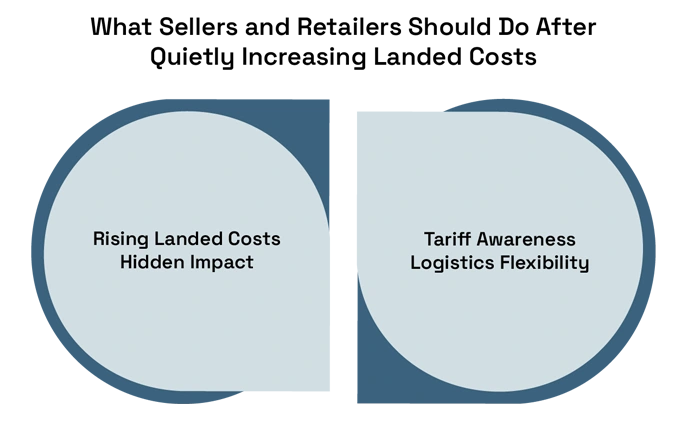
What Sellers and Retailers Should Do After Quietly Increasing Landed Costs
When landed costs rise unexpectedly, reactive pricing adjustments can damage competitiveness. Instead, organizations should focus on proactive guidelines.
Strengthen Classification Governance
Conduct regular HS code audits
Align product descriptions with technical documentation
Work closely with experienced Customs Brokers
Invest in Supply Chain Optimization
Advanced classification tools and data analytics support supply chain optimization, helping companies estimate duty exposure and avoid cost problems. Integrating tariff understanding into logistics planning also improves flexibility.
Review Delivery and Pricing Methods
Businesses providing premium delivery service or confirmed delivery timelines should reassess cost systems under revised categorizations to maintain limits without reducing service quality.
Why Organizations Frequently Don’t Show Landed Costs at Checkout
Many sellers avoid displaying landed costs upfront due to variability and approval risk.
Common Reasons for Non-Disclosure
Frequent tariff changes
Classification uncertainty
Different Incoterms are applied across regions
Dependence on the importer of record service arrangements
However, a lack of transparency can lead to customer dissatisfaction, especially in B2B transactions involving international shipping terms. Now companies are looking for now using varied pricing tools that estimate landed costs more accurately at checkout.
Conclusion
Customs reclassification is no longer a rare exception; it is becoming a regular feature of global trade execution. For companies working across IT, aviation, medical equipment, and automotive industries, ignoring its impact can quietly erode stops and destabilize logistics operations. By improving categorization accuracy, partnering with dependable international freight services, and using compliance into supply chain optimization strategies, organizations can better manage landed costs and maintain trust across global markets. In an era of improving regulations, proactive customs planning is no longer optional; it is a competitive necessity.
DID YOU KNOW?
Passenger vehicle sales stood at 4.3 million, commercial vehicles crossed the 1 million mark, and two-wheelers dominated the market with a 76.57% share. India also exported over 5.3 million vehicles, including 4.19 million two-wheelers, underscoring India’s growing global changes.
FAQs:
1. What is customs reclassification?
Customs reclassification occurs when authorities assign a different HS or HTS code to imported goods than the one declared by the shipper, often leading to changes in duties and compliance requirements.
2. How does customs reclassification increase landed costs?
Reclassification can raise duties, taxes, inspection fees, and documentation requirements, increasing the total landed cost even when freight charges remain unchanged.
3. Which industries are most affected by customs reclassification?
Industries such as IT hardware, aviation components, medical devices, and automotive parts are most impacted due to technical classifications and regulatory oversight.
4. Can a change in HS classification affect import duties?
Yes. A revised HS classification can place a product under a different tariff heading or duty rate, which may increase the importer’s overall landed cost. It can also affect applicable taxes, documentation or product-specific import requirements.
5. How can companies reduce the risk of customs reclassification?
Businesses can lower risk through regular HS code audits, accurate technical documentation, experienced Customs Broker support, and proactive supply chain optimization.