Compliance has been seen to be very important particularly when conducting international trade.
Navigating global business successfully requires strict adherence to international trade regulations, and one of the most critical elements of compliance is the correct use of the HS Code (Harmonized System Code). This standardized numerical method of classifying traded products ensures that goods are properly identified across borders, helping to determine duties, taxes, and regulatory requirements.
In the age of globalization, businesses are now reaching out beyond borders and following international trade laws as compliance has to be more effective than ever before. Transactional compliance encompasses issues of global trade law, and international business regulations as well. They make sure that companies follow the regulations governing what they are doing in any country thus encouraging fair trade practices.
Failure to follow the required guidelines can attract heavy fines, sanctions and tarnishing of reputation. For example, in January 2022 alone over $5 million was fined. In 2019, over $1.3 Billion dollars of penalties and settlements against violating entities were collected just in one year.
Besides, customs operations in the EU make up about 16% of global trade. The processing of import and export volumes shows a figure exceeding 3,400 billion euros annually. This shows the speed of global trade and so we must be obedient to this arena.
Compliance and Ethics Strategic Integration: A Framework for Transglobal Commercial Success
To enable the companies to effectively implement the envisaged changes to the existing Transglobal Commercial Duties, the companies’ main emphasis should be on aligning operational compliance with ethical business conduct through all operations. As a corollary to this enclosing approach, a high level of understanding of international commercial laws is required as well as a strong determination to uphold the ethical norms in the corporate world. Critical aspects that should be considered are the creation of an international compliance framework which includes the specific legal requirements of the operational country. This is provided within a framework including key areas such as labor standards, data protection rules, anti-corruption policies, and tax compliance provisions. As well as that, evaluation and risk management must be done regularly to ensure one can see and prevent legal and ethical risks in a variety of markets. Organizations must concentrate on the destructive effects that can be the result of non-compliant conduct costing heavy fines and causing an institution’s reputation to decline. For instance, they have to present a set of proactive measures such as internal audits, compliance training for employees, and a worthy internal reporting system that will help solve ethical issues if they arise.

Ensuring Compliance in International Trade
Navigating the Landscape of Compliance in International Trade
Compliance in international trade encompasses several critical elements. These include customs compliance; competition in trade and economies according to standard international transaction rules as well implementing the frameworks of such companies. Every single one of these elements is an indispensable component that helps businesses to successfully operate in the international market. What is meant by customs compliance in this context involves adherence to the rules and regulations of each country’s custom authorities. This can involve correctly declaring the produce, payment from correct duties and tax as well all imported products being in accordance with regional laws and regulations.
Compliance implementation frameworks entail establishing systems and operations within the organization with which compliance is mandated for all the above-discussed aspects. Such entail training programs, internal audits and compliance software.
The Significance of Documentation in Achieving Compliance.
Compliance needs proper documentation of transactions. It provides evidence of trade paperwork responsibility, documentation compliance standards and legal records. This ranges from invoices, shipment documents and customs declaration till certificates of origin among others. Suitable documentation not only facilitates compliance but also prevents unnecessary delays and complexities in shipping activities.
The invoices are a record of transaction and it is often demanded by the customs authorities in order to ascertain duties amounts etc. They are supposed to correctly determine the price of goods and especially between sellers and buyers.
Shipping documents like the Bill of Lading or Airway Bill reveal proof carriers and are typically demanded by banks, on one hand insurers along with custom authorities as well.
Customs authorities issue customs declarations so as to manage imports and exports of goods. They give details about products, what is the value and source of such a good.
The certificates of origin play the role in ascertaining goods source where these determines whether it’s eligible for paying duties and taxes. They are usually needed in order to obtain preferential treatment of goods under trade agreements.
Legal Implications of Importer of Record (IOR)
Delving into Legal Aspects: The role of IOR on compliance.
Compliance is very much concerned with global trade dealings, where the Importer of Record (IOR) has a huge responsibility to play. The IOR is the one who delivers imported commodities subject to laws and regulations of an importing country. In this case it includes making sure that proper duties and taxes are paid, the goods meet all requirements for import into the country while other required documents accompany them.
Legally, the IOR has to declare what has been imported plus classify and value everything. They also have the duty of paying taxes on imported goods which include import duties and other levies. The IOR should make sure that each imported product’s provenance will fall under the internal country laws and regulations concerning safety-related to health, people around them as well as environment.
For failing to meet these responsibilities there are severe penalties, fines and losses of your goods or even a lawsuit. Sometimes, the IOR may also be sued for any loss attributed to products brought into the country.
Case Studies: Global Transactions as Legal cases.
Through various legal cases, we see how challenging compliance is, and what are some of its legal implications are for IOR. Such cases act as teaching lessons to businesses with regard to compliance standards. They show the possible results of violations, such as fines, penalties, etc, and a company’s image in its name.
For example, in the case of a big electronics firm that faced charges for importing goods without proper documentation was fined millions of dollars. It should be noted that an IOR firm, the company in question, wrongly declared import duties for the goods and thereby underpaid.
Another period is, there was a lawsuit brought against the clothing retailer for importing some garments that do not meet both general health standards and developmental factors. As the IOR, the retailer was liable for seeing to it that any imported goods met all safety regulations.
These cases only show how imperative it is for somebody to understand and comply with the legal obligations that are associated with IOR Services. They also lay emphasis on the possible legal and financial costs that corporations incur when they do not fulfill these obligations.
IOR and Regulatory Requirements
Changes in Regulation and Adaptation strategies of IORs.
Due to permanent changes in regulatory demands, the IORs’ compliance strategies should be adapted anyway. Awareness of the latest guidelines is essential for compliance. Activities related to this include observing evolutions in legislation; evaluating the effects of these changes on duties entrusted to IORs, and developing actions enhancing continued conformity.
For instance, if a new regulation requires documentation of specific goods or commodities at point of entry every other importer who wants to import such would need the necessary systems and processes in place. This can be accomplished by working with suppliers to obtain the relevant information; purchasing new software or systems for documenting affairs including training staff on these requirements.
Globally in the business world that is globalizing so rapidly compliance becomes not only a law but also a strategic necessity. It represents a rather complex problem that requires an aggressive and holistic solution. However, for businesses that can overcome this hurdle it becomes a significant source of competitive advantage in the global market.
Conclusion:
Confirming agreement in global trade is important for organizations looking to avoid costly penalties and maintain a reputable global presence. A vital part of this requires correctly applying the HTS harmonized tariff system to classify goods, which determines the applicable duties, taxes, and regulatory approval across borders. Using a trusted IOR service confirms that all imported products meet local agreement standards, such as accurate customs laws, payment of import duties, and adherence to health, safety, and laws. Also, understanding and combining Incoterms into global transactions helps clearly define the commitment of buyers and sellers, reducing legal risks and promoting smooth cross-border work.
FAQS
1. What are the best practices for managing legal disputes in global transactions?
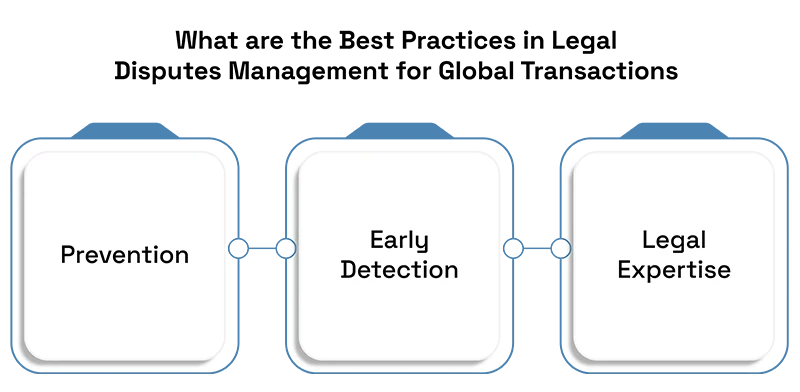
Businesses should prevent issues with strong compliance programs, detect risks early, work with legal experts in global trade law, and include clear dispute-resolution clauses in their contracts.
2. What happens if a company violates ESG regulations?
Breaking ESG rules can lead to fines, legal action, and damage to a company’s reputation. It can also cause loss of clients, investors, and trust from stakeholders.
3. Do international trade laws differ across regions?
Yes. Tariffs, import/export rules, and product standards vary by country. Companies must follow each country’s laws to avoid penalties, delays, and legal disputes.
4. Who should businesses contact for help with international trade compliance?
Businesses should work with experts like One Union Solutions, who provide complete compliance support and reduce the risk of delays, errors, or extra costs.
5. What is the function of Global Trade Compliance?
Global Trade Compliance ensures companies follow all international trade laws. It includes checking product details, HS codes, value, origin, and proper documentation to avoid customs issues and penalties.