The Growing Logistics Demand for Global AI Infrastructure
Artificial intelligence is changing the way data centers are designed, built, and supplied. As companies expand AI workloads, demand is rising for high-performance servers, GPUs, networking equipment, storage systems, power infrastructure, and specialized cooling systems. Much of this equipment is manufactured in one country, configured in another, and installed at a data center thousands of miles away.
That creates a logistics problem that goes well beyond simply moving a shipment from one port to another.
AI infrastructure is often expensive, heavy, time-sensitive, and subject to detailed customs and import requirements. A shipment can contain hundreds of components with different classifications, values, technical specifications, and regulatory considerations. If you are installing equipment, even a small delay in customs or delivery can impact installation schedules for a data center construction or expansion project.
Why AI Infrastructure Requires Specialized Logistics Planning
Traditional IT shipments may involve servers, switches, storage equipment, and related hardware. AI infrastructure can involve much higher-value and more technically complex equipment, including GPU servers, high-speed networking systems, racks, power distribution equipment, and advanced cooling components.
Those shipments could also transit via several countries to reach the final data center. So, for example, equipment may be produced in Asia, consolidated through a European logistics hub, and finally imported into North America for installation.
Each movement introduces another layer of documentation & customs requirements.
The shipment must be correctly described, classified, valued, and documented. The importer also needs to be identified correctly, especially where the equipment is being imported by a company that does not have its own legal entity in the destination country.
High-Value Equipment Makes Customs Accuracy More Important
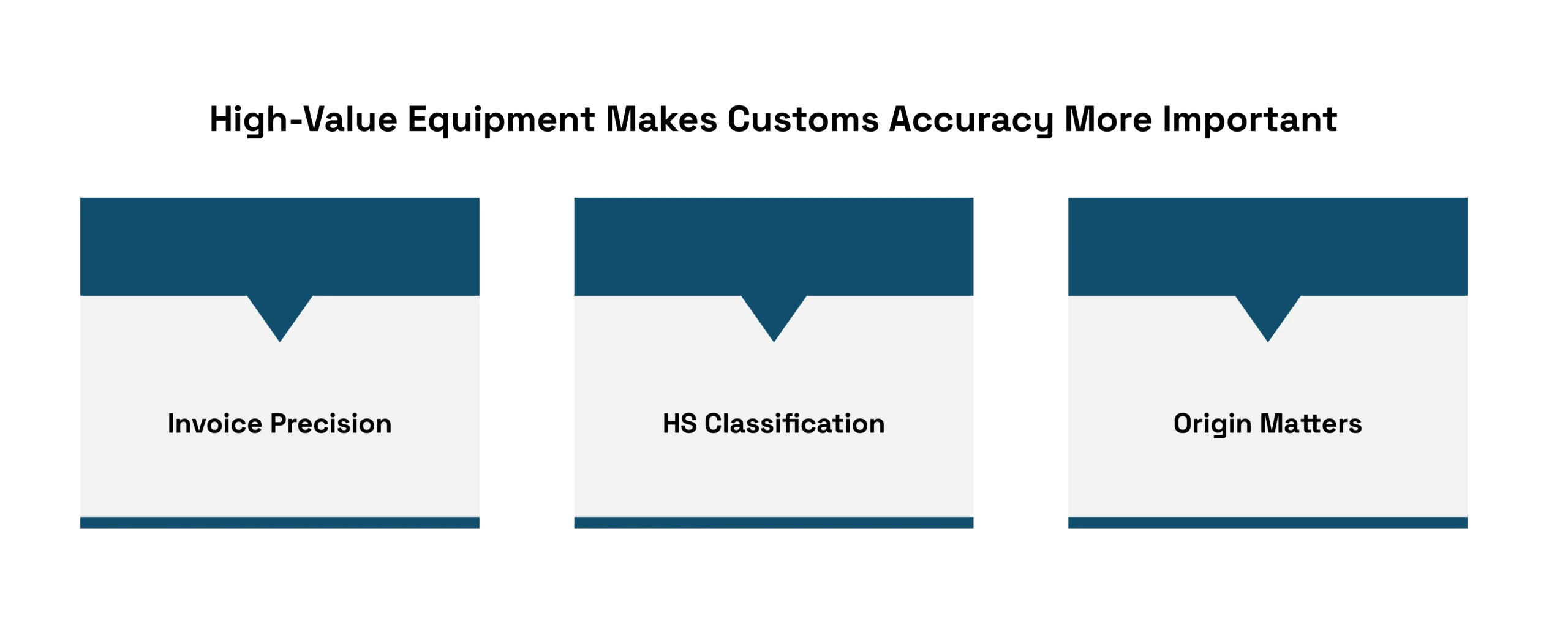
AI servers and GPU-based systems can represent substantial shipment values. A mistake in the commercial invoice, HS classification, country of origin, or declared value can create questions during customs processing.
This is especially true if a shipment contains various types of equipment. A data-center project can consist of a set of servers, networking equipment, storage devices, cables, racks, power equipment and spare parts. These items may not all receive the same customs treatment.
Companies should establish the correct product descriptions and classification approach before the shipment leaves the origin country. If they require more information, the customs authorities may also ask for technical specifications and other supporting documents.
It’s not just about getting the shipment through fast. The objective is to make sure the shipment enters the destination country under the correct customs and regulatory framework.
The Importer of Record Can Become a Critical Part of the Project
One of the biggest issues for companies expanding data-center operations internationally is determining who will act as the Importer of Record (IOR).
The company buying the equipment may not have a registered entity in the destination country. A logistics provider may transport the equipment, but a freight forwarder does not automatically become the IOR simply because it is arranging the shipment.
The Importer of Record (IOR) normally files the import declaration and all applicable customs requirements including duties and taxes. Depending on the country and the equipment involved, other permits, registrations or regulatory requirements may apply.
For this reason, companies should determine the IOR structure before shipping rather than trying to resolve it when the cargo reaches the border.
An IOR service can be useful when a business needs a compliant structure for importing into a country where it doesn’t have a local presence of its own. The precise configuration will depend upon the rules of the destination country, the nature of the goods, the parties to the transaction and the manner in which the transaction is structured.
Controls on exports and technical regulations are also important
AI hardware can sometimes fall within export-control or technology-control requirements depending on the product, specifications, origin, destination, and parties involved.
Therefore, companies shouldn’t approach AI network like any other commercial good without reviewing the rules that apply. Export licensing, restricted-party screening, end-use considerations, and destination-specific requirements may need to be assessed before shipment.
The exact requirements vary by country and product. A shipment should therefore be reviewed based on its actual equipment and transaction rather than assuming that every server or GPU shipment follows the same process.
How One Union Solutions Supports Global AI Infrastructure Shipments
One Union Solutions supports cross-border shipments of servers, GPUs/HPC systems, networking equipment, and data-center hardware. Depending on the destination and shipment requirements, services include IOR, EOR, freight coordination, DDP, customs documentation, and final-mile delivery support. What the proper setup is depends on the equipment, destination and the parties involved.
Conclusion
The global expansion of AI infrastructure is creating a logistics network that is just as important as the technology itself. GPUs, servers, networking equipment, and data-center hardware must move through international supply chains while meeting customs, documentation, transportation, and regulatory requirements.
For companies expanding into new markets, the key is to plan these requirements before equipment is shipped. Identify importer, verify product classifications, complete documentation, choose mode of transportation, arrange last-mile delivery to avoid unwarranted delays.
Did You Know?
According to the U.S. Department of Energy’s 2025 Update, U.S. data centers used 192 TWh of electricity in 2024, accounting for 4.7% of total U.S. electricity consumption. The DOE’s Reference Case projects this could reach 649 TWh by 2030.
Frequently Asked Questions
1. Why is logistics important for AI data-center expansion?
The AI systems often involve moving high-value servers, GPUs, networking equipment and other specialized hardware across international borders. Correct documentation , customs planning, transportation, and delivery management are important to keep equipment moving according to the project schedule.
2. Can a freight forwarder be the Importer of Record for AI Device?
Being a freight forwarder does not automatically make someone the IOR. In some arrangements it may provide IOR services in the destination country if legally able and willing to assume the role. The specific requirements depend on the country, equipment, and transaction.
3. What kind of papers are usually required to import artificial intelligence systems?
Typical documents are commercial invoice, packing list, Air Waybill or Bill of Lading as shipping document, customs declaration information or any similar licenses or regulatory documents. Additional technical or end-use information relative to the equipment and destination may be requested.
4. Is air freight better than ocean freight for GPUs and servers?
It will depend on the shipment and on the project schedule. If you need equipment right away air freight is helpful or ocean freight may be a better choice for larger shipments when the delivery time allows for longer transit times. Consider cost value of equipment size of shipment and project requirements.
5. Can companies import AI equipment without having a local entity?
In some countries, where a business does not have a local presence , it may use a compliant importing method, such as an suitable IOR arrangement. However, the options are dependent on the customs and regulatory requirements of the destination country and the nature of the equipment.