Overview
As global trade proceeds with the development of Incoterms in 2026, businesses in cross-border logistics see increasing difficulty. Growing logistics costs, stronger trade agreement rules, technology customs systems, and customer expectations for quicker deliveries have made a strong knowledge of Incoterms necessary in global trade. These international shipping terms help define fees, risk changes, and work between buyers and sellers. Organizations working in IT, aviation, medical, and automotive industries use Incoterms to change everything from pricing plans to customs clearance and complete delivery. Selecting the correct Incoterm is necessary for regulatory approval and supply chain optimization.
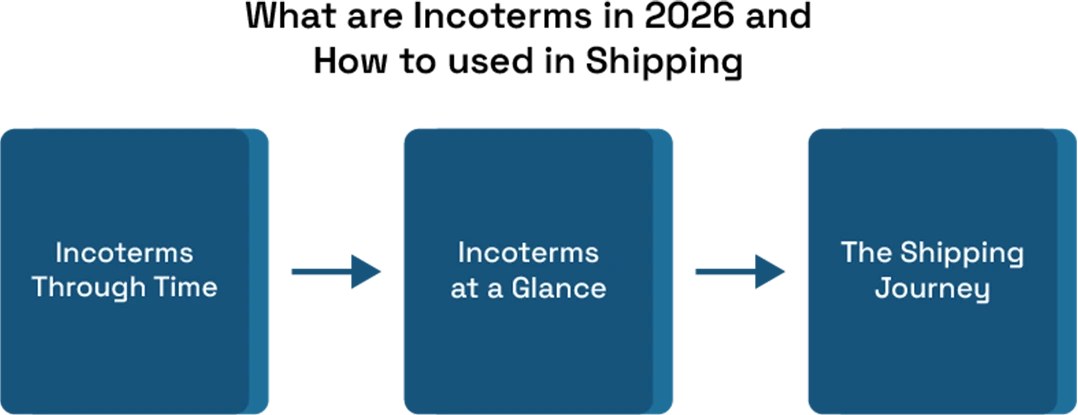
What are Incoterms in 2026 and How to used in Shipping?
International Commercial Terms are globally accepted trade rules by the International Chamber of Commerce. They clarify:
Who pays for logistics and insurance?
When the risk changes from the seller to the buyer
Who is responsible for export and import formalities
Incoterms do not replace contracts; rather, they complement them by providing a standardized system for international shipping transactions.
Role of Incoterms in Modern Logistics
In 2026, Incoterms will be closely combined with digital logistics systems, automated shipping documentation, and global trade approval platforms. Accurate usage confirmation:
Correct customs declarations using HS code and the HTS Harmonized Tariff Schedule
Smooth work with customs brokers and freight forwarders
Reduced issues between buyers and sellers
Also, Incoterms help determine program qualification for trade, such as the Generalized System of Preferences (GSP), which can reduce duty fees when applied correctly in global trade.
How Incoterms Affect Your Shipping Cost in 2026
Cost Clarity and Risk Allocation
Each Incoterm defines how shipping costs are distributed across the supply chain. These costs may include:
Inland transportation
International freight services
Insurance coverage
Customs clearance fees
Import duties and taxes
Under DAP, the seller takes all logistics fees to the location, while the buyer is responsible for import taxes. Selecting the wrong Incoterm can give unwanted fees, delayed shipments, or agreement fees.
Incoterms in 2026: Major Incoterms for Varied Methods of Transport
All Modes of Logistics
These Incoterms are mostly added for air, road, rail, and multimodal delivery:
Ex Works (EXW)
DAP / DAPs (Delivered at Place)
DDP (Delivered Duty Paid)
Among these, DAP continues to be mainly used due to its balance between seller control and buyer responsibility.
Incoterms for Sea and Inland Logistics
Used mainly for ocean freight:
FOB (Free on Board)
CFR (Cost and Freight)
CIF (Cost, Insurance, and Freight)
These Incoterms are mostly used in huge automotive parts, aviation equipment, and IT shipments.
Why is DAP mostly used in 2026
Delivered at Place is used for its agreement with premium delivery service methods, providing door-to-door logistics while allowing buyers to manage import approval through a local service provider.
What are the 3 Incoterms used During Shipment?
1. DAP (Delivered at Place)
DAP allows exporters to have authority over global logistics while importers manage duties and taxes. It is mostly used in the technology, medical, and automotive industries because of its cost-effective systems.
2. Free on Board
FOB remains a systematic choice for ocean freight. Risk Changes once goods are added to the ship, making it proper for buyers with strong logistics expertise.
3. Cost, Insurance, and Freight
CIF is mostly used for valuable shipments where sellers arrange insurance coverage, reducing buyer issues during logistics.
How Can One Union Solutions Help You Select the Right Incoterms?
Strategic Trade and Approval Support
One Union Solutions helps businesses guide Incoterms selection based on shipment value, destination country, and industry-specific regulations. Services such as Importer of Record Service, Exporter of Record Services, Licensed customs broker work, and End-to-end international freight services
Industries Expertise
With experience across IT, aviation, medical, and automotive industries in 190+ countries, we confirm correct tariff categorizations using HS code and HTS Harmonized Tariff Schedule, smooth customs clearance, and approval with global trade regulations.
Conclusion
In 2026, Incoterms are no longer just agreement terms; they are necessary tools for managing global trade. For import–export businesses, the right Incoterm selection supports cost clarity, regulatory approval, and effective logistics work. Working with expert providers like One Union Solutions, organizations can increase supply chain optimization, simplify customs clearance, and manage global shipping across diverse industries.
DID YOU KNOW?
In the recently published Allianz Trade Global Survey, 60% of the 4,500 companies participating in the study stated that they expect a negative impact from the trade war, while 45% predicted a decrease in export turnover.
FAQs:
1. What are Incoterms, and why are they important in 2026?
Incoterms are internationally recognized trade rules published by the International Chamber of Commerce that define cost, risk, and responsibility between buyers and sellers. In 2026, they are essential due to rising logistics costs, digital customs systems, and stricter trade compliance requirements.
2. Do Incoterms cover customs duties and taxes?
Incoterms clarify who is responsible for customs clearance and payments, but coverage varies by term. For example, under DDP, the seller pays duties and taxes, while under DAP, the buyer handles import duties and taxes.
3. Which Incoterms are most commonly used in 2026?
The most commonly used Incoterms in 2026 are DAP, FOB, and CIF. These terms offer flexibility across multimodal, ocean, and high-value shipments in industries such as IT, medical, aviation, and automotive.
4. How do Incoterms impact shipping costs?
Incoterms determine who pays for transportation, insurance, customs clearance, and taxes. Choosing the wrong Incoterm can lead to unexpected charges, shipment delays, or compliance issues.
5. Can Incoterms affect trade benefits like GSP?
Yes. Correct Incoterm usage supports accurate customs declarations and eligibility for trade programs such as the Generalized System of Preferences (GSP), which can reduce or eliminate import duties when applied correctly.