
Overview
Mexico’s announcement of an unreasonable tariff hike on Indian exports, affecting nearly 75% of India’s shipments, has spread across global trade. Effective January 2026, duties on selected good categories are expected to rise by up to 50%, creating significant cost pressures for Indian exporters. Businesses working across IT devices, aviation parts, medical devices, and automotive parts. This changes trade plans, pricing methods, and long-term supply chain planning. As trade guidelines become more secure, exporters must reevaluate agreements, logistics, and customs clearance processes, which are challenging in the Mexican market.
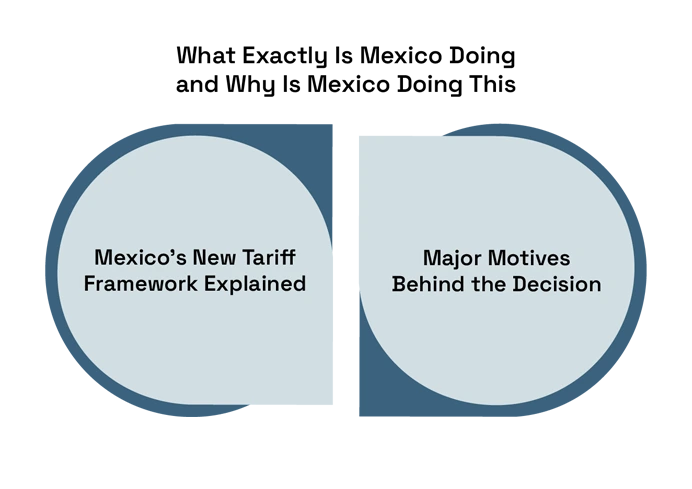
What Exactly Is Mexico Doing and Why Is Mexico Doing This?
Mexico’s New Tariff Framework Explained
Mexico is revising its HTS Harmonized Tariff Schedule, introducing higher duties across multiple HS code categorizations where Indian exports are controlled. These changes look to reduce import dependency and secure local manufacturers, specifically in high-value sectors.
Major Motives Behind the Decision
Mexico’s shipments work with its broader industrial policy of growing local production and improving North American supply chains. With global trade operational changes accelerating, Mexico is prioritizing sourcing closer to its location while improving controls on third-country imports that benefit from cost advantages.
Why does Mexico Tariff Hike to Hit 75% of India’s Exports?
Heavy Affected Product Categories
India exports a huge share of automotive parts, medical equipment, electronics, and aviation goods to Mexico. Many of these products fall under tariff lines now subject to duty increases, explaining why such a high percentage of exports are affected in the supply chain.
Limited Preferential Coverage
While some Indian exports previously benefited from the generalized system of preferences (GSP), the revised tariff regime hugely reduces these advantages. The absence of a long-term free trade agreement further limits comfort options for exporters in Mexico.
What’s the Major Reason Behind the Tariff Hike on India’s Exports?
Price Competitiveness and Market Share Concerns
Indian manufacturers are highly effective in pricing, frequently using optimized logistics, effective international freight services, and growing production. Mexico views this competitiveness as a threat to local suppliers and quickly implements tariff adjustments to level the playing field in global trade.
Compliance and Trade Control Measures
Mexico is also tightening scrutiny around valuation, product classification under HS code norms, and documentation connected to the Importer of Record Service and Exporter of Record Services. These measures reduce risks of under-declaration and improve customs execution.
Impacted Sectors and Trade Details After Tariff Imposition on India
Automotive and Aviation Industries
Automotive parts such as engines, transmission systems, and electronic modules will see clear duty increases. Also, aviation components and IT devices imports will see cost changes, impacting supply chain efficiency and delivery schedules.
Medical Devices and IT Hardware
Medical instruments, diagnostic equipment, and IT hardware exports may experience huge pressure due to higher landed costs. Exporters will need to revisit Incoterms such as DAP and DAPs to clearly define cost and risk allocation.

Trade Operations and Supply Chain Implications
Increased focus on customs clearance accuracy and working closely with a dependable Customs Broker
Re-evaluation of international shipping terms to absorb or change tariff-related costs
Increased inventory and order management to reduce problems
usage of supply chain optimization plans, including alternate routing and consolidation
Some exporters may explore premium delivery service options to maintain service levels despite longer clearance cycles.
Conclusion
Mexico’s tariff hike marks a changing point for India and Mexico’s trade relations. With duties growing up to 50%, Indian exporters, mainly in IT, aviation, medical, and automotive sectors, must act quickly to preserve market access and profitability. Major use of compliant trade structures, correct documentation, and effective freight planning will be necessary in global trade. While the policy added short-term challenges, businesses that invest in trade observation, improve shipping systems, and improve customs processes can continue operating effectively in the Mexican market. In an era of changing tariffs and developing regulations, flexibility and preparedness are no longer optional; they are competitive advantages.
DID YOU KNOW?
Currently, a 20% tariff is levied on passenger vehicles. From January 2026, this tariff will increase to 35% – representing a 75% increase in the tariff cost. For auto components, the tariff will increase from 10-15% to 35%.
FAQs:
1. Why is Mexico increasing tariffs on Indian exports in 2026?
Mexico aims to protect domestic manufacturing, reduce import dependency, and strengthen North American supply chains while tightening control over third-country imports.
2. Which Indian export sectors are most affected by Mexico’s tariff hike?
Automotive parts, aviation components, medical devices, electronics, and IT hardware are among the most heavily impacted sectors.
3. How much will tariffs increase on Indian goods exporting into Mexico?
Selected product categories may face duty increases of up to 50%, significantly raising landed costs for Indian exporters.
4. Does India receive any tariff benefits under GSP or trade agreements?
Limited benefits previously available under the generalized system of preferences (GSP) are now reduced, and no long-term free trade agreement exists between India and Mexico.
5. How can Indian exporters reduce the impact of Mexico’s new tariffs?
Exporters can reassess Incoterms, improve customs approval, freight planning, work with dependable customs brokers, and explore alternative routing or combined strategies.