
Overview
In today’s changing global trade environment, tariff systems are changing faster than ever in shipment. Changing geopolitical alliances, developing trade agreements, and sudden regulatory changes have made global trade increasingly difficult in global trade. Also, trade risk management has changed from a working issue to a boardroom priority, mainly for organizations working in the import–export process across IT, aviation, medical, and automotive sectors. Businesses that fail to proactively manage trade risks now face cost overruns, agreement penalties, and disrupted supply chains.
What Is Trade Risk Management?
Trade risk management refers to the structured approach organizations use to identify, assess, and reduce risks growing from international trade operations. These risks include frequently changing tariffs, customs regulations, categorization problems related to the HS code or the HTS harmonized tariff schedule, and changes in trade preference programs such as the generalized system of preferences (GSP).
For exporters and importers, effective trade risk management also involves managing international shipping terms, selecting exact Incoterms, and confirming correct documentation for customs clearance. When tariffs become unpredictable, even small missteps can hugely impact profitability.
Building a Strong Trade Compliance Strategy
A strong trade compliance strategy allows businesses to easier deal with changing tariffs, customs processes, and import regulations. It entails producing correct customs documents, using the proper product classification, and following to all local and global trade regulations. This helps to reduce customs issues, save extra costs, and improve international delivery. A strong compliance strategy also allows businesses to react quickly to changing trade regulations, keep supply chains working smoothly, & deliver goods on time to customers. Companies can reduce risks and improve long-term growth in global trade by planning ahead of time & following proper processes.
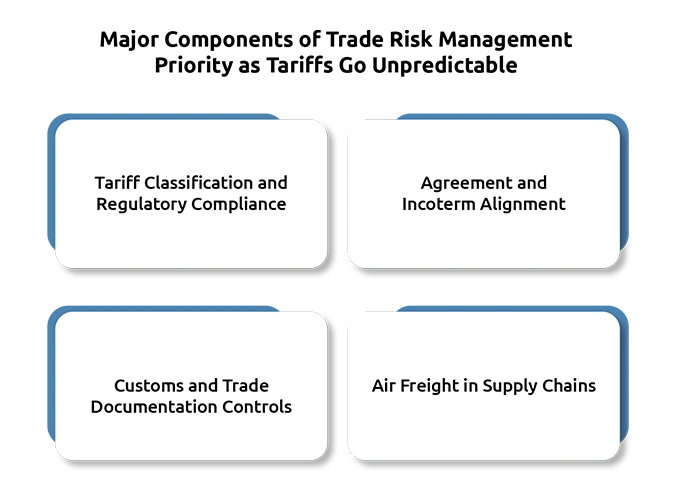
Major Components of Trade Risk Management Priority as Tariffs Go Unpredictable
Tariff Classification and Regulatory Compliance
Correct product categorizations using the correct HS code and HTS harmonized tariff schedule are foundational. Errors can result in incorrect duty payments, inspection, or execution actions. This risk is used when governments look for tariff rates without growing change periods.
Agreement and Incoterm Alignment
Choosing the right Incoterms, such as DAP or DAPs, helps clarify cost and risk allocation between buyers and sellers. In unpredictable tariff conditions, poorly defined delivery terms can expose organizations to unplanned duty dependabilities and disputes.
Customs and Trade Documentation Controls
Strong processes around customs declarations, supported by experienced Customs Broker partnerships, reduce the risk of shipment delays. This is mainly vital in regulated industries such as medical devices and aviation components.
Understanding the Business Impact of Trade Risk
Cost Changing and Margin Pressure
Tariff uncertainty directly affects landed costs. Without strong trade risk systems, businesses face reduced margins, mainly in high-value automotive and IT components, where duties change frequently.
Supply Chain Disruptions
Unwanted tariffs can push for quick rerouting of goods or supplier changes. Organizations that lack supply chain optimization plans may struggle to maintain service levels or address agreement issues.
Approval and Reputational Risk
Non-compliance with customs regulations can result in fines and damage reputation with authorities and partners. Using exporter of record services and Importer of record services can help organizations maintain agreements while expanding into new markets.
Effective Strategies for Trade Risk Management Priority as Tariffs
Major Trade Structuring
Organizations should evaluate sourcing methods and trade lanes regularly, considering available preference programs and alternative routes. Combining international freight services with trade approval planning improves responsiveness to tariff changes.
Digital Trade and Inventory Visibility
Advanced inventory and order management systems provide real-time tracking of shipments, allowing quicker responses to regulatory changes. This is specifically valuable for industries such as medical and aviation, where delays can be costly for shipments.
Partner-Led Risk Mitigation
Collaborating with logistics experts providing premium delivery service, customs advisory support, and approval expertise allows businesses to focus on core work. End-to-end logistics solutions help reduce friction across borders.
Scenario Planning at the Board Level
Trade risk should be evaluated alongside financial and operational risks. Board-level oversight confirms that tariff exposure, approval readiness, and possibility plans are used in corporate strategy rather than managed reactively.

Conclusion
As tariffs grow more unpredictable, trade risk management is no longer optional; it is a major necessity. For import–export businesses working across IT, aviation, medical, and automotive industries, proactive trade risk systems protect margins, confirm agreements, and stabilize supply chains. Working customs processes, international shipping terms, and supply chain optimization with executive oversight, organizations can guide uncertainty with confidence and maintain competitiveness in a quickly developing global trade.
DID YOU KNOW?
GTRI stated that India’s exports to China have declined from approximately $23 billion in 2021 to around $15 billion in 2024. In 2025, the country’s exports to China are projected to improve to $17.5 billion, although this will remain below previous levels.
FAQs:
1. Why has trade risk management become a boardroom priority?
Frequent tariff changes, geopolitical tensions, and regulatory uncertainty have increased financial and compliance risks, making trade risk a strategic concern for senior leadership.
2. What are the biggest trade risks businesses face today?
Key risks include unpredictable tariffs, incorrect HS code classification, customs non-compliance, supply chain disruptions, and changes in trade preference programs.
3. How do unpredictable tariffs affect business profitability?
Tariff volatility increases landed costs, reduces margins, and can lead to unexpected duty liabilities, especially in high-value and regulated industries.
4. How can companies reduce trade compliance risks?
Businesses can reduce risks through accurate product classification, strong documentation controls, experienced customs broker support, and digital trade visibility tools.
5. Which industries benefit most from strong trade risk management?
Industries such as IT, automotive, medical devices, and aviation benefit significantly due to complex regulations, high shipment values, and strict compliance requirements.