Insight
Efficiency in aviation supply chains is of utmost importance, from aircraft production to spare part delivery. One area driving dramatic transformational change is data center integration into aviation supply chain management; data centers offer computational power, storage capacity and real-time analytics necessary for streamlining operations, cutting costs and improving decision-making capabilities.
Here, we’ll explore the important part that data centers play in aviation supply chains, the challenges they address, & the advantages of leveraging partnerships among data centers to meet growing industry demands.
Why Are Data Centers Necessary in the Aviation Sector?
Airlines, suppliers, logistics companies, & manufacturers comprise the complex supply chain supporting aviation operations. Large amounts of data are generated at every process stage, from acquiring parts to shipping them to maintenance facilities. Yet, efficient information management is essential to an industry’s seamless operation.
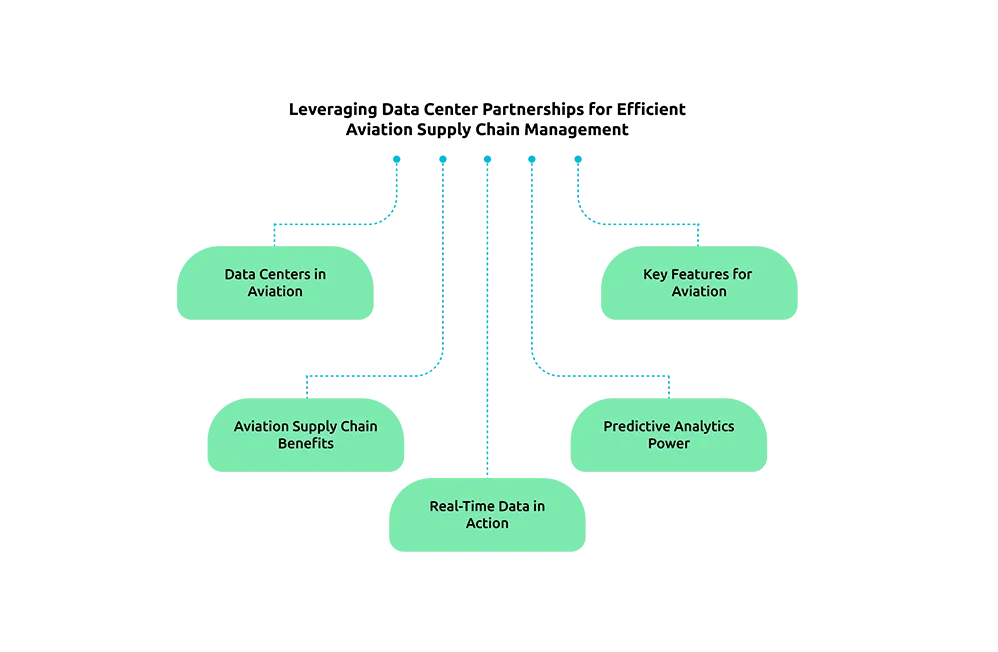
Inventory management, maintenance plans, and flight operations can all be negatively impacted by inefficiencies, delays, and expensive setbacks if this data fails to be processed, analyzed, and shared in real time. Data centers fill that need by offering the infrastructure needed to manage and organize the vast volumes of information produced and guarantee that it is readily available when needed for decision-making that can be put into action.
Overcoming Key Challenges in Aviation Supply Chain Management
Aviation supply chains face major challenges that can delay operations if ignored. A primary challenge is the lack of visibility caused by independent data systems, which leads to communication gaps & costly delays across the supply chain. To address this, partnering with data centres that provide real-time visibility into stock, shipments, & part accessibility is important for optimizing collaboration and minimizing risk. Additionally, airlines often struggle with inventory control; excess stock unnecessarily ties up capital, while insufficient stock can result in grounded aircraft, leading to substantial losses in revenue and time.
How Data Centers Are Revolutionizing the Aviation Supply Chain

1. Real-Time Visibility and Tracking
Data centers enable advanced tracking solutions that provide real-time updates on parts and shipments. By incorporating technologies like Internet of Things-IoT devices, RFID tags, and DAP (Delivery at Place) logistics solutions into their supply chains, stakeholders can closely track component locations and conditions while decreasing delays and improving coordination across supply chains.
2. Predictive Maintenance
Aircraft maintenance is one of the corner-stones of aviation supply chains. Data centers process huge volumes of operational data from aircraft systems & enable predictive maintenance; by anticipating potential issues before they manifest themselves, airlines can schedule maintenance proactively reducing downtime & costly disruptions.
3. Enhancing Inventory Management
Data centers utilize sophisticated algorithms and machine learning models to predict demand accurately. This enables aviation companies to optimize inventory levels while reducing excess stock. This information also benefits supply chain management activities like supplier relationship management (SRM).
4. Increased Collaboration and Communication
Data centers serve as centralized hubs for sharing information between all stakeholders. With secure cloud platforms, suppliers, logistics providers, and airlines can collaborate quickly to streamline operations and ensure timely deliveries. Tools like Incoterms ease international trade logistics and compliance.
5. Regulatory Compliance and Reporting
Compliance with aviation regulations demands meticulous record-keeping. Data centers facilitate this process by automating data collection and creating reports that meet regulatory standards such as HS codes or DDP (Delivery Duty Paid). This reduces administrative burden while decreasing penalties associated with noncompliance.
6. Disaster Recovery and Business Continuity
Reliable access to complex data is important for aviation operations. Data centre collaborations help maintain continuity through secondary systems, recovery strategies, & supporting infrastructure. These measures reduce delays caused by technical issues, security threats, and events. As a result, aviation companies can keep supply chain activities running smoothly & minimize delays. Efficient data management also improves overall reliability & responsiveness.
Aviation Data Center Partnerships Offer Benefits
Partnership with data centers brings many key advantages to aviation supply chains. Cost savings can be acknowledged through the optimized processes & reduced inefficiency. Data centres offer businesses scalability, providing flexible infrastructure that adapts as data volumes grow and accommodates any new requirements.
Data security can be further strengthened with advanced cybersecurity measures to prevent breaches. Real-time analytics allow faster, data-driven decision-making that enhances responsiveness.
Calculating Costs and Efficiencies with Data
Accurate cost calculations are crucial for managing logistics and air freight expenses, and tools powered by data centers help streamline this process. For example, chargeable weight is calculated by comparing the dimensional weight (volume weight) and actual weight of a shipment, with the higher value used to determine air freight costs. Using the standard air freight formula, a volumetric weight calculator helps logistics managers easily calculate dimensional weight based on shipment dimensions.
An air cargo cost calculator, integrated with real-time market rates, ensures accurate cost calculations for air freight shipments. These tools simplify logistics management, provide cost transparency, and boost efficiency, ensuring businesses can better plan and control their air freight expenses
What Are the Role of One Union Solutions?
As the aviation industry evolves, One Union Solutions is invaluable in unifying data centers to streamline supply chain management. Offering advanced IT infrastructure and data-driven solutions tailored to their particular challenges, One Union Solutions assists aviation businesses in adopting cutting-edge technologies tailored specifically for them, thus improving operations, enhancing security, and making faster data-driven decisions than before.
By efficiently addressing key obstacles like fragmented systems and high operational costs and supporting long-term growth – helping the aviation industry prosper amidst today’s fiercely competitive data-driven world!
Did You Know?
Modern aircraft generate large volumes of data every day, making data centers essential for efficient aviation supply chain operations.
FAQs
What role do data centers play in aviation supply chains?
Ans: Data centers are an indispensable infrastructure for processing, storing, and analyzing information for real-time visibility, predictive maintenance scheduling, and improved inventory control.
How can data centers enhance aviation logistics?
Ans: Data centers enhance logistics by offering real-time tracking, optimizing routes, increasing stakeholder communication and decreasing delays in part deliveries.
How do data centers support business continuity in aviation?
Ans: Data centers maintain business continuity by providing secure data storage, backup systems, and disaster recovery solutions. These measures help ensure uninterrupted access to critical information and maintain operational efficiency.
How can predictive analytics benefit aviation supply chains?
Ans: Predictive analytics allow businesses to detect potential issues before they arise, enabling proactive maintenance and reducing downtime.
Why do aviation companies need partnerships with data centers?
Ans: Partnerships with data centers provide the expertise and infrastructure necessary to manage rising data volumes efficiently while adhering to industry regulations.