Insight
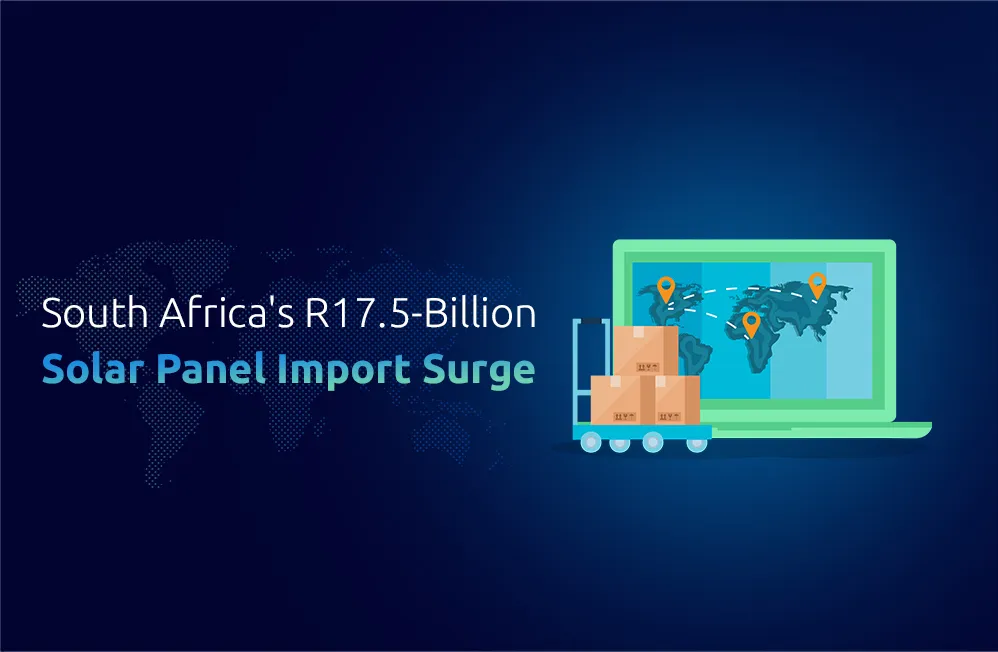
South Africa is experiencing an extraordinary transformation of it’s energy landscape, marked by a rapid increase in solar adoption. Last year alone, R17.5 billion worth of solar panels were imported, reflecting South Africa’s commitment to sustainable energy sources while lowering the dependency on fossil fuel.
This increase in solar imports coincides with India’s ongoing energy problems, such as rolling blackouts, energy shortages and grid instability. Businesses & households affected by power interruptions caused by ageing infrastructure have increasingly turned to solar as a reliable and cost-effective energy solution. There is a rising interest in clean energy and a response to energy insecurity. Rather, it forms part of a national plan to diversify South Africa’s energy mix while decreasing coal use while meeting its climate goals.
The surge in solar installations is also reshaping South Africa’s industrial & commercial sectors. From mining operations to manufacturing plants, solar power is increasingly being integrated to minimise service costs & ensure energy continuity during grid outages. Large corporations are investing in hybrid solar-battery systems, which combine renewable energy generation with storage to ensure a stable power supply. This industrial adoption not only cuts emissions but also supports South Africa’s broader decarbonization goals under the Just Energy Transition framework, positioning the country as a renewable energy hub in sub-Saharan Africa. Additionally, as solar panel imports increase, international e-commerce shipping & global trade compliance play an important role in managing logistics, customs clearance, & sustainable trade across borders, ensuring that renewable energy products reach South Africa efficiently & responsibly.
Breaking Down the Numbers
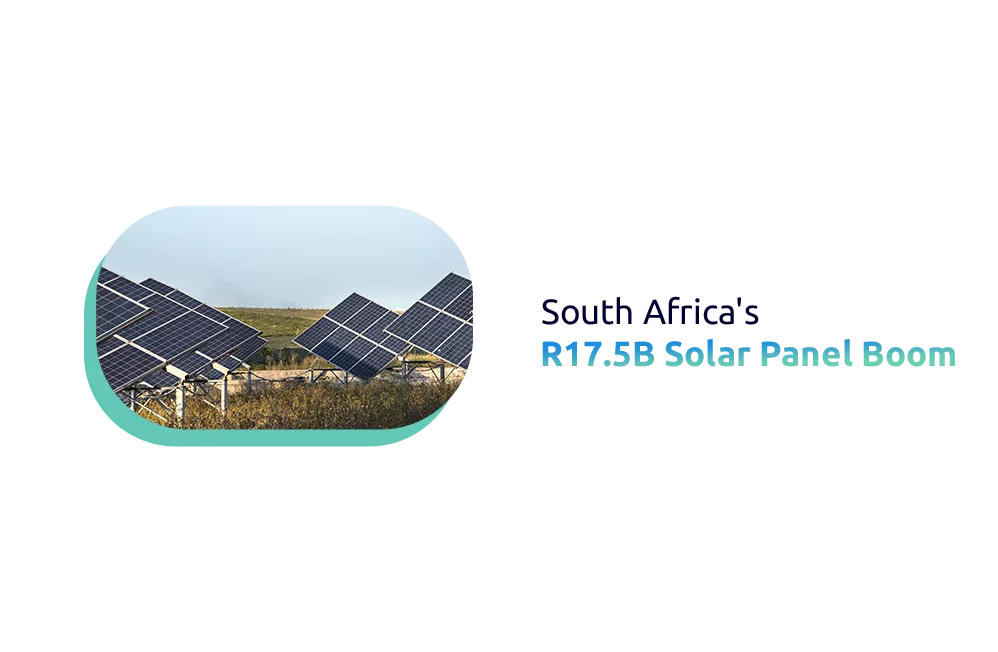
South Africa’s solar energy market is predicted to grow quickly by 2026 because of government support, reduce cost solar panels, and the need for stable, reliable electricity. More homes, companies, and industries are turning to solar energy to reduce electricity bills and deal with power cuts.
The government is helping to support new solar projects and increasing green energy investment. It is also working to increase local solar panel production, create jobs, and grow the renewable energy sector. This supports South Africa’s shift to a cleaner, stronger, and more reliable energy future.
Overcoming Barriers to Scaling Solar Energy in South Africa
Although South Africa’s solar energy boom offers immense promise, several challenges must be met to maintain its momentum. One major impediment to expansion is grid connectivity; many regions lack the infrastructure to link solar installations to the national grid efficiently, limiting solar energy production’s full potential. High initial costs continue to pose an obstacle, with many households unable to afford initial investments due to rising initial costs despite declining panel costs.
Regulator delays and inconsistent policies further delay solar energy projects. A shortage of qualified personnel to install and maintain systems poses another formidable barrier; ensuring South Africa’s solar sector thrives into the future requires investment in infrastructure, regulatory reform and workforce development.
The Role of Imports in Meeting Demand for Solar Energy in South Africa
South Africa’s R17.5 billion worth of imported solar panels illustrates South Africa’s increasing reliance on international suppliers to meet rising renewable energy demands, especially China, the global leader in solar panel manufacturing. However, this dependence also highlights a pressing need to strengthen local manufacturing capabilities: developing the domestic solar industry can decrease imports and the cost of installations and provide thousands of new jobs, contributing positively towards economic development and energy independence.
Building Local Capacity
South African government and private sectors have begun to recognize the significance of domestic solar production, with investments underway in manufacturing facilities for components. Establishing domestic manufacturing industries offers many advantages, one such advantage being reduced dependence on imported solar panels while also creating more secure supply chains.
Reducing production costs could make solar installations accessible to businesses and households, hastening adoption. Most importantly, this shift would create thousands of new manufacturing, installation, and maintenance jobs to strengthen our economy further while supporting renewable energy development.
Conclusion
Due to government backing and declining investment prices along with evolving environmental policies solar energy has an auspicious outlook in South Africa. Due to robust governmental backing, combined with reducing prices and increasing environmental sensitivity, solar power demonstrates great potential to become a central component of South Africa’s energy platforms. Local manufacturing investments alongside upgraded power grid infrastructur,e together with regulatory simplificatio,n will accelerate solar power expansion in South Africa. The R17.5-billion solar panel import from South Africa demonstrates national dedication to establishing a sustainable future through solar power to support both energy security and economic progress, and environmental preservation. One Union Solutions provides comprehensive support for this energy transformation through solution-oriented expertise that will help the transition run smoothly.
Did You Know that,
Africa’s solar panel imports set a new record in the 12 months to June 2025, reaching 15,032 MW – a 60% increase on the 9,379 MW imported in the preceding 12 months.
FAQs
1.Why is solar energy growing so fast in South Africa in 2026?
In 2026, more people and businesses are choosing solar power because it helps reduce electricity costs and provides a reliable source of energy during power shortages.
2. How much solar capacity is South Africa expected to have by 2030?
South Africa is expected to have more than 18,000 MW of installed solar capacity by 2030 as renewable energy projects continue to grow.
3. What steps is the South African government taking to encourage solar adoption?
The government promotes solar energy through tax incentives, subsidies, reduced import duties on solar equipment, and national energy programs designed to speed up renewable energy development.
4. How can One Union Solutions support solar equipment imports?
One Union Solutions helps manage import compliance, customs clearance, documentation, and logistics to ensure solar equipment reaches South Africa smoothly and on time.
5. What is the future outlook for South Africa’s solar market?
The solar market is expected to grow steadily, with projections showing more than 10% growth between 2023 and 2030 and total installed capacity exceeding 18,000 MW.