Insight
International trade has long been recognized as an essential part of economic growth & development in developing nations, providing access to global markets, investments & cutting-edge technologies Recently, IT infrastructure & data centers have emerged as critical elements of global trade, which provide transformative opportunities for developing economies.
Participation in global trade provides developing countries with access to goods and services, driving innovation and improving productivity. However, entering international markets can present unique challenges; businesses often must meet stringent regulatory requirements, logistical difficulties and compliance needs when trading high-value equipment such as IT infrastructure or data center components. That is why Exporter of Record services provide such crucial assistance and a smooth trading process.
Significance of International Trade
International trade remains invaluable to developing countries. It is a key motor for economic progress through the adoption of new technologies, capital and global markets. Improved competitiveness, increased job opportunities as well as infrastructure development, in departments such as IT and data centers among other benefits are what developing countries enjoy from international trade. By increasing their involvement in global commerce, developing economies can modernize their industries while attracting foreign investments and encouraging innovation. International trade presents itself as a strategic avenue for achieving enduring economic resilience and global integration.
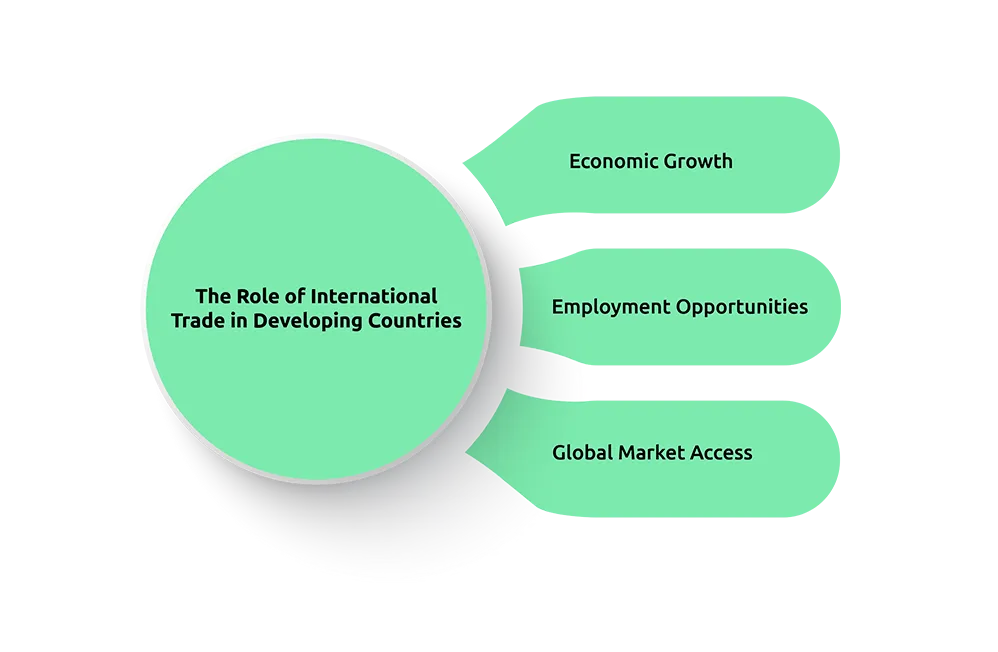
International trade plays an essential role in driving economic development and industrialization across developing nations. By engaging in it, these nations can:
Trade Enables Access to Advanced Technology: Trade allows developing countries to import hi-tech equipment, such as IT hardware and data center components, that are essential for modernization and digital transformation.
Attracting Investments: An efficient trade framework attracts foreign direct investments that allow countries to develop infrastructure and technological capacities.
Increase Trade Activity to Generate Jobs: Increased trade activities generate jobs across various sectors & improve economic stability.
As developing nations expand their participation in global commerce, the digital economy becomes a central growth driver. Industries such as IT infrastructure, telecom, aviation technology, automotive systems, and healthcare equipment increasingly depend on reliable cross-border trade. This shift makes compliance, logistics efficiency, and export expertise more important than ever.
Role of international trade in economic growth and sustainable development of developing countries
International trade is important for developing countries’ progress. It allows them to get new technologies, connect with global markets, and attract global investment. Developing countries can grow their businesses, improve productivity, and develop key industries like IT, medical equipment, automotive, and aviation through trade with other countries. It also allows businesses to make use of improved tools and current technology. By supporting more effective and smart processing methods and improving resource efficiency, international commerce also supports sustainable development. To avoid issues, countries effectively handle trade rules, customs processes, and logistics. Developing countries can grow their economy and move toward long-term, sustainable growth with effective policies and strong trade systems.
Common Challenges and Opportunities in International Trade for Developing Nations
Many developing countries face common challenges when entering global markets. These challenges include complicated export rules, customs regulations, limited infrastructure, high shipping costs, and lots of paperwork. For industries exporting high-value products like IT equipment, data center components, telecom hardware, aviation systems, automotive parts, and healthcare technology, these challenges can be even bigger because of strict classification rules, HS codes, and international trade standards.
At the same time, international trade creates big opportunities for developing nations. It can help diversify the economy, attract foreign investment, and boost digital growth. By improving export documentation, making customs processes more transparent, and following structured compliance practices, countries can reduce trade barriers and become more competitive globally. Strong logistics, modern supply chains, and following international trade rules also help businesses expand smoothly. As the demand for digital infrastructure and advanced technology grows, developing nations that focus on compliance and efficient trade practices are better placed to grow exports and achieve long-term economic success.
Role of Exporter of Record (EOR) in Supporting International Trade
Exporter of Record (EOR) services help developing countries take part in global trade more easily. EOR providers manage export documents, customs rules, and compliance requirements. They also handle shipment coordination to make the process smooth This helps businesses export products like IT equipment, telecom devices, and data center hardware without problems. By reducing delays and making sure all rules are followed, EOR services make international trade faster, easier, and more reliable.
Industrial Cities
Industrial cities located near borders or ports contribute greatly to international trade by offering well-developed infrastructure and easy access to global markets. Such cities play an essential role in moving high-value goods such as IT equipment and data center components across global borders. As infrastructure improves, smaller cities are emerging as key players in the trade ecosystem. They provide extra capacity for managing exports and reducing congestion in primary hubs while improving regional connectivity.
Role of Compliance & Logistics in IT Hardware Exports
Developing nations exporting IT equipment, telecom hardware, or data-centre components must manage strict compliance procedures such as HS code classification, in-transit documentation, customs clearance, shipping arrangements aligned with Incoterms® 2020, and the appropriate use of DDP or EXW terms. Partnering with an EOR ensures every export follows global trade compliance standards while coordinating with freight forwarding services, warehousing services, and multimodal transport providers. This integrated approach minimizes delays, supports green logistics, and helps businesses maintain a resilient telecom and IT supply chain strategy—strengthening their participation in global commerce.
For developing nations aiming to strengthen their presence in global markets, structured export management and regulatory awareness are no longer optional — they are strategic necessities. Businesses that align compliance, logistics efficiency, and trade expertise are better positioned to compete internationally and sustain long-term growth.
Conclusion
International trade can provide transformative opportunities for developing nations, providing access to cutting-edge technologies, attracting investments, and strengthening economic resilience. But its complexities – exporting high-value equipment like IT infrastructure and data center components requires special expertise – require special care in their handling. By working with One Union Solutions as their Exporter of Record provider, businesses can ensure smooth and compliant trade operations that maximize international commerce’s full potential.
Did You Know?
According to market research, international trade accounts for roughly 25% of GDP in developing nations – underscoring its significance for economic development and growth.
FAQs
1. What is the role of technology in international trade?
Technology helps track shipments, manage documents digitally, and improve speed and accuracy in trade operations.
2. What role does government policy play in international trade growth?
Government policies help by creating trade agreements, reducing barriers, and supporting businesses with better export and import systems.
3. How does One Union Solutions help in international trade?
One Union Solutions helps manage export documents, customs clearance, compliance, and logistics for smooth global trade.
4. Why is One Union Solutions important for global trade operations?
One Union Solutions simplifies complex trade processes by handling regulations, documentation, and shipment coordination across borders.
5. What is the future of international trade?
The future of international trade is more digital, faster, and focused on technology, sustainability, and global cooperation.