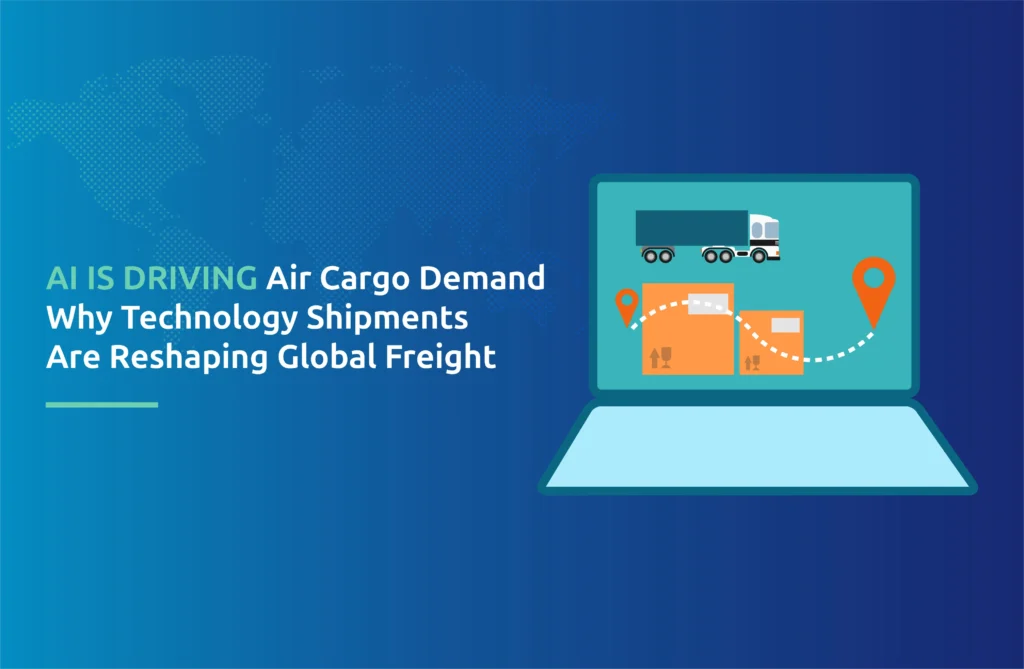
Artificial intelligence is transforming more than the way companies use technology. It is also shifting how that technology moves around the world.
The need for GPUs, servers, networking hardware, storage systems, and other data center hardware has surged due to the rapid growth of AI applications. Many of these things require vast amounts, are quite expensive, and take a lot of time. Because of this, companies are mostly switching to air freight when speed is more important than cost of shipping.
This shift is making it easier for logistics companies to handle high-value technology shipments while also opening up new avenues for air cargo.
AI Hardware Is Creating New Air Cargo Demand
AI systems need significant computing power. Data centers are therefore investing mainly in GPUs, AI servers, updated processors, switches, cables, storage equipment, & cooling systems.
These products often ship across some countries before reaching their final destination. A processor may be developed in one country, built into a server elsewhere, & then shipped to a data center in another country.
Planned capacity and construction timetables may be impacted when a data center is awaiting critical equipment. Because of this, air freight is a desirable choice for last-minute goods.
Why Technology Companies Prefer Air Freight
Air cargo is mainly more costly than ocean transportation. However, technology companies may accept the higher cost when the value of speed is greater than the additional freight cost.
By air, a shipment of expensive AI equipment can get at its destination considerably more quickly. By doing this, businesses may reduce wait times and maintain the timeliness of building, installation, and deployment initiatives.
A modest shipment of modernized networking hardware or CPUs can be highly valuable. Compared to big, inexpensive commodities, such cargo might be more economical for air travel.
This does not mean that all technology shipments will take airplanes. Large and reliable amounts of equipment can still be transported by water. Air freight is especially useful when companies have to meet tight deadlines, shortages of supply, new product launches, or urgent replacement needs.
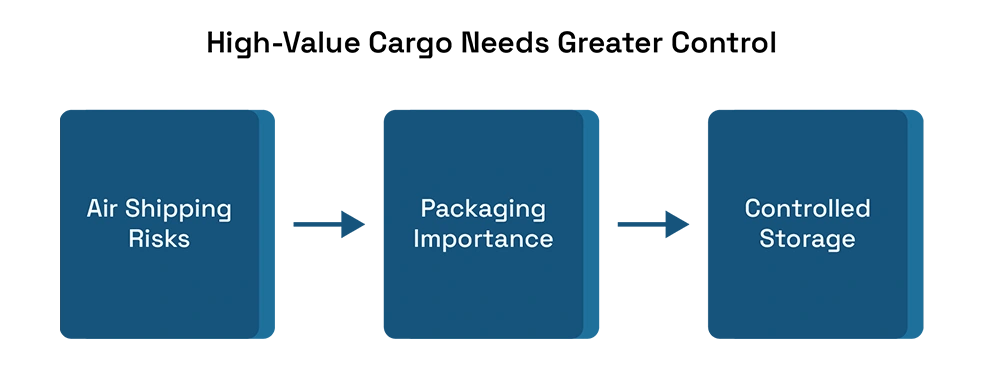
High-Value Cargo Needs Greater Control
Hardware for AI is not only cargo. Millions of dollars’ worth of equipment can be transported in some shipments in a comparatively tiny physical area.
During air shipping, companies may need secure coordination, safe handling, controlled storage, & enhanced tracking. Because sensitive electronic equipment might be damaged by crashes, moisture, temperature changes, or improper management, packaging is mainly important.
Logistics companies may provide specialized management and last-mile delivery services for mainly delicate equipment. The quantity of handoffs between the airport and the data center can be minimized with the use of these services.
Customs Compliance Is Another Challenge
Speed does not remove customs requirements.
Shipments of technology may added with critical product verification, import laws, taxes, duties, licensing procedures, & document. The customer does not gain anything from a shipment that arrives on time but gets stoped at customs.
For organization shipping equipment across many markets, this ishighly important.
Before shipping, correct product data, tariff verification, commercial invoices, packing lists, & other needed paperwork must be done. Additional regulatory restrictions may also be applicable, depending on the product and destination.
For AI network projects, customs planning should therefore be considered alongside freight planning rather than after the cargo has already left the supplier.

What This Means for Global Freight
The development of AI is creating a new pattern in global freight. Technology products are becoming an increasingly important part of time-sensitive cargo flows, mainly as data center investment continues.
For logistics teams, the challenge is not simply finding an aircraft with available space. They need to consider transportation costs, customs needs, safety , packaging, delivery schedules, & the value of the equipment being moved.
As AI networks expand, these needs are likely to become even more important.
Conclusion
AI is developing demand for computing networks on an international scale, and that demand is having a direct effect on freight movement. GPUs, servers, networking equipment, & other technology products often need to reach their final location quickly, making air cargo an important option for time-sensitive shipments.
Ocean freight will continue to manage high volumes of equipment, but air freight can provide the speed & flexibility needed when deadlines are tight.
For companies building & developing AI infrastructure, logistics is becoming part of the technology strategy itself. Getting important equipment delivered safely, properly, & on time can be just as important as getting the equipment manufactured in the first place.
Did you know?
The global race to build artificial intelligence is redrawing Asia’s air cargo map, prompting airlines to redesign networks around growing semiconductor manufacturing hubs as cross-border e-commerce loses momentum.
FAQs
Why is AI increasing air cargo demand?
AI requires large amounts of specialized hardware, including GPUs, servers, and networking equipment. Some of this equipment needs to reach data centers quickly, increasing demand for air freight.
Is air freight better than ocean freight for AI equipment?
Not always. Air freight is faster, while ocean freight is generally more economical for large and less time-sensitive shipments.
What AI equipment is commonly shipped by air?
GPUs, processors, AI servers, networking equipment, storage systems, replacement parts, and other high-value technology components may be transported by air.
Why is customs compliance important for technology shipments?
Incorrect documentation, product classification, or missing regulatory requirements can delay shipments even when air transportation is fast.
Will AI continue to affect global freight demand?
As investment in AI infrastructure and data centers grows, demand for the transportation of related technology equipment is likely to remain an important factor in global freight markets.