Introduction
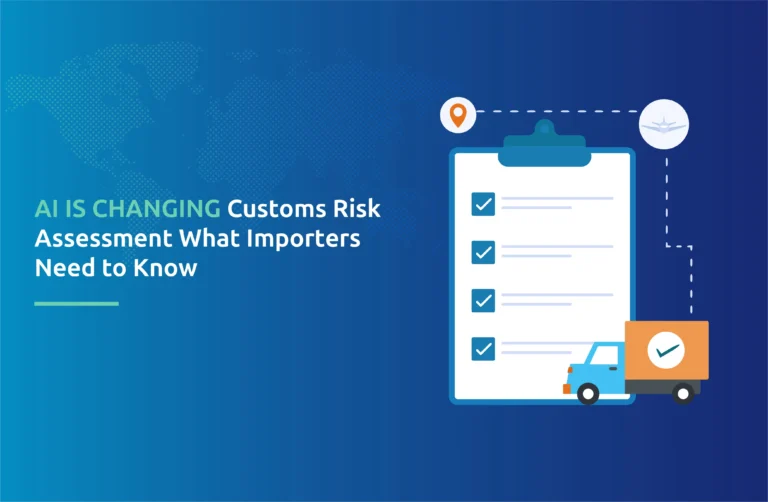
International trade generates huge volumes of shipment data every day. Customs authorities check declarations, invoices, cargo details, origin information and product classifications. With an increase in the volume of trade, traditional methods of inspection may become difficult to manage.
To manage this workload, border authorities are increasingly relying on AI, data analytics, automation and risk-based screening to flag shipments that may need a closer look.
Consequently, importers and exporters rely heavily on shipment data accuracy. Incorrect descriptions, value, classification, country of origin or documentation may result in increased scrutiny and possible delays in clearance.
How AI is Changing Customs Screening
Traditionally customs screening has been based on declarations, document checks, inspections and defined risk profiles. Newer systems may take this a step further, analyzing large volumes of information at speeds far beyond manual systems.
AI and advanced analytics can evaluate data from customs declarations, shipping documents, past transactions, trade routes and other available data sources. The system can then detect trends that could be different from the normal trading activity
The objective is not simply to inspect more shipments. It is to focus customs resources where potential risks are more likely to exist while allowing lower-risk shipments to move through the border process more efficiently.
What Data Do Customs Authorities Analyze?
The utility of AI-based screening is heavily reliant upon the quality & diversity of data available to customs. Though there are different systems and data sources in different countries, there are a number of types of information that are commonly relevant.
Shipment declarations include key details of the goods, such as product details, quantities, values, country of origin and tariff classifications. Then customs systems can cross-reference this information with other records to detect mismatches.
Also transport information can add context. Details such as the carrier, routing, ports of departure and arrival, container information, and shipment history can contribute to a broader risk assessment.
Further detail of the transaction may be contained in the commercial documents. Invoices, packing lists, purchase information, and other records can help authorities determine whether the declared shipment information is consistent.
Risk-Based Screening at the Border
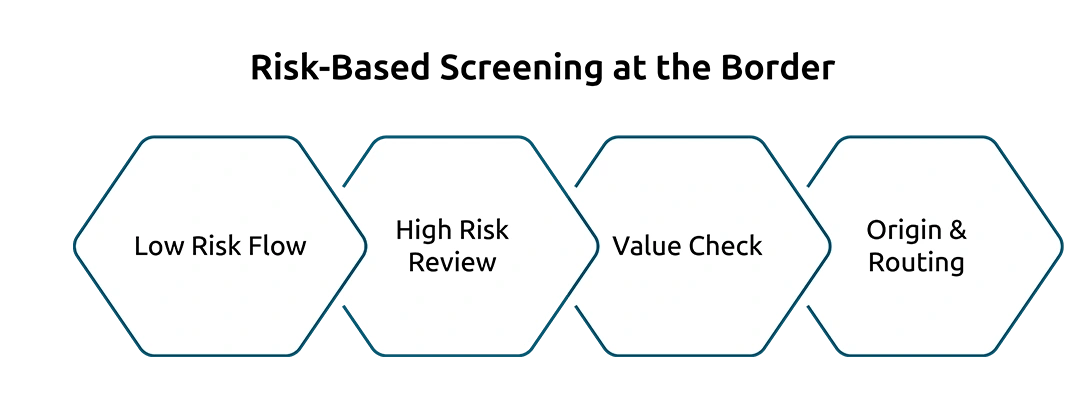
One of the biggest advantages of data-driven customs is risk-based screening. Instead of treating every shipment in exactly the same way, authorities can prioritize consignments according to identified risk factors.
A shipment considered low risk may move through the customs process with limited intervention, subject to the rules of the relevant jurisdiction. A shipment with several indicators of potential risk may receive additional documentary review or physical inspection.
Risk assessment can be based on multiple factors, not on just a single issue.For example, customs authorities may compare the declared product to the tariff classification, value, origin, importer history and routing information.
This approach allows customs agencies to make better use of limited inspection resources. It can also reduce unnecessary physical examinations of routine shipments while directing attention toward transactions that warrant closer review.
Finding Inconsistencies and Unusual Patterns
Standard artificial intelligence systems tend to be especially useful when there is a need to compare large quantities of data. A human officer may not be able to identify a pattern across thousands of transactions in the same time frame as automated systems can by analyzing large data sets.
For example, repeated declarations involving unusually low values may trigger further attention. Similarly, differences between a product description and its declared classification could become a risk indicator.
Also artificial intelligence can help you to identify changes in trading patterns. A company that suddenly begins importing a new category of goods, changes its usual routing, or reports transaction details that differ significantly from its historical activity may receive additional scrutiny.
These indicators do not necessarily indicate a violation of customs rules by a shipment. They are more appropriately viewed as signals that can help customs officers decide where additional investigation may be necessary.
AI and Customs Paperwork
Documentation remains a central part of global customs clearance , even as technology becomes more advanced.
Systems with AI capabilities can evaluate and cross-reference information from electronic declarations and supporting documents. This makes consistency across documents increasingly important.
For businesses a product description needs to be a true description of the goods being shipped. The declared value, quantity, country of origin, and tariff classification should also be supported by appropriate records.
Example: In case of a deviation between invoice and customs declaration, questions may arise which need to be clarified. Similarly, vague product descriptions can make it harder for authorities to determine what is being imported or exported.
The Implications of AI-Driven Customs for Importers
The increasing use of data-driven customs screening means businesses should pay closer attention to the accuracy of their shipment information.
Importers or exporters should make sure that commercial documents , customs declarations, product descriptions, values, classifications, and origin information are consistent & supported by appropriate records.
This is particularly the case with shipments of particular equipment. IT and telecommunications equipment, servers, networking equipment, GPUs, medical devices, automotive components, and aviation equipment can involve detailed product specifications and classification considerations.

Conclusion
As the move to data-driven customs becomes more entrenched, accuracy & consistency of documentation will be increasingly important for importers & exporters. Product details , tariff classifications, values, origin details, and supporting records should accurately reflect the shipment.
AI does not replace the need for customs compliance nor does it speed up customs clearance. But it does give regulators more tools to deal with the rising levels of trade and to target their resources more effectively. As border screening becomes increasingly digital , companies that understand this changing environment and maintain accurate shipment data will be more adept at navigating customs processes.
Did You Know?
In May 2026, more than 280 Customs representatives and experts joined the WCO’s discussions on disruptive technologies and data-driven Customs modernization.
Frequently Asked Question
1. What is AI-powered customs screening?
AI-enabled customs screening employs AI, data analytics and automated systems to screen information about shipments or flag trades that may need to be reviewed further by customs.
2. What shipment information can customs authorities analyze?
Country & its customs system rely on authorities to review declarations, descriptions of products, tariff classifications, values, origin information, shipping details , commercial documents & historical trade data.
3. Does an AI risk score mean a shipment has broken customs rules?
No. Sometimes a risk score or automated alert will prompt a further assessment. Customs officers may review documents, shipment details , & other proof before deciding whether additional action is required.
4. How should organizations ready for customs screening in the era of AI?
They must offer consistent and correct information on shipments involving product details , values, classifications, quantities and origin. Supporting documentation should be retained and available as and when necessary.
5. Will AI make customs clearance faster?
AI is able to assist customs authorities in identifying shipments that are lower risk and to target inspection resources to higher risk transactions. But clearance times are still dependent on the destination country’s regulations, shipment details, documentation, customs procedures and if further review is needed.