Navigating Global Markets With Confidence
Automotive manufacturing and trade are integral components of the global economy, providing vehicles and related equipment that satisfy consumer, manufacturer, and repair market demands. This industry’s global presence extends far beyond just car production; its scope includes everything from parts and components production to machinery and specialized equipment.
International automotive trade, comprising vehicle components, manufacturing machinery, and parts for cars, is an integral component of growth, invention, and economic expansion in many nations around the world. Automotive businesses need a solid understanding of trade regulations, logistics, and compliance to expand into foreign markets and ensure successful, cost-efficient trade operations.
Trade Compliance Best Practices for Automotive Businesses
Every automobile company involved in global trading must follow to trade compliance. Businesses should use the proper HS codes, create correct export documents, and follow to each destination country’s customs laws. Delays and fines can be avoided by maintaining current records and checking shipments before to export. The shipping process is also made simpler by working with knowledgeable logistics and compliance partners, which allows the safe and efficient transportation of automotive across international boundaries.
Automotive Machinery and equipment
Manufacturing equipment used in manufacturing & assembly is vitally vital to the global automotive supply chain. From stamping presses, welding robots, and coating equipment, to stamping presses; stamping presses, welding robots & coating equipment all play key roles in producing high-quality cars. North American vehicle production lines may rely on European suppliers for robotic welding systems while Asian assembly plants might purchase equipment from U.S. suppliers; highly specialized pieces are often produced locally with cutting-edge technological capabilities before being exported globally to various auto factories worldwide.
The automotive manufacturing equipment market plays an important role in the global economy of automobiles, helping the easy production and assembly of vehicles worldwide. With the constant demand for innovation, the automotive production market continues to develop, driven by the need for specialized equipment and machinery that supports vehicle making at scale. As countries engage in cross-border trade to source materials and technology, the interplay between global markets becomes important to ensuring that automotive manufacturers stay complete and able to meet consumer demands in various regions.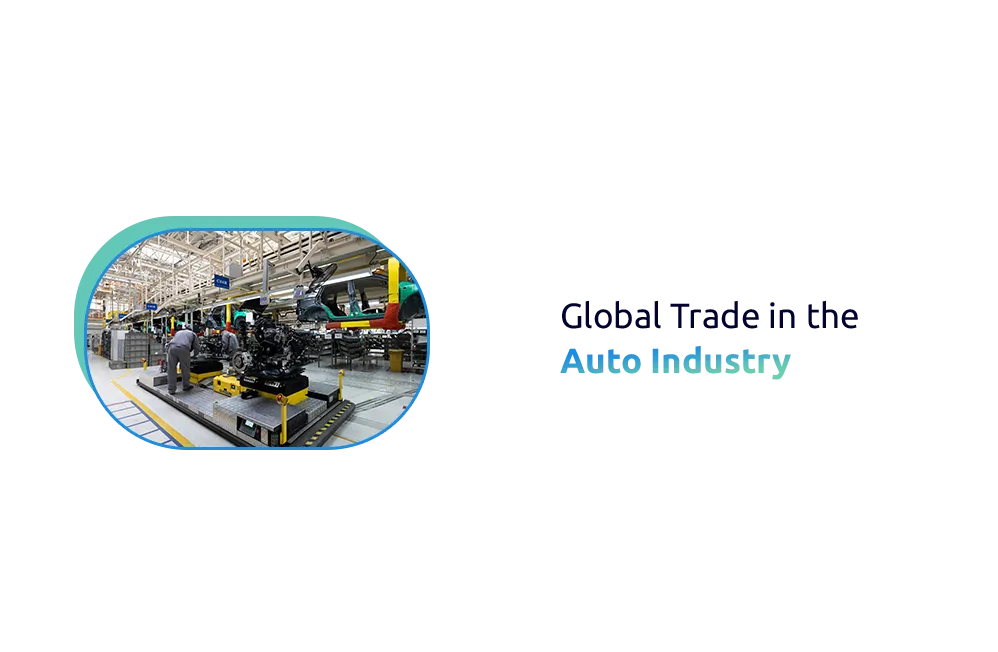
Compliance with International Automotive Trade Rules
Every country has different rules for importing and exporting automotive equipment. Businesses follow these rules to avoid delays and problems. They also need the correct documents and product details. Following rules helps goods move smoothly through customs. Many businesses use Exporter of Record (EOR) services to handle compliance and make global shipping easier.
This also helps businesses avoid fines and legal issues. Proper compliance makes global trade safer, faster, and more reliable.
Strengthening Automotive Supply Chains Through Smart Warehousing & Global Logistics
Efficient storage and movement of automotive components rely heavily on advanced warehousing solutions, real-time inventory tracking, and optimized “in transit” operations. As automotive companies deal with thousands of SKUs—from engines and transmissions to EV batteries and electronic modules—they depend on reliable warehouse management services and storage facilities capable of handling sensitive, high-value equipment. Modern automotive logistics integrates multimodal transport, green logistics practices, and AI-powered demand forecasting tools to reduce delays, manage customs clearance efficiently, and maintain resilient supply chains. By combining strategic warehousing with strong freight forwarding support, manufacturers can improve their MRO supply chain, reduce operational risks, and meet production timelines across global markets.
Logistics and Supply Chain Complexity
Given the scale and scope of the global automotive trade, logistics plays a pivotal role in ensuring timely and cost-effective deliveries of goods. Automotive manufacturers rely on an ecosystem of suppliers, distributors, and logistics providers to transport components and machinery across borders; for instance, one U.S.-based automotive company might source parts from Germany before assembling them in Mexico before finally shipping out its completed product globally. Coordinating supply chains requires careful coordination to prevent delays, lower costs, and comply with all trade regulations in place.
Why Automotive Companies Need Expert Exporter of Record (EOR) & Logistics Support
In the automotive industry, international expansion depends on seamless customs clearance, accurate classification under HS codes, and fully compliant export documentation. Exporter of Record (EOR) services help manufacturers and suppliers avoid costly delays by managing trade compliance, duty requirements, and cross-border paperwork for high-value automotive parts, MRO equipment, and manufacturing machinery. With global supply chains becoming more complex—especially as vehicles rely on electronic components, sensors, telecom modules, and EV technology—automotive companies increasingly depend on professional freight forwarding services, DDP shipping solutions, and warehousing services to maintain “in transit” visibility and meet just-in-time production deadlines. By partnering with an experienced EOR and freight forwarder, businesses can reduce risks, optimize multimodal transport routes, and ensure smooth deliveries across regions, even in markets with strict customs regulations and advanced trade compliance frameworks
Conclusion
Automotive manufacturing is an integral component of global trade, and its success rests on effective cross-border cargo movement. Businesses engaging in global trade often need help with conducting this activity – from complying with complex regulations to overseeing logistics and supply chains. By hiring Exporter of Record (EOR) services, automotive businesses can reduce international commerce risks while remaining compliant with local and global regulations.
One Union Solutions’ EOR services specialize in tailoring export processes to streamline procedures and broaden the global reach of businesses in the automotive industry. Let us handle the complexity of international trade so you can focus on expanding your business in this fiercely competitive automotive marketplace.
Did You Know,
According to the World Trade Organization/WTO, annual worldwide automotive exports total approximately $1.5 trillion and make one of the key sectors for global trade.
FAQ’s
What part does international trade play in the automotive sector?
Ans: International trade drives the global automotive sector by facilitating the movement of vehicles, parts, and specialized equipment across borders to meet global demand for manufacturing products.
How has international trade affected automotive supply chains?
Ans: Trade connects manufacturers with suppliers worldwide, facilitating the steady supply of essential parts such as engines and transmissions that may originate in multiple countries.
What are some challenges encountered in global automotive trade?
Ans: Companies operating globally face many hurdles to their trade activities, including regulatory compliance issues such as tariffs and customs procedures that must be observed so as to avoid delays that could prove costly in terms of delayed transactions or financial implications.
What strategies can automotive companies implement to enhance global trade operations?
Ans: Partnering with an Exporter of Record service can streamline logistics, facilitate compliance, and simplify international trade for automotive companies.
Why is the automotive industry so dependent upon international trade?
Ans: As automotive production spans across multiple nations, international trade plays an essential role in providing raw materials, components and equipment essential to driving innovation and global collaboration.