Ready to grow globally? Fill out our inquiry form, and let’s make international trade easier for you!
Insight
International trade plays a critical role in today’s interconnected global economy, benefitting industries across many different industries worldwide. One such sector that sees massive international trade success is pharmaceuticals; an increase in medication and healthcare products around the globe has spurred global trade, leading to increasingly complex and dynamic trading environments for pharmaceutical companies as they must navigate regulatory, logistical, and market-related challenges to deliver products on time across borders.
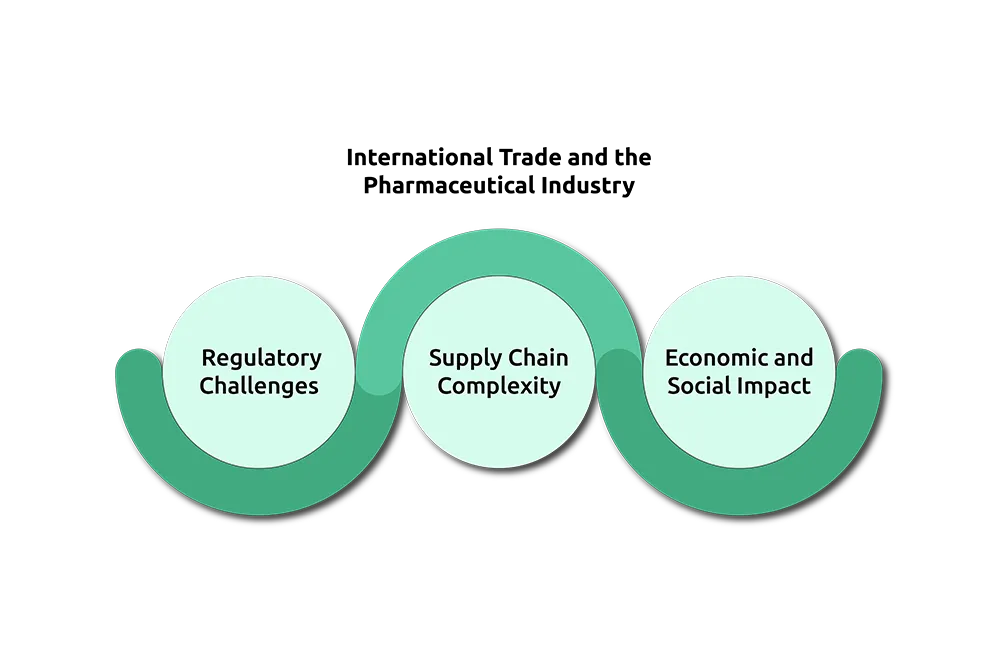
To operate successfully, pharmaceutical companies must adhere to stringent international regulations and quality standards. Efficient logistics and cold chain management are essential to protect product safety during transport. Trade agreements and customs processes also influence costs and delivery timelines. Together, these factors shape how pharmaceutical companies manage global supply chains.
Internationalization of Pharmaceutical Industries
Pharmaceutical industries operate globally. Global demand has seen significant surges due to advancements in healthcare technology & medicine over the last several decades, fueled by strong global growth rates for sales of prescription medicines. As populations age & increase, demand for lifesaving drugs and innovative therapies has never been higher.
Pharmaceutical businesses can import and export medical equipment to meet global demand because of international trade. The United States, Switzerland, Germany, & India, the topmost exporter of pharmaceutical supplies, contribute almost one-third of the global pharmaceutical industry’s over $1.5 trillion in sales in year 2022.
Challenges & Regulatory Compliance
One of the most difficult aspects of global pharmaceutical trading is guiding regulatory norms. Every nation has its laws ruling the import and sale of pharmaceuticals, and organizations such as the FDA, EMA, and WHO enforce stringent standards. Product safety is only one aspect of compliance; other aspects include labelling, packaging, and documentation, all of which can differ by location. Many pharmaceutical businesses join with export compliance specialists to get past these obstacles & guarantee timely, seamless shipments while avoiding expensive delays or fines.
Supply Chain Management and Logistics
Another significant aspect of the global pharma trade is logistics. Pharmaceuticals are delicate goods which need to be handled & transported securely. Certain pharmaceuticals require specific storage & transport conditions, including medical equipment that are sensitive to temperature. From manufacturing plants to the final distribution locations, maintaining the cold chain is crucial.
Pharmaceutical companies frequently have to handle the complexities of global freight as well, such as inventory management, customs processes, & transit delays. Because the pharmaceutical industry is so dynamic, businesses frequently have to come up with innovative and effective solutions to satisfy demand across different geographies. This could mean working with marketers and logistics partners who specialize in pharmaceutical goods, negotiating new contracts, or identifying alternate transportation routes.
Trade Agreements and Market Access.
Trade agreements are also important in determining the face of global pharmaceutical business, with companies enjoying lucrative opportunities to grow and have their operations automated. Through bilateral and multilateral agreements that include the EU-US Trade and Technology Council, agreements are being established that will make working between nations easier, by simplifying procedures and lessening tariffs on pharmaceutical firms. These agreements contribute to stabilizing markets, which is extremely important to make sure constant supplies of pharmaceutical equipment across borders.
In addition, Free Trade Agreements such as the Regional Comprehensive Economic Partnership significantly impact the global rankings of the pharmaceutical industry. The FTAS, through minimization of import/export taxes, expediting customs procedures, and opening new markets that were previously out of reach, create an opportunity for pharmaceuticals to cover a larger global territory. The global trade climate in the pharmaceutical industry for 2025 is also likely to improve because these frameworks will enhance greater market access, make the pharmaceutical products more available and affordable, and broaden markets to new consumers.
Why Prefer One Union Solutions?
We at One Union Solutions are aware of how complex the international pharmaceutical trade may be. We are here to assist. We have developed into a vital partner for pharmaceutical businesses looking to expand internationally thanks to our in-depth knowledge of regulatory restrictions, supply chain difficulties, and global compliance needs.
Our tailored solutions aim to make life simpler; whether that means navigating red tape efficiently, optimizing logistics, or opening doors into new markets so that you can focus on providing vital healthcare products around the globe – let us be your partner as you expand your global reach!
Conclusion
International trade is vital to the pharmaceutical industry’s ability to meet global healthcare demands with medical equipment. Yet navigating its complex regulations, logistics, intellectual property protection, and market access requirements can be daunting; pharmaceutical companies must adapt quickly as the industry continues to shift while adhering to all relevant international laws and building resilient supply chains if they hope to remain successful in meeting the ever-increasing demand for quality healthcare worldwide. Trade agreements, regulatory cooperation, and innovation provide avenues for global pharmaceutical firms to meet this global need for quality healthcare products worldwide.
Did You Know
By 2024, the pharma device market is expected to generate an astounding US$508 billion in sales.
FAQs
How does international trade support pharmaceutical innovation?
Ans: Global trade allows pharmaceutical companies to access specialized raw materials, advanced research facilities, and global partnerships that support drug development and innovation.
Why is regulatory compliance critical in the pharmaceutical trade?
Ans: Strict compliance ensures patient safety and helps companies avoid shipment delays, product recalls, and legal penalties when trading medicines across borders.
What role do cold chain solutions play in pharmaceutical imports and exports?
Ans: Cold chain solutions maintain required temperature conditions during storage and transport, protecting the effectiveness and safety of temperature-sensitive medicines.
How do customs delays impact pharmaceutical supply chains?
Ans: Customs delays can lead to product spoilage, shortages, and higher costs, especially for time-sensitive or temperature-controlled pharmaceuticals.
Why do pharmaceutical companies use Importer of Record services?
Ans: Importer of Record services help pharmaceutical companies meet complex customs and regulatory requirements, ensuring smooth clearance and timely delivery of medical products.