
Rising Global Risks Reshaping Supply Chains
The global supply chain environment is facing unprecedented pressure due to semiconductor shortages, geopolitical instability, customs delays, and supplier disruptions across major trade regions. Automotive manufacturers, medical equipment providers, aviation companies, and IT infrastructure businesses are having a hard time. This is because they are finding it really difficult to get the components they need. The automotive manufacturers are struggling to get raw materials on time. Semiconductor dependency, especially in automotive and advanced technology sectors, has exposed vulnerabilities in traditional sourcing models, forcing businesses to rethink procurement strategies and supplier networks. At the same time, changing international trade regulations and port congestion continue to slow down cross-border shipment movement, increasing uncertainty for import export businesses worldwide.
The problem of cyberattacks is getting bigger and bigger. Cyberattacks on logistics infrastructure and digital trade systems are really worrying. These cyber risks can really hurt our ability to keep things running smoothly. If someone gets into our systems without permission or if we get hit with ransomware or if our transportation management systems go down it can make shipments late. Cause problems with sensitive international operations. Cyberattacks on logistics infrastructure and digital trade systems are an issue.
These challenges make businesses invest in risk detection technologies, predictive analytics and strong logistics plans. This helps them keep track of their trade networks. Companies that change fast through change and active supply chain improvement are in a better place to handle disruptions. They can also make sure they are stable in the run and they do this by adapting and optimizing their supply chains.
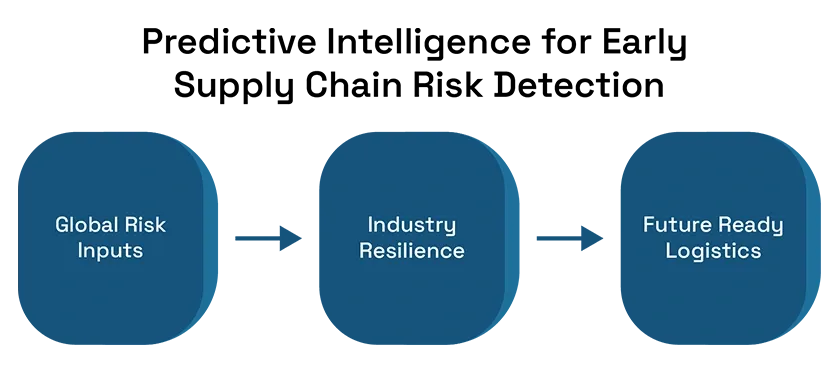
Predictive Intelligence for Early Supply Chain Risk Detection
These days companies that operate across countries are changing the way they manage their supply chains. Now they are trying to use ideas to predict what will happen and run their operations in a smarter way. Instead of waiting for problems to affect deliveries, systems that use AI look at current trade information such as how well suppliers are doing, the best routes for transportation, the weather, what customs are doing and changes in politics to find risks before they get worse. This helps them see issues before they cause problems with shipments, Weather conditions and customs activity are also important. Predictive AI is really useful for businesses because it helps them find out about problems beforehand. This means businesses can do something about these problems quickly. Predictive AI is a way to make sure the supply chain is working well. It helps businesses see what is going on everywhere in the world. It stops things from going wrong in their logistics networks. This is important because it saves them money and helps everything run smoothly. Supply chain optimization is what it is about and Predictive AI is making it better.
For industries such as automotive, aviation, IT, and medical equipment, using intelligence to forecast things is also very helpful for managing the things they have in stock and the orders they get. This helps these companies keep running even when there are problems with trade. When businesses use tools to keep an eye on things and combine these tools with the process of getting things through customs and shipping things around the world they can get orders done faster, deal with problems better and make better choices when things are changing really fast in the world of international trade.
Cybersecurity and Digital Protection in Modern Supply Chains
As global supply chains we see that they are getting more connected to computers and the internet. This means that cybersecurity is really important, for managing risks when we do business with countries. Logistics networks, smart warehouses, transportation systems, and customs platforms are increasingly vulnerable to cyber threats such as ransomware attacks, data breaches, and unauthorized system access. A single cyber incident at a port, warehouse, or supplier facility can disrupt shipment visibility, delay cargo movement, and impact entire supply chain operations across automotive, aviation, IT, and medical industries.
Businesses have a lot of problems to deal with. So they are using systems that look for things that’re not normal. These systems are always watching what is happening on the network. Companies need to have good digital systems that work well across different countries. They also need to be able to predict problems and use automation to fix problems. This helps companies be strong and able to deal with problems. It also helps them keep their trade information safe. They can keep importing and exporting to other countries without any problems.
Industry-Specific Applications of AI-Driven Risk Detection
AI-driven risk detection is really changing the way supply chain operations work in different industries. It does this by giving us a view of what is happening right now predicting what might happen next and help us react faster. For example in the sector risk detection helps car makers see if they will have enough semiconductors. This is important for making medical equipment and devices safe to use when they are exported to other countries. Risk detection also helps make sure that all the rules are followed when these things are being transported.
In aviation, AI-powered platforms improve visibility for critical spare-part shipments, helping airlines and maintenance providers reduce downtime and maintain operational continuity.
The IT and data center businesses are helped by the movement of very important equipment. This is done with the help of ways to track the shipments, protect them from cyber threats and find the best routes. These special uses show how artificial intelligence helps the supply chain work better. It makes the businesses stronger, improves the way things are moved around and helps people make decisions when trading with other countries. The IT and data center businesses really benefit from this.

Conclusion
The future of trade depends on smart supply chain systems that use advanced AI. These systems need to be connected and able to withstand disruptions. As trade changes businesses must update their operations. They have to use tools to keep up because traditional ways of working are no longer enough and AI helps businesses in their supply chain. It also helps them predict and prepare for problems. Intelligent systems ensure businesses follow the rules when trading across borders.
Companies that work in the aviation and medical and IT industry are using new technologies to make their supply chains stronger, improve operational agility, and respond faster to market disruptions. In the future companies that put money into supply chains that’re ready for and use automation and real-time monitoring and make decisions based on data will do better. These companies will be able to grow for a time and follow rules more easily and expand all around the world.
DID YOU KNOW
“Enhances prediction accuracy by 15% compared to single models, particularly useful in financial risk scenarios.”
FAQs
1. How does AI identify cross-border supply chain risks?
AI analyzes vast datasets (market trends, weather, supplier performance) to forecast potential disruptions before they occur.
2. What are the key benefits of AI in this context?
Creates digital twins for end-to-end visibility of goods crossing multiple borders. Automates HS classification, customs documentation, and duty calculations to ensure regulatory compliance.
3. What specific risks is AI helping to manage in 2026?
Monitoring political risks, sanctions, and trade policy shifts. Continuously monitoring credit risks of suppliers across all tiers, as described in the Rubix Early Warning System (EWS) mentioned in Vayana’s analysis.
4. What are the challenges in implementing AI for this?
AI requires high-quality, structured, and connected data, which is often difficult to obtain across siloed international partners.
5. How should organizations prepare their risk management?
Conduct Regular Assessments: Use tools that incorporate AI analytics to constantly re-evaluate risk.