The Growing Role of IOR in IT and Telecom Trade
The quick growth of global trade is changing the IT and telecom industries, making Importer of Record (IOR) services important for approval and smooth international work. By managing import duties and tariffs, confirming adherence to difficult regulations, and working with freight logistics services and white glove shipping services, IOR providers help businesses deploy vital infrastructure such as 5G equipment, IoT devices, and edge computing systems smoothly across borders. Their expertise minimizes delays, supports sustainability goals, and strengthens supply chain dependance, empowering organizations to expand globally while staying compliant and effective in today’s competitive digital trade environment.
As technology deployments become faster and more complex, companies need reliable partners to manage cross-border compliance. IOR services reduce operational risk by handling regulatory changes and documentation requirements. This allows IT and telecom businesses to focus on innovation and network expansion. With expert IOR support, global deployments remain efficient, secure, and on schedule.
Developments in Technology and Market Growth
5G and Beyond
The expansion of 5G networks is increasing demand for telecom networks across global markets. Businesses importing 5G equipment must address country-specific technical & regulatory requirements. Importer of Record services help support timely deployment by managing import documentation and customs processes.
Internet of Things (IoT)
The rapid growth of IoT is increasing global shipments of connected devices across multiple industries. Importing these products often requires correct documentation & compliance with destination-country rules. IOR services help businesses handle these import requirements for smoother market access.
Edge Computing
The growth of edge computing is driving demand for servers and regional data center equipment worldwide. Importing this infrastructure requires careful coordination of customs documentation and import procedures. IOR services help support efficient cross-border deployment of edge computing equipment.
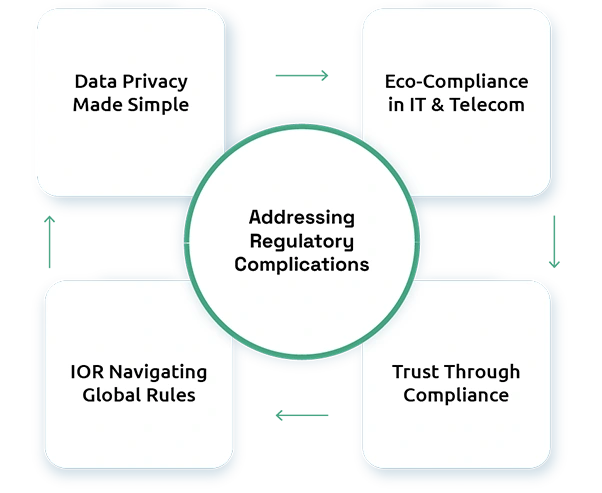
Addressing Regulatory Complications
Product Safety and Environment Requirements
Imported IT and telecom equipment may be subject to a country’s product safety and environmental requirements. These might be electrical safety standards, RoHS restrictions on hazardous substances or WEEE requirements for electronic waste depending on the market and product. Organization should check the applicable rules or documentation needed before shipping. An IOR may support import formalities, but product compliance or certification obligations rely on the applicable regulations and parties involved.
Data Protection and Privacy Rules
Businesses that process personal data may be governed by data protection regulations such as the EU’s GDPR and California’s CCPA. Simply appointing an Importer of Record does not automatically satisfy these laws. IT and telecom companies need to assess their data-handling activities separately and make sure that imported equipment meets the relevant customs and product requirements in the destination market.
Cybersecurity and Equipment Import Requirements
Telecom hardware, network devices and servers may be subject to product-specific security rules, technical standards or import restrictions in certain markets. Requirements vary by country and equipment type. Before shipment, the organization needs to determine whether approvals, conformity assessments or supporting technical documents are required. An IOR can support with applicable import details or customs processes while specialist product approvals may require separate action.
Adjusting to the Dynamics of Global Trade
Reducing Trade Wars’ Effects: Trade wars and tariffs are becoming a more prominent feature of the modern global trade landscape, which presents serious difficulties for cost structures and supply chains. IOR provide priceless strategic advice, navigating these uncharted waters with their extensive understanding of trade agreements, tariff classifications, and exemption tactics.
Even with trade barriers, their expertise helps to keep pricing competitive & improve market entry strategies.
Boosting Supply Chain Resilience: Recent global disruptions have highlighted the necessity of strong supply chains. IOR services are now providing strategic advice on building resilient & flexible supply chains in addition to compliance services. IOR assists companies in preventing disruptions, reducing risks, and preserving operational continuity in the face of uncertainty around the world by utilizing predictive analytics and diversification techniques.
Trade agreements of digital goods: As digital trade has grown, new trade agreements have been formulated to help with e-commerce and cross-border data flows. IOR play a crucial role in guiding companies through these digital trade agreements, guaranteeing adherence to laws governing cross-border e-commerce, and optimizing the chances these agreements present for international market expansion.
Conclusion
Global trade is changing fast because of new rules, new technology, & shifting market needs. In this environment, the Importer of Record (IOR) has become more important than ever for the IT and telecom industries. IOR help companies manage international shipments, follow all legal requirements, & manage difficult logistics with ease.
As businesses continue to grow across borders, working closely with an IOR will be key to their success. This partnership supports innovation, ensures smooth & compliant imports, and strengthens global connectivity. In the future, the strong relationship between companies & IOR will play a major role in overcoming challenges & taking advantage of new opportunities in the global IT & telecom trade.
Did You Know?
The U.S. government classifies telecommunications equipment as a priority import category, requiring compliance with customs and applicable regulatory requirements before market entry.
FAQ
What role will IOR play in the future of the IT and telecom trade?
IOR services will manage import compliance for IT and telecom equipment across borders. They will help companies expand into new markets without facing legal or customs challenges.
Can businesses import IT and telecom equipment without a local entity?
Yes. Businesses can use an Importer of Record (IOR) to import IT & telecom equipment into many countries without establishing a local legal entity, subject to destination-country regulations.
How does IOR support faster deployment of IT and telecom equipment?
IOR providers handle customs clearance, duties, taxes, and documentation at the destination. This allows equipment to be delivered faster and projects to start on time.
Which industries will benefit most from future IOR trends?
Telecom operators, cloud service providers, data centers, and IT companies will benefit the most, as they depend on fast and compliant cross-border equipment movement.
What import challenges do IT and telecom companies commonly face?
IT and telecom companies often face customs documentation requirements, changing import regulations, product certifications, and shipment delays. An Importer of Record helps manage these requirements for smoother international imports.