Medical equipment repairs and warranty replacements can be more complicated than ordinary return shipments. A diagnostic device, laboratory instrument, patient monitor, imaging component, or other medical product may be subject to customs requirements as well as medical-device regulations in the destination country.
An Importer of Record (IOR) can help manage the importer role for eligible shipments where a company does not have a suitable local importing structure. However, an IOR does not automatically replace a manufacturer’s registration, product approval, local regulatory representative, or other authorization that may be required.
For medical equipment, customs planning and regulatory review should therefore happen together before the shipment moves.
Why do medical equipment returns require careful planning?
Depending on the product, manufacturer, intended purpose, and target market, medical equipment may be subject to regulations. A shipment’s ability to be approved may also depend on the product’s status and importer eligibility.
The purpose of the shipment matters too. A warranty replacement is different from equipment being sent abroad for repair. A replacement spare part may have different requirements from a complete medical device.
Product identity is another important factor. Model numbers, serial numbers, manufacturer details, and accurate product descriptions can help customs and regulatory authorities connect the shipment with the correct product records.
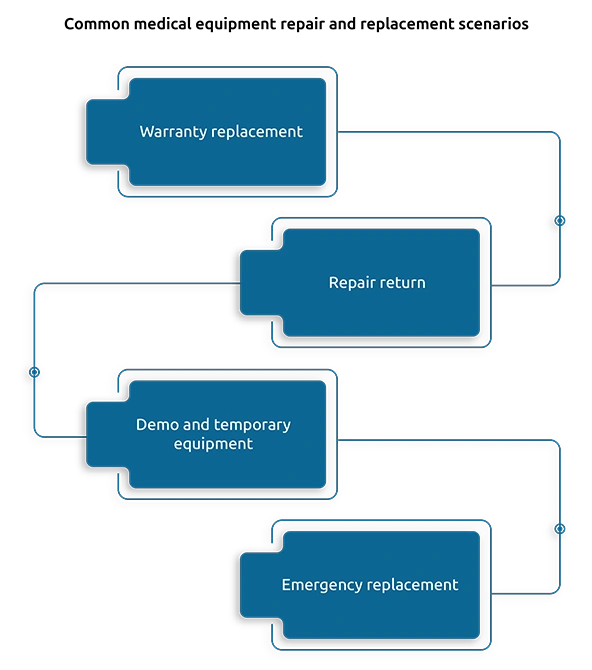
Common medical equipment repair and replacement scenarios
Warranty replacement
A manufacturer may send a replacement device or component to a hospital, distributor, or service organization at no charge. A shipment being provided under warranty does not necessarily mean that normal import requirements disappear.
The shipment may still require an importer, customs declaration, valuation information, and supporting product documentation. The customs treatment of a no-charge replacement should be checked under the destination country’s rules.
Repair return
Equipment may be exported to a manufacturer’s service facility and later returned after repair. The export and re-import should be documented consistently so that the customs authorities can understand what happened to the equipment.
Some customs systems provide special procedures for goods undergoing repair. For example, the European Union’s outward processing procedure can cover goods temporarily exported for processing and then re-imported, with specific conditions for customs-duty relief.
Service parts
Medical-device service may involve replacement boards, sensors, power units, modules, probes, or other components. These parts should be described correctly rather than simply being labelled as generic electronics.
The part’s identity, intended use, classification, and regulatory status may all affect the import process.
Demo and temporary equipment
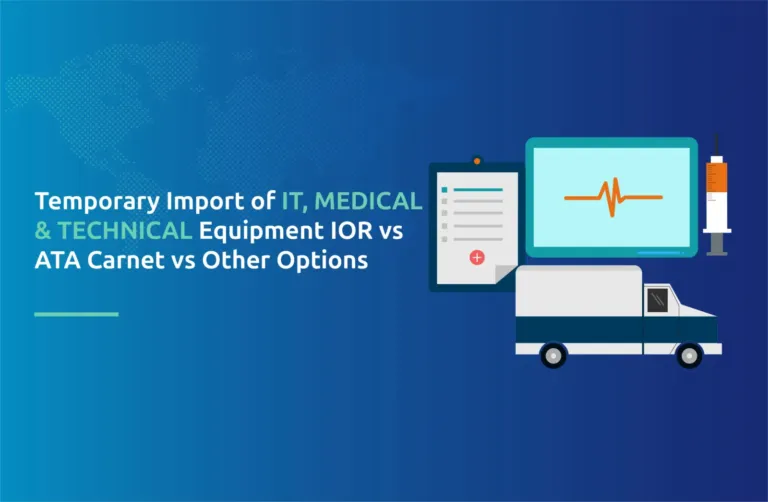
Medical technology companies may move demonstration, evaluation, testing, or service equipment across borders without intending a permanent sale. A temporary customs procedure may be available in some countries, but eligibility and conditions vary.
Companies should confirm the procedure before shipment rather than assuming that equipment will automatically qualify for temporary admission.
Emergency replacement
Healthcare operations may require urgent replacement equipment when an installed device fails. Even in an emergency, customs and regulatory requirements do not necessarily disappear.
Preparing the importer information, product details, service documentation, and regulatory information in advance can reduce avoidable delays.
IOR vs. medical-device regulatory responsibility
An IOR and a medical-device regulatory representative are not automatically the same role.
The IOR is responsible for the import activity within the agreed scope. Depending on the country, this can involve customs declarations, importer information, duties and taxes, and other import-related obligations.
Similarly, U.S. requirements can involve establishment registration, device listing, and importer information. The FDA notes that establishments involved in the production and distribution of medical devices may have registration and listing obligations, and initial importers have specific responsibilities.
This means an IOR should not be presented as a substitute for a required local regulatory representative, manufacturer obligation, product registration, or market authorization unless the applicable law specifically permits that arrangement.

Common mistakes with medical RMA shipments
Treating a medical device like ordinary consumer electronics is one of the biggest mistakes companies can make.
Other common issues include using an incomplete product description, omitting serial numbers, describing a warranty replacement as an ordinary sale, failing to identify the real shipment purpose, or assuming that a repair shipment automatically qualifies for duty relief.
Assuming that an IOR can address every regulatory problem is another error. Product registration, authorization, manufacturer responsibilities, and regulatory representation may be handled independently, although the importer function may handle the customs aspect of a shipment.
Conclusion
More preparation is needed for medical equipment repairs, replacements, and warranty shipments than for a typical international return. Before the equipment is moved, it is important to evaluate the cargo purpose, product identity, importer status, customs treatment, and medical-device requirements.
To ascertain whether an IOR structure could be appropriate, One Union Solutions can examine the cargo data, product information, destination, customs route, and importer needs. Regulatory clearances or clearance results cannot be guaranteed, and acceptance is contingent upon shipment-specific review.
Did you know?
The European Union has an “outward processing” customs procedure that can apply when goods are temporarily exported for processing or repair and then re-imported. The procedure may allow eligible businesses to receive customs-duty relief when the goods return, subject to specific conditions.
FAQs
Can an IOR handle medical equipment warranty replacements?
An IOR may handle the importer role for an eligible warranty replacement, subject to the destination country’s customs and regulatory requirements. The IOR does not automatically provide any required medical-device registration or approval.
How do I import medical equipment for repair?
Start by identifying the equipment, serial number, repair purpose, destination, importer, and applicable regulatory status. The appropriate customs procedure should be confirmed before shipment, particularly where temporary admission or processing procedures may apply.
What documents are required for medical device replacement shipments?
Requirements vary by country, but documents may include an invoice or pro forma invoice, product description, model and serial number, manufacturer details, RMA or warranty documentation, customs classification, value information, importer details, and applicable regulatory documents.
Does a repaired medical device need to be imported again?
A repaired device returning from another country may still require a customs declaration or re-import procedure. Special customs treatment may be available in some countries, but eligibility depends on local rules and the original export and repair arrangements.
Can medical equipment be temporarily imported for service?
Some countries provide temporary admission or processing procedures for eligible goods. These procedures have specific conditions and should be confirmed with the relevant customs authority before the equipment is shipped.