Overview
Telecom & network equipment imports involve more than moving products through customs. Routers, wireless access points, radio equipment, cellular systems or IoT gateways may also be subject to type permission, certification or other technical requirements, rely on the product and destination country.
This article explains how telecom regulations interact with customs clearance, what an IOR handles, where manufacturer responsibilities remain, and what companies should verify before shipping network equipment internationally.
Why Telecom Imports Can Require More Than Customs Clearance
Importing telecom and network equipment is not always a simple customs transaction. A shipment may contain routers, switches, wireless access points, radio equipment, cellular system, IoT gateways or other network appliances, and the regulatory treatment can differ according to the product, its technical functions and the destination country.
Customs authorities generally focus on the import declaration, classification, value, origin & supporting commercial documents. Telecom regulators may have a separate role where equipment uses radio frequencies, connects to public networks, falls under technical standards or requires certification before import, sale or use.
Which Telecom and Network Products May Need Additional Review?
Regulatory requirements depend on the product, its technical functions and the destination country. Wired network equipment may have different requirements from devices with Wi-Fi, Bluetooth, cellular, satellite or other radio capabilities.
Wireless access points, radio equipment, 4G/5G systems and IoT gateways may require additional certification or regulatory review. Products should therefore be assessed by their exact model and configuration rather than assuming all network equipment follows the same rules.
India, for example, applies WPC Equipment Type Approval (ETA) requirements to certain wireless equipment and has specific import requirements for regulated devices.
Type Approval and Certification Explained
Type certification confirms that telecom equipment meets relevant technical requirements before import, sale or use, rely on the country.
Terminology or processes vary between regulators, so companies should verify the current requirements with the destination authority. In India, the TEC’s MTCTE framework covers mandatory testing & certification for specified telecom equipment, while the UAE’s TDRA operates a Type Approval system for telecommunications devices.
Checking these requirements before shipment helps prevent regulatory issues during customs clearance.
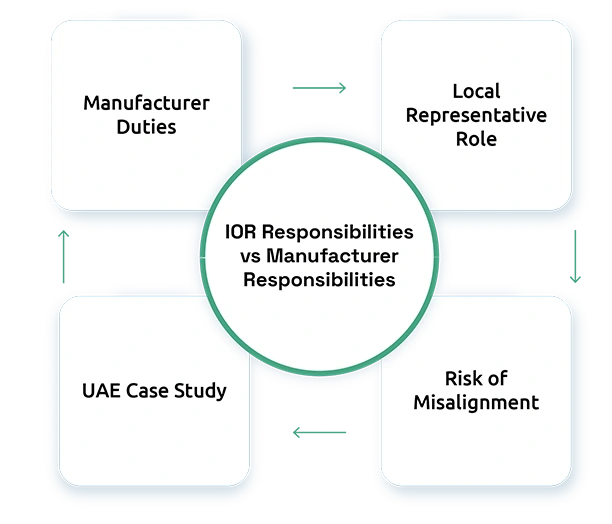
IOR Responsibilities vs Manufacturer Responsibilities
The IOR generally handles the import and customs side, including customs declarations, import documentation and coordination with authorities. However, this does not directly make the IOR responsible for the product’s technical certification.
Production may need to offer technical details, test reports , certificates & declarations, while an authorised local representative may handle specific regulatory filings. Requirements vary by product and country.
For telecom deployments, companies should clearly assign customs and certification responsibilities before shipment. In the UAE, for example, TDRA requires approved devices and supporting documents for customs release.
Pre-Shipment Telecom Compliance Checklist
Before shipment, confirm the exact product model, technical configuration, wireless functions and intended use. Check the destination regulator and verify whether the specific model requires approval or certification.
Required technical documents, certificates and manufacturer authorisations should be prepared where applicable, and the importer or authorised representative should be confirmed.
Customs documents should match the regulatory information, including product description, model number, quantity, value, origin and classification. This review is especially important for large deployments involving multiple equipment models.
What Happens If Equipment Reaches Customs Before Approval?
If needed approval is missing when telecom equipment arrives, customs clearance may be delayed while additional documents, testing or regulatory approval are completed.
The process varies by country and product, and approval may not always be possible after arrival. For example, the UAE requires TDRA-approved telecommunications devices and supporting documentation for certain customs release procedures.
Therefore, regulatory and customs requirements should be verified before the equipment is shipped.

How Companies Should Plan International Network-Equipment Deployments
A telecom or network deployment should be treated as a coordinated product, regulatory and customs process rather than as a shipment alone. Before purchasing or shipping equipment, companies should identify the models involved, determine whether radio or telecom-specific requirements apply and verify the current position of the destination regulator.
The IOR can then be incorporated into that process to establish who will act as importer, who will coordinate customs documentation and which regulatory requirements need to be completed by the manufacturer, supplier or authorised representative.
One Union Solutions can support the importer and customs coordination layer for international telecom and network-equipment shipments. Its role can include reviewing the proposed import structure, coordinating the IOR process and aligning customs documentation with the shipment requirements. Product certification and technical conformity, however, remain subject to the applicable destination-country rules and the responsibilities assigned to manufacturers, suppliers or authorised representatives.
Conclusion
Telecom and network equipment imports require coordination between customs, product certification and technical regulations. An IOR can handle the import or customs process, while manufacturers or authorised agent may remain responsible for product approvals od technical compliance. Checking the exact model, regulatory requirements or required documents before shipment can help avoid delays at customs. For global deployments, early manage between the importer, supplier and regulatory stakeholders makes the import process easier to manage.
Did You Know?
India’s DoT provides Equipment Type Approval (ETA) certification for specified telecommunication equipment, with the applicable technical requirements updated for 2026
Frequently Asked Questions?
Can an IOR import telecom equipment?
Yes. An IOR can handle the import and customs process, subject to the destination country’s requirements. Product-specific certifications may still remain the manufacturer’s or authorised representative’s responsibility.
Does all network equipment need type approval?
No. Requirements vary by product, technical features and country. Wireless and radio-enabled equipment may face additional approval or certification requirements.
What documents are needed for telecom equipment imports?
Documents can include commercial invoices, packing lists, technical details , certificates, test reports and regulatory approvals. Exact requirements depend on the product and destination.
What happens if equipment arrives without required approval?
Customs clearance may be delayed until the required documents, testing or regulatory approvals are completed. The available process depends on the destination country’s rules.
How can companies prepare telecom equipment for international deployment?
Companies should check the exact model, regulatory requirements, certification status or importer details before shipment. Customs and technical compliance should be reviewed together to avoid avoidable delays.