Introduction
Telecom & network infrastructure projects are growing rapidly as businesses invest in digital change, cloud services, & advanced communication systems. These projects require the global movement of equipment such as servers, routers, switches, & networking hardware. However, global shipments involve complex customs regulations, documentation requirements, taxes, & compliance challenges. Global logistics solutions help businesses manage shipping, customs clearance, & regulatory processes effectively. With the right logistics & IOR support, companies can make sure smooth equipment delivery & successful infrastructure deployment across global markets.
Why Global Logistics Is Important for Telecom Infrastructure Projects
Global logistics plays an important role in telecom network projects by making sure the safe & timely movement of critical equipment across global borders. Telecom projects often require the delivery of high-value equipment such as servers, routers, switches, fiber optic components, & network systems to different locations worldwide. Without proper logistics planning, businesses may face customs delays, shipment issues, & increased project costs. A reliable logistics partner helps manage shipment, documentation, customs clearance, & compliance requirements, making sure equipment reaches the destination on schedule. This allows telecom companies to complete installations faster, reduce risks, & maintain smooth project operations across global markets.
Benefits of Using Global Logistics Services
Global logistics services help businesses manage the global movement of telecom & network system equipment effectively. These services make sure that critical technology products such as servers, routers, switches, & communication systems are transported safely while meeting customs and regulatory requirements. By working with an experienced logistics partner, companies can reduce delays, improve supply chain management, & complete system projects smoothly across different regions.
Global logistics support also helps businesses manage documentation, customs clearance, transportation planning, & delivery management. This allows companies to focus on project execution while making sure their equipment reaches the required location on time & in compliance with local rules.
Telecom Equipment Compliance Requirements
Importing telecom and network equipment requires businesses to follow country-specific rules, technical standards, & customs requirements. Depending on the destination country, companies may need product approvals, import permits, compliance certificates, & accurate HS code classification before shipment. Different regions have specific rules for communication devices, networking hardware, and electronic equipment. Managing these requirements properly helps businesses avoid customs delays, additional costs, & shipment rejection. An experienced logistics and IOR partner helps ensure all compliance requirements are completed before the equipment reaches the destination market.
Industry Applications of Telecom and Network Logistics
Telecommunication Industry
Telecom companies frequently transport network equipment, communication systems, & system components across countries. Global logistics support helps manage large-scale deployments while making sure compliance with local import rules.
Data Center Industry
Data centers require continuous delivery of servers, storage systems, networking hardware, & power equipment. Proper logistics planning helps avoid project delays & making sure secure delivery of complex infrastructure.
IT & Technology Industry
Technology companies shipping advanced hardware globally need support with documentation, customs clearance, & regulatory requirements. Logistics solutions help businesses expand their technology operations globally.
Enterprise Network Projects
Large organizations setting up offices or digital infrastructure in new countries require reliable shipping of networking equipment. Global logistics services help manage equipment movement efficiently.
Role of Importer of Record IOR in Telecom Logistics
An IOR service helps businesses import telecom & network equipment into countries where they do not have a local entity. The IOR manages customs documentation, import declarations, duties, taxes, product compliance requirements, & shipment clearance. It also helps make sure that telecom equipment meets local import rules, required approvals, & customs standards. This allows businesses to deliver equipment globally without setting up a local business presence while reducing delays & compliance risks.
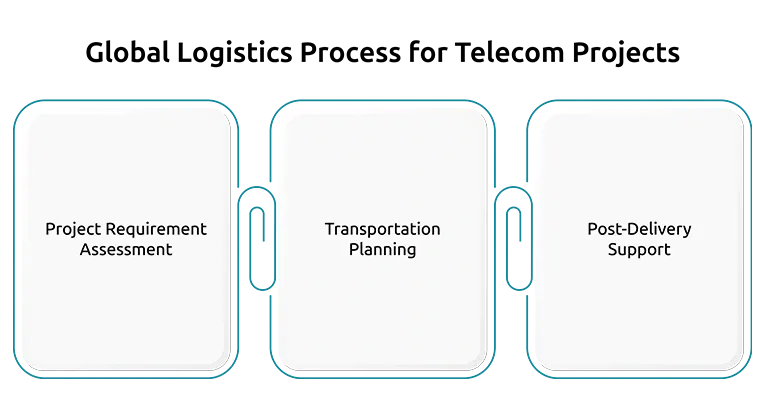
Global Logistics Process for Telecom Projects
1. Project Requirement Assessment
The logistics team reviews equipment details, destination countries, timelines, & compliance requirements.
2. Documentation Preparation
Required documents such as invoices, packing lists, & product information are prepared & verified.
3. Transportation Planning
The best shipping method is selected based on project timelines, equipment type, & destination requirements.
4. Customs Clearance Management
Customs declarations, duties, taxes, and import requirements are handled to make sure smooth clearance.
5. Delivery Coordination
After clearance, equipment is delivered safely to the project location according to the schedule.
6. Post-Delivery Support
Support is provided for documentation records, compliance needs, and future shipments.
Common Challenges in Telecom Logistics and How to Overcome Them
Telecom logistics projects can face challenges such as customs delays, incorrect product classification, changing rules, & limited local import support. These issues can affect project timelines & increase costs. With proper documentation, compliance management, accurate HS code classification, & IOR support, businesses can ensure smooth customs clearance & timely delivery of telecom equipment.
Why Choose One Union Solutions for Global Logistics
One Union Solutions helps businesses manage global telecom & network system shipments with reliable logistics & compliance support. Our team handles documentation, customs requirements, IOR services, & global delivery coordination.
With experience supporting technology, telecom, IT, & system projects across multiple countries, we help businesses reduce risks & complete international deployments smoothly.
Traditional Shipping vs Managed Global Logistics
Traditional shipping frequently provides only basic shipping support, leaving businesses responsible for documentation, customs processes, & compliance requirements. This can increase the risk of delays & make international growth more challenging.
Managed global logistics provides complete support, including customs compliance, documentation management, shipment planning, & regulatory support. With expert guidance, businesses can reduce risks, improve effectiveness, & deploy telecom & network system projects across global markets more smoothly.

Conclusion
Global logistics is important for successful telecom & network system projects. Managing transportation, customs compliance, documentation, & import requirements helps businesses complete projects faster & avoid unnecessary delays.
With One Union Solutions as your logistics & IOR partner, companies can successfully move telecom equipment & technology systems across borders while maintaining compliance with global trade requirements.
Did You Know?
The WTO Information Technology Agreement (ITA) eliminated tariffs on many information technology and telecom products across participating economies, helping simplify global trade in telecom equipment and networking hardware.
Frequently Asked Questions
What is global logistics for telecom infrastructure projects?
Global logistics for telecom projects includes managing transportation, customs clearance, documentation, & delivery of network equipment across cross borders.
Why do telecom companies need logistics support?
Telecom companies need logistics support to manage complex shipments, customs requirements, & timely delivery of system equipment.
What telecom equipment requires specialized global logistics services?
Equipment such as servers, routers, switches, storage systems, fiber optic components, telecom hardware, and network system devices often require specialized logistics services because of secure transportation requirements.
How does IOR support telecom equipment imports?
IOR services manage customs clearance, import documentation, duties, taxes, & regulatory requirements for telecom equipment shipments.
How can businesses reduce delays in international telecom shipments?
Businesses can minimize delays by creating accurate documentation, following local rules, & working with experienced logistics partners.