Introduction
International trade is developing at a fast pace, & ports once seen as past logistics hubs are now becoming mainly intelligent, data-driven ecosystems. Smart Ports & AI Automation in Global Cargo Handling explores this transformation, where artificial intelligence, robotics, IoT sensors, & updated analytics are developing how goods move across the world.
What Are Smart Ports?
Smart ports are mainly updated shipping hubs that use digital technologies like the Internet of Things, artificial intelligence, big data analytics, & automation to enhance working output, improve security, & also improve environmental sustainability. These ports replace manual processes with automated systems to manage cargo & resource allocation more easily, often including 24/7 autonomous performance.
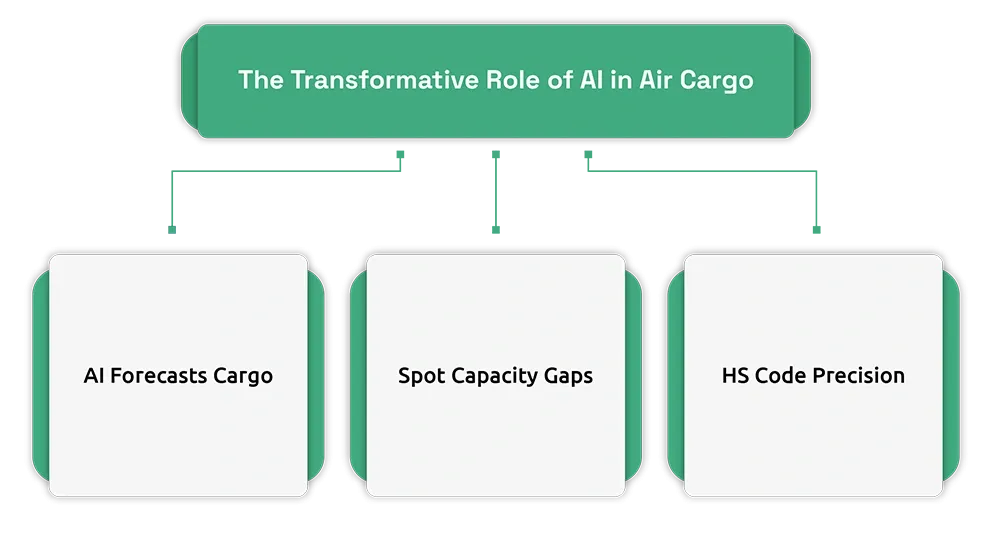
The Transformative Role of AI in Air Cargo
AI is changing air cargo with freight forwarders & global shippers to improve their work with the best accuracy. Predictive analytics powered by AI helps organizations approximate cargo demand, identify capacity issues more easily, avoid delays & minimize working costs. Machine-learning algorithms verify large amounts of data, from shipment records to trade flows governed by systems such as the generalized system of preferences (GSP), giving air carriers deeper insight into market patterns. Also, AI tools improve accuracy in giving HS code data, which directly affects Import duties & tariffs, and confirms agreement within different customs systems. Supporting intelligent documentation verification, automated billing, & increased communication between carriers & shippers, AI strengthens the complete logistics system, making global trade more predictable & effective.
Automation in Air Cargo: Smarter, Faster, Safer
AI gives unwanted consistency & security in air cargo work. Automated scanning, digital airway bills, & robotic security screening work on processing times while improving accuracy. These technologies are also used for safer management of high-value or oversized cargo. When combined with AI, automated systems can detect inconsistencies in cargo shipment, standard documentation gaps, & support the Exporter of Record definition process by validating needed export documents. This combination of automation & AI increases the global logistics chain, allowing carriers & shippers to manage agreements while achieving quicker shipping times.
Benefits of AI-Driven Smart Ports
The development of AI & automation technologies in ports gives huge benefits that can mainly improve operations:
Improve Decision-Making Capabilities: AI can quickly verify large volumes of data, providing port operators with actionable insights. AI systems can analyze traffic patterns, weather conditions, & historical data to inform planning & resource allocation, use to more updated & on time decision-making.
Improved insight-based management for Equipment: AI-powered predictive maintenance systems can cover the health of port equipment, such as cranes & industrial trucks, in real time. By verifying data from sensors, these systems can calculate when equipment is likely to fail or need maintenance, allowing ports to address issues before they cause costly downtime.
Improved Logistics & Cargo management: Automation technologies use logistics by tracking the movement of cargo within the port. Automated guided vehicles can transport containers from ships to storage areas without human action, minimizing loading & unloading times. AI can improve stock management by giving real-time visibility into container locations & status, ensuring that cargo is managed easily.
Challenges & Limitations of Smart Ports & AI Automation in Global Cargo Handling
Despite the growing adoption of smart technologies, the transition toward AI-powered port operations comes with some challenges & limitations. When automation enhances efficiency & minimizes practical issues, ports in the whole world still face technological, financial, & functional issues that can slow development.
One of the main challenges is the high initial investment needed for an updated port network. Introducing AI systems, automated cranes, IoT sensors, robotics, & digital management platforms demands important capital cost, making adoption difficult for smaller or developing ports.
Cybersecurity is another major concern. As ports become mainly connected through digital networks & cloud-based systems, they also become more risky to cyberattacks, data fraud, & operational issues. A single cyber incident can affect cargo movement, supply chain visibility, & international trade operations.
Integration with the legacy network also remains a limitation. Many ports still operate using past systems that are not fully usable with modern AI technologies. Developing these systems requires time, technical expertise, & large-scale operational adjustments.

Conclusion
Smart ports & AI automation are developing global cargo management by creating faster, smarter, & more connected logistics ecosystems. Through technologies such as artificial intelligence, IoT, robotics, predictive analytics, & automated cargo systems, ports are improving operational efficiency, minimizing delays, improving cargo visibility, & advancing supply chain usability.
Did you know?
The global smart ports market size was valued at $2.0 billion in 2022 and is projected to reach $15.5 billion by 2032.
FAQ
1. How does AI improve cargo handling?
AI optimizes crane scheduling, manages container stacking in yards, and enables predictive maintenance for equipment, minimizing downtime and accelerating container turnover.
2. What are the main benefits of automated ports?
Key benefits include reduced turnaround times (faster ship docking), increased cargo handling capacity (up to 30% higher), and enhanced safety by reducing human error and manual labor.
3. How are smart ports supporting sustainability?
Smart ports reduce emissions by optimizing traffic, utilizing electric/hydrogen-powered equipment, and enabling “just-in-time” arrivals, which prevents ships from idling outside the harbor.
4. What role does 5G play in smart ports?
Private 5G networks provide the low-latency, high-speed connectivity needed for autonomous robots and real-time AI computer vision systems to function safely.
5. Which ports are currently leading in smart technology?
Ports in China (Qingdao, Shanghai), Singapore, and Rotterdam are leaders in adopting fully automated, AI-driven, 5G-powered operations.