Introduction
The global supply chain and logistics industry has been guiding a period of transition through 2025, marked by changing trade sizes, geopolitical challenges, and growing customer expectations. Businesses worldwide are looking to achieve greater efficiency in freight forwarding service operations, customs clearance support, and comprehensive import-export support. From Delivered Duty Paid logistics (DDP) to advanced freight forwarding services, the supply chain ecosystem is undergoing significant shifts. Countries are also aligning policies with international export regulations, HS codes, and the HTS harmonized tariff to streamline global trade facilitation.
Complete Global Supply Chain & Logistics Outlook in September 2025?
By September 2025, global supply chain services are showing signs of stabilization, though not without persistent risks. On one hand, major economies continue to promote generalized system of preferences (GSP) programs and Incoterms updates to encourage smoother cross-border trade. On the other hand, rising working costs, price volatility, and complex approval requirements remain major concerns. Organizations dealing in import export business are increasingly dependent on a mix of importer of record services and exporter of record services to guide these challenges effectively. Also, new technologies are changing trade flows, digital customs platforms, automation in export customs brokerage, and AI-based forecasting for demand planning. These tools help global organizations balance efficiency and agreement while maintaining competitiveness in global markets.

Logistics Outlook between Countries in September 2025?
Logistics networks between key countries remain influenced by both policy and infrastructure readiness. Europe, Asia, and North America continue to account for the largest share of global supply chain services, with local DDP shipping and DAP trade agreements gaining traction. For smaller economies, maintaining approval with export register documentation and import export registration is necessary to sustain global competitiveness. The Middle East and Africa are seeing stronger growth in Delivered Duty Paid service arrangements, supported by regional logistics hubs. Also, Asia-Pacific continues to dominate in manufacturing-led exports, supported by freight forwarding companies that provide comprehensive import-export support with a focus on both DAPs and DDP methods.
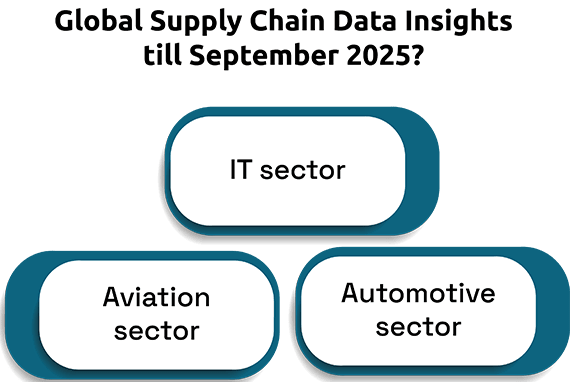
Global Supply Chain Data Insights till September 2025?
Data insights reveal that cross-border shipments have grown steadily through 2025, though at a slower pace than pre-pandemic years. According to logistics trend reports, around 65% of companies expanded investments in global trade facilitation technologies, while 40% increased their reliance on customs clearance support and import export registration services.
- IT sector: Continues to leverage importer of record services for global hardware deployment.
- Aviation sector: Relies heavily on export customs brokerage to meet international export regulations.
- Medical industry: Prefers DDP shipping to confirm timely and compliant delivery of critical supplies.
- Automotive sector: Focuses on DAP logistics to reduce costs and simplify distribution.
These insights highlight the growing interdependence between nations and the critical role of freight forwarding service providers in confirming smooth operations.
Meeting Global Supply Chain & Logistics Expectations Requires a Combination of Inventory Control and Warehousing
In 2025, global supply chain expectations are not just about moving goods; it’s about efficiency, visibility, and risk mitigation. Businesses are using smarter inventory control systems combined with advanced warehousing facilities to minimize disruptions. Pairing this with importer of record services, exporter of record services, and agreement management confirms smooth work between production and delivery. By combining warehouse automation with trade approval tools such as HS codes, Incoterms, and HTS harmonized tariff classifications, businesses can accelerate global supply chain services while reducing errors. This approach strengthens dependence against issues and confirms that organizations can continue to meet growing customer requirements.
Conclusions
The global supply chain and logistics outlook through September 2025 shows a fragile between growth opportunities and challenges. From approval with international export regulations to increasing dependence on comprehensive import-export support, businesses must continue developing. The integration of importer of record services, DDP shipping, and freight forwarding service solutions with smarter warehousing and inventory control represents the future of international trade. Also, those who invest in adaptability, in case through technology, customs clearance support, or stronger partnerships with logistics providers, will be best positioned to grow in the developing landscape of global trade.
DID YOU KNOW?
In the United States, growth is projected to slow from 2.8% in 2024 to 1.8% in 2025 and 1.5% in 2026 due to higher tariff rates, a decline in net immigration, and a decline in federal government employment.
FAQs
Q1. What is the global supply chain outlook for September 2025?
The outlook shows gradual stabilization with strong reliance on importer of record services, digital customs clearance, and freight forwarding services, though risks from cost volatility and compliance remain.
Q2. Which industries are driving logistics growth in 2025?
Key industries include IT (hardware deployment), aviation (export customs brokerage), medical (DDP shipping), and automotive (DAP logistics).
Q3. How are Incoterms and HS codes impacting trade in 2025?
Incoterms updates and accurate HS/HTS code classifications are helping businesses streamline import-export approvals, minimize delays, and maintain compliance in cross-border trade.
Q4. What role do warehousing and inventory control play in global logistics?
Advanced warehousing and smarter inventory control systems are essential to reduce disruptions, support automation, and ensure visibility across the supply chain.
Q5. Why are importer of record and exporter of record services important in 2025?
They help companies manage compliance, navigate international trade regulations, and confirm seamless delivery under DDP and DAP arrangements.