
Introduction
In 2024 and 2025, the world trade routes were debilitated by geopolitical risks in the Red Sea and significant canals. These canals are lifelines connecting Africa, Asia, and Europe. They transport specialized equipment, including IT/data center equipment, aircraft equipment, automobile equipment, & sensitive medical equipment. Rising tensions & clashes, especially with armed groups and local authorities, meant shipping companies had to reroute. This diversion resulted in longer shipping times, freight, and any insurance rates, and serious difficulties in assuring stable and reliable supply chains.
Red Sea & Canal geopolitical risks
It created a high-risk environment in the Red Sea because it increased attacks on commercial shipping containers, particularly in the Bab al-Mandeb Strait. Armed with missiles & drones, groups attacked maritime vehicles, raising concerns about the safety of one of the most important marine chokepoints in the world. But even with naval patrols & the military actions to protect the region, constant instability led to higher insurance premiums & made most ships reluctant to transit these waters. In the meantime, the Suez Canal was also at risk; due to security concerns & the ship delays, several carriers chose another route, the Cape of Good Hope. This option, however, added several days to the transit time, producing ripple effects throughout global logistics networks and adding to the cost of operation.

Trade Agreements and Tariffs under Strain
Businesses faced changing tariff situations as cargo was diverted to bypass the areas that are vulnerable to disruptions. New routes implied passage through new ports with different customs regulations and duties. Companies were forced to promptly modify their customs duty management tactics and practices, whereby they used the right HS codes and HTS codes to get the maximum available benefits, such as those under the generalized system of preferences. It became crucial to remain current and up-to-date with the import and export registration requirements to avoid punishment and unexpected delays, particularly where various jurisdictions enforced their own rules.
Supply Chain Compliance: Codes and Registration
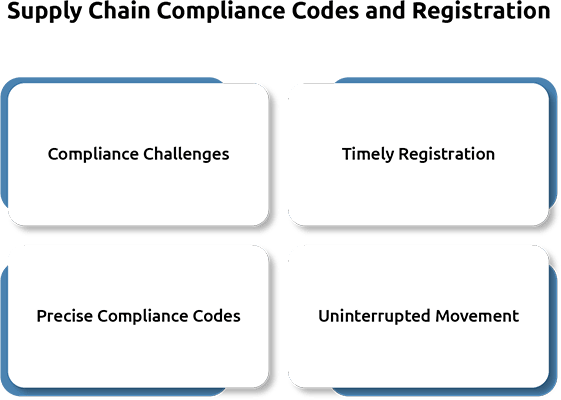
Amid evolving geopolitical uncertainty, adherence to import and export regulations intensified in importance. The importer of record and customs broker assumed greater responsibility for ensuring import-export documentation met current standards. Timely registration of import export license under guidelines like DGFT IEC and usage of precise compliance codes, including ECCN, helped prevent shipment delays and costly customs holds. Agile management of these compliance elements was vital for sustaining uninterrupted movement of high-value and highly regulated equipment like aviation components and healthcare devices.
Shipping Terms and Delivery Practices
In this shifting landscape, a clear understanding and use of Incoterms gained renewed importance. Terms like ddp and DAP helped define liability for duties, taxes, and shipping responsibilities, providing clarity amidst uncertain delivery conditions. Knowing what ddp shipping means allowed businesses to negotiate contracts confidently, designating exactly who manages customs clearance and import costs. This transparency eased freight forwarding and cargo forwarding operations, allowing freight forwarder and cargo forward teams to better coordinate cross-border logistics under fluctuating circumstances.
Logistics & Freight Forwarding Transformations
Freight forwarding services are key in adjusting supply chains affected by geopolitical risks. Many providers diversified their offerings to include air forwarding to bypass maritime hazards and enhanced cargo forwarding options to maintain reliable end-to-end export handling. Strong collaboration between the freight forwarder, customs broker, and importer of record ensured the timely management of drayage and demurrage, preventing costly storage fees and ensuring goods continued moving by freight transport by road or sea despite route changes.
Warehouse and Supply Chain Strategy
Restructured trade practices increased the strategic importance of warehouses close to alternative logistic centres. The bonded warehouses became relevant as interim (temporary) warehousing, whereby companies could pay duty late until they had shipped their consignments. The latest warehouse management systems (WMS) allowed improved inventory tracking and responsiveness to changes in the supply chain. The logistics hubs became important staging points like Nuevo Laredo, Colton, CA, and Dayton, New Jersey. Their adaptable warehouse areas also guaranteed dedicated handling and accommodated time-sensitive delivery services and delicate goods shipping.
Specialized Handling and White Glove Services
With the complexities of rerouted shipments and higher risks, white glove logistics services became essential for sensitive equipment. These premium services include fragile item transportation and asset protection delivery, with on-site installation and move services that minimize damage and simplify final delivery. The added care provided by white glove service reassures customers that vital IT, aviation, medical, and automobile equipment arrives intact and ready for use.
Freight Cost and Volume Management
Volumetric weight and chargeable weight calculations took center stage in freight cost planning amid changing routes and cargo volumes. Air freight chargeable weight calculators helped forecast precise transportation costs, while drayage and demurrage fee monitoring ensured overheads stayed controlled. Efficient freight quote tools allowed logistics teams to adapt budgets quickly and maintain profitability despite extended transit times driven by geopolitical rerouting.
Conclusion
Geopolitical threats in the Red Sea and large canals caused global trade to divert and change. This increased complexity meant that companies had to deal with trade agreements, tariffs, or compliance codes much more accurately as they reorganized logistics and warehousing strategies. Special delivery and warehousing solutions combined with flexible freight forwarding ensured the flow of shipments under these circumstances. At One Union Solutions, we are aware of these emerging risks, and we offer specialized logistics services that will deliver your delicate equipment to its location safely, efficiently, and in a way that will meet the requirements in uncertain times.
Did You Know,
The research supported by the government data indicates that investments in supply chain resilience & technology amounted to more than $450 billion globally in 2024. This data assists with infrastructure, digitalization, & risk management enhancement. It helps to ensure the secure transport of specialized goods regardless of geopolitical factors.
FAQ’s
- How did geopolitical risks affect trade routes in 2024–25?
The conflicts in the Red Sea & near major canals forced rerouting, increasing cost and transit times.
- What role do customs codes play in adapting to new trade routes?
Proper HS and hts code classification ensures compliance and eligible tariff benefits.
- Why are shipping terms like DDP important during uncertain logistics?
They clarify responsibilities for duties and taxes, reducing risk and confusion.
- How do logistics hubs help during global trade disruptions?
They provide strategic storage and staging areas, minimizing delays in supply chains.
- What benefits do white glove services offer for sensitive shipments?
They ensure careful handling, asset protection, and on-site installation support.