Overview
Manufacturers worldwide are reevaluating their production strategies as global trade dynamics continue to evolve. Rising tariffs, geopolitical uncertainties, supply chain disruptions, and shifting customer demands have prompted many companies to relocate manufacturing operations to new regions. Whether through nearshoring, reshoring, or expanding into emerging markets, businesses are seeking greater supply chain resilience, improved market access, and reduced operational risks. Moving to a place can be really good for you in the long run. However it also means you have to deal with a lot of issues, rules, regulations and daily operations.
The trend is really clear in the medical industries and also in IT and aviation. These industries need to keep producing and delivering things on time. Automotive companies are trying to manufacture in different places so they do not have to rely on just one area. Technology companies are moving their facilities to places that are close to where most of their clients are.
Aviation and medical equipment manufacturers need to find places to make their products. They want to be sure they can keep making aviation and equipment. When these companies move their manufacturing to countries they have to figure out what it will really cost them to make aviation and medical equipment. This is really important for aviation and medical equipment manufacturers to decide where to put their money and stay ahead of manufacturers around the world.
Why Companies Are Moving Manufacturing Operations
Manufacturers are moving their production facilities more and more. They want to make their supply chains more stable get closer to their markets and avoid problems that can happen globally. By moving operations to where their customers are companies can get products to customers faster and save money on transportation. This helps them have control over production and not rely so much on suppliers from other countries. It helps businesses respond quickly to changes in what customers want and to changes in inventory needs. Market proximity enables businesses to respond quickly to changing customer demands and inventory requirements.
At the time recent problems with getting goods uncertainties around the world and changing trade rules have made companies think about making products in different places and having more flexible plans for getting what they need. For industries like automotive, IT, aviation and medical equipment moving manufacturing to places is seen as a good idea that helps with growth over time stable operations and better service of these industries. The problems with supply chains, trade policies and uncertainties, around the world are making companies think again about how they make manufacture and where they get their supplies, which is affecting the automotive IT, aviation and medical equipment industries.
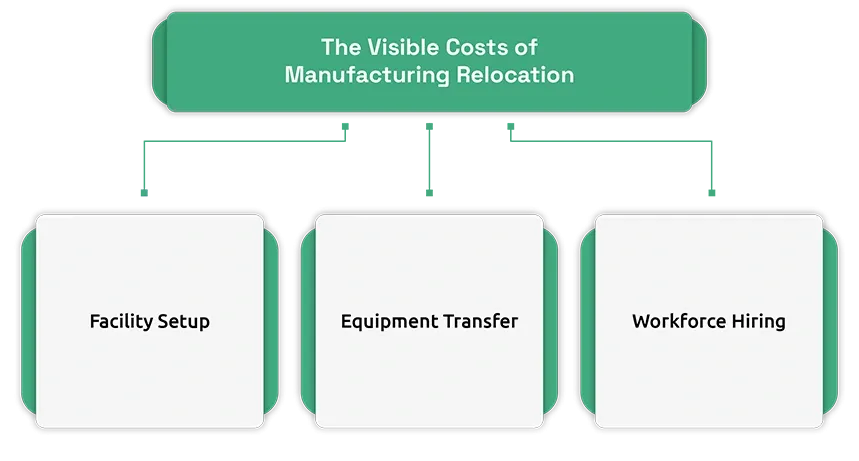
The Visible Costs of Manufacturing Relocation
Facility Setup
When a company sets up a factory in a different country it has to pay a lot of money upfront. The company has to buy or rent land set up services like water and electricity plan the layout of the factory put in safety systems and get all the technology working together.
Equipment Transfer
When a company moves its factory equipment from one country to another it is not, about paying for transportation. The company has to take the equipment pack it up ship it get insurance deal with customs put the equipment back together make sure it is working right and test it to make sure it is running properly.
Workforce Hiring
To have a manufacturing operation you need a skilled workforce that can keep up the good work and meet the quality standards. When you move your production to a place you have to find new people teach them what to do and how to do it.
Regulatory Approvals
Each country has its rules for manufacturing like taking care of the environment treating workers fairly and making sure products are safe. You have to follow the Workforce Hiring rules and get the approvals to make sure your manufacturing operation is doing everything correctly and this is also part of the Regulatory Approvals process for Workforce Hiring and manufacturing, in general.
Hidden Costs Businesses Often Overlook
Production Downtime
One of the most underestimated costs of manufacturing relocation is production downtime. During the transition period, equipment installation, workforce training, and operational testing can temporarily reduce output.
Supplier Qualification
When we move our manufacturing operations to a place we need to find and approve new suppliers. This involves checking if they’re good enough assessing their quality negotiating contracts and verifying if they comply with rules. It takes a lot of time to build trust with suppliers in industries like automotive, aviation and medical manufacturing where rules are strict.
Inventory Carrying Costs
To avoid problems when we relocate many companies keep stock before and during the move. This helps ensure we have what we need. It also means we spend more on storing and managing inventory. We have more money tied up in stock.
Strategies to Reduce Relocation Costs and Risks
Successfully moving a manufacturing operation requires a plan. The plan must balance saving money with keeping the operation running. Businesses can reduce risks by optimizing their supply chain. This means keeping materials, production schedules and transportation networks in line during the move. Inventory and order management practices help prevent stock shortages and production delays.
Supplier diversification helps reduce reliance on one supplier. This makes the business stronger against disruptions. Supplier diversification makes business more resilient. Digital visibility tools give real-time information on shipments. They also provide data, on inventory levels and supplier performance.

Conclusion
Relocating manufacturing operations to countries is a big decision. It should be seen as a long-term plan to improve the business rather than just a way to save money. A lot of times, companies make this decision because of labor costs. You also need to consider your suppliers and how you will transport goods.
To have a transition you need to plan very carefully. This means you have to manage risks and know a lot about how international trade works. If you do this you can stop things from going wrong. Keep costs under control. Companies that make things like those in the IT, aviation, medical and automotive sectors can do a things to make their manufacturing networks better. They can make sure they follow all the rules transport their goods in a way and make their supply chains work really well.
Did You Know?
“Relocating manufacturing across borders requires navigating high upfront costs and structural shifts. While direct savings like lower wages can reach 50% in markets like India or Mexico compared to developed regions, the hidden costs often exceed initial budgets by 20% to 30%.”
FAQs
1. What is the single largest hidden cost in a cross-border factory relocation?
When a production line is not working and it is not making anything this is usually the expense that was not planned for.
2. How much cheaper is labor in alternative manufacturing hubs compared to Western nations?
Labor costs in places like Vietnam, India or Mexico can be 60 to 80 percent lower than in the United States or Western Europe.
3. What are “exit taxes” and how do they impact a cross-border supply chain move?
Exit taxes are fees that a country charges when a company moves its things, ideas or money-making parts out of that country.
4. How do international logistics and freight costs offset the savings of moving overseas?
When you move your factory to a place where you can get materials cheaply it is often far, from the people who will buy your products.
5. Is it cheaper to buy new equipment abroad or ship existing machinery across borders?
It is usually cheaper to send the machines you already have to another country at first. It can be very risky.