Overview
India’s aerospace sector is seeing a changing stage as the government reviews aircraft import duties and customs guidelines to improve domestic manufacturing capabilities. The Union Budget 2026 introduced huge reforms with the purpose to reduce dependency on imports while improving competitiveness for local aerospace manufacturers. Global aviation demand is growing, and Indian airlines are getting large aircraft orders. Administrators are working with tariff systems, logistics systems, and trade approval systems to support long-term industrial growth. Recent policy changes focus not only on reducing working costs but also on improving customs clearance efficiency, supply chain optimization, and international freight services supporting aviation manufacturing.
Indian Aircraft Manufacturing Sector Responds to New Tariff Changes
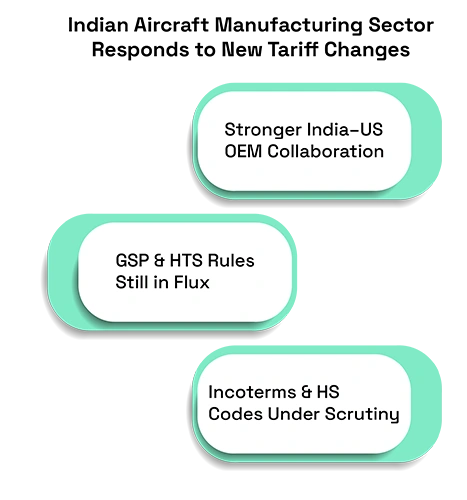
Indian aerospace companies have smoothly welcomed recent India-US trade developments that reduced tariffs on aerospace components. The agreement lowered certain U.S. tariffs from nearly 50% to around 18%, improving export growth for Indian device suppliers. The agreement is expected to grow collaboration between Indian organizations and global OEMs. Also, uncertainty remains around long-term tariff systems such as the generalized system of preferences (GSP) and developing HTS harmonized tariff schedule categorizations that affect aerospace exports. Exporters mainly depend on the exporter of record services and the importer of record service providers to confirm approval with changing Incoterms, HS code categorizations, and documentation standards.
Customs Duty Cut on Aircraft Parts Announced in Budget 2026 to Reduce the Cost of Maintenance
Duty Exemptions to increase MRO Ecosystem
A key highlight of Budget 2026 was the exemption of basic customs duty on aircraft components, engines, and raw goods used for manufacturing and maintenance, Repair, and Overhaul (MRO) systems. The government looks to reduce maintenance costs for airlines while increasing domestic production of aircraft parts. Industry experts believe this move could mainly reduce overseas repair dependency on the supply chain.
Impact on Aviation Logistics and Trade Compliance
Lower duties directly improve aviation logistics efficiency by reducing landed costs under delivery methods such as DAP and DDP shipping arrangements. Organizations managing international freight services must now reevaluate pricing systems, inventory and order management plans, and customs documentation processes. Digital customs systems announced in the budget are expected to simplify approvals through single-window clearance platforms, improving shipping time for aviation imports and exports.
How New Import Duties Support Domestic Aerospace Manufacturing
Improving Local Production
Instead of protecting inefficiencies, the revised duty systems target major inputs not widely produced in India. By reducing tariffs on necessary components while quickly local assembly, India is building a balanced manufacturing ecosystem. Local aerospace programs such as aircraft assembly partnerships already source nearly 70% of some components locally, showing increasing industrial capability.
Improving Supply Chain Dependance
Modern aerospace manufacturing depends heavily on combined logistics and approval systems. Businesses are increasingly using the best trade compliance software for import export rules to manage customs filings, check HS code usage, and maintain regulatory guidelines. Questions such as can a freight forwarder be an exporter of record or can a customs broker handle both import and export documentation are becoming necessary to operational planning as organizations simplify global trade networks.

Key Benefits for Indian Aerospace Manufacturing After New Import Duties
- Duty exemptions reduce manufacturing input costs, allowing Indian suppliers to compete with established aerospace hubs.
- India’s MRO market is projected to reach nearly $4 billion by 2031, supported by policy incentives and improved logistics systems.
- India’s aerospace sector share is expected to grow from about 2% today toward 10% in the coming years as OEM partnerships expand for global trade.
- Simplified customs clearance, better approval systems, and improved international freight operations reduce delays and working risks.
Conclusion
India’s review of aircraft import duties sees a major change from import dependence toward manufacturing leadership. Combining tariff simplification, customs tax changes, and improving global trade, the government is creating the base for a working aerospace manufacturer. These reforms could make India a major aerospace manufacturing and MRO hub within the next few years, improving both economic growth and global aviation trade.
DID YOU KNOW?
The move is expected to reduce production costs by 5-7% and support local companies like Hindustan Aeronautics Limited (HAL) and MRO providers.
FAQs:
1. What changes were introduced in aircraft import duties under Budget 2026?
Budget 2026 announced exemptions on basic customs duty for many aircraft components, engines, and raw goods used in manufacturing and MRO systems to reduce maintenance costs and improve domestic production.
2. How do lower import duties benefit India’s aerospace manufacturing sector?
Reduced duties, lower input costs for manufacturers, improved competitiveness, attracted global OEM partnerships, and local assembly and component shipment.
3. What impact do duty exemptions have on aircraft Maintenance, Repair, and Overhaul (MRO)?
Duty exemptions reduce overseas repair dependence, lower airline maintenance expenses, and help India develop a stronger domestic MRO ecosystem.
4. How do new import duty policies affect aviation logistics and trade?
Lower tariffs simplify landed cost calculations, improve DDP and DAP shipping efficiency, and acceptance of digital customs clearance and approval systems.
5. Why is India focusing on aerospace manufacturing instead of imports?
The government aims to build long-term industrial capability, reduce dependence on foreign suppliers, and position India as a global aerospace manufacturing and aviation services hub.