Overview
Global aerospace supply chains are seeing one of their most difficult problems in years as geopolitical sanctions mostly target critical avionics components such as navigation systems, sensors, semiconductors, and flight-control electronics. These highly modern parts are frequently shipped from a minimum number of certified suppliers, making the industry mostly unprotected by export restrictions and approval problems. Sanctions connected to geopolitical problems and improving export controls on dual-use electronics have difficulty in international freight services, customs clearance, and regulatory agreements, leading organizations to look for global logistics plans.
Why Are Aircraft Costing So Much More After Sanctions on Critical Avionics?
Sanctions affect aviation costs mainly through restricted access to certified avionics suppliers. Aircraft manufacturers depend on globally combined production networks where components cross borders multiple times under established Incoterms such as DAP and DAPs. When export controls increase, these trade shipments weaken significantly. Tariffs and sanctions have increased approval requirements connected to HS code categorizations and the HTS Harmonized Tariff Schedule. Even small documentation delays can stop shipments because avionics components require strict licensing approvals. Also, sanctions have forced airlines to operate older aircraft longer in the supply chain. The global aircraft backlog has surpassed 17,000 jets, nearly 12 years of production capacity, getting maintenance demand higher globally. Higher maintenance frequency increases dependance on importer of record service providers and exporter of record services to legally move restricted components across administrations. Organizations are also reevaluating whether a freight forwarder can be an exporter of record to simplify compliance delivery.
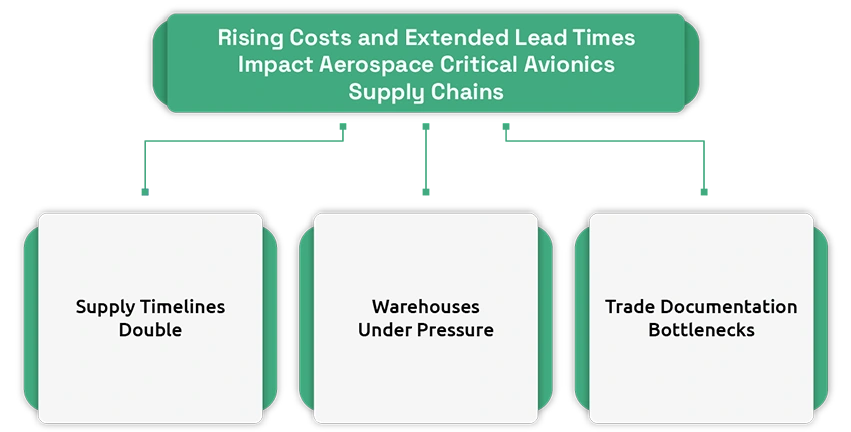
Rising Costs and Extended Lead Times Impact Aerospace Critical Avionics Supply Chains
Supply Delays and Inventory Pressure
Supply timelines for avionics modules and engine electronics have doubled in many cases due to suppliers focusing and sanctions resulting in trade changes. Airlines are now spare parts, increasing inventory holding costs by an estimated $1.4 billion globally.
Maintenance and Working Costs
Previous aircraft require more repairs, contributing nearly $3.1 billion in extra maintenance expenses yearly. Extended maintenance costs also mean aircraft remain grounded longer, reducing airline capacity and costs of maintenance.
Logistics and Approval Complexity
Sanctions increase the need for advanced logistics planning, including:
- Detailed customs clearance procedures
- Export license validation
- Trade documentation checks
- Approval audits under the generalized system of preferences (GSP) eligibility rules
Many aerospace organizations now depend on specialized international freight services and trade approval software for import export rules to avoid regulatory penalties.
Key Challenges in Aerospace Supply Chain Management After Sanctions
Limited Supplier Warehouse
Critical avionics components are certified for safety, meaning replacements cannot easily be sourced from various vendors. A disruption at one supplier can spread across the complete aerospace ecosystem.
Regulatory and Documentation Burden
Organizations must verify whether a customs broker can manage both import and export documentation while confirming approval with sanctions guidelines and export control terms.
Cost Changing
Tariffs on electronics and metals have raised component prices, while renting rates for aircraft and engines have increased by 20–30% compared to pre-2019 levels.
Visibility Gaps
Many aerospace supply chains still need real-time tracking across multi-tier suppliers, making risk projection difficult in global trade.

How Can Digital Supply Chains Help Manage Aerospace Risk for Avionics?
Digital transformation is growing as a major solution to sanctions disruptions.
Complete Supply Chain Optimization
Modern platforms combine inventory and order management with supplier shipment tracking, allowing organizations to predict shortages before they occur in the supply chain.
Trade Approval Automation
The best trade compliance software helps automate HS code categorization, screening, licensing checks, and Incoterms checking, reducing manual problems in the supply chain.
Data-Driven Logistics
Digital supply chains improve work between freight forwarders, importer of record service providers, and customs brokers, accelerating approvals and reducing shipment delays.
Predictive Risk Management
IATA recommends improved supply chain visibility and predictive maintenance analytics to stop problems and reduce downtime across the aircraft trade.
Conclusion
Sanctions targeting critical avionics have changed aerospace logistics, exposing problems in the globally interconnected supply chain. Growing approval difficulty, longer lead times, and growing maintenance costs are quickly causing airlines and manufacturers to rethink shipping plans and operational methods. As geopolitical uncertainty continues, aerospace organizations that invest in digital supply chains, approval automation, and flexible logistics partnerships will be better situated to manage risk. In an environment where avionics availability directly affects aircraft operations, a flexible supply chain is no longer a competitive advantage; it has become a working necessity.
DID YOU KNOW?
According to a report by Ruaviation on June 11, 2025, with more than 65 billion rubles allocated for the modernization of the Irkutsk Aviation Plant, these investments reflect Russia’s strategic priority of aviation self-sufficiency.
FAQs:
1. Why are avionics components heavily affected by sanctions?
Avionics systems contain dual-use electronics such as semiconductors and navigation technology that fall under strict export control regulations, making them highly sensitive to geopolitical sanctions.
2. How do sanctions increase aircraft operating costs?
Sanctions delay spare parts availability, extend maintenance cycles, and force airlines to work older aircraft longer, increasing repair, logistics, and approval expenses.
3. What role do importers and exporters of record play in aerospace logistics?
Importer and exporter of record service providers confirm regulatory agreement, manage licensing requirements, and legally move restricted avionics components across borders.
4. How do digital supply chains help aerospace companies manage risk?
Digital platforms improve shipment visibility, automate trade approval checks, and predict shortages, helping organizations reduce delays and avoid penalties.
5. Why are aerospace supply chains vulnerable to disruptions?
Critical avionics parts are sourced from limited certified suppliers, so disruptions or sanctions affecting one supplier can impact the complete global aviation ecosystem.