Overview
Global aerospace supply chains are going into new regulations as governments impose stronger controls on dual-use technology goods that can work for both civilian and military purposes. The latest export control updates introduced by authorities such as the U.S. Department of Commerce and the European Commission are changing how aircraft components ship across borders. Suppliers working with major manufacturers such as Boeing and Airbus, approval is no longer minimal to documentation; it now affects shipment types, logistics routes, and export licensing processes. With a considerable global aircraft excess of 14,000 commercial jets combined in 2025–2026, industry suppliers must work as quickly as possible to avoid shipment delays and regulatory penalties.
How Are Aerospace Suppliers Preparing for Future Export Regulations?
Aerospace suppliers are managing to new export regulations by improving product documentation, digitizing export documentation, & increasing supply chain visibility. Many companies are implementing compliance management systems & collaborating with logistics partners to streamline global shipments. These calculations help reduce delays, improve regulatory readiness, & support more efficient global aerospace trade.
What Are the New Dual-Use Technology Regulations for Exporters
Dual-use regulations mainly apply to advanced avionics, navigation systems, sensors, composite goods, and semiconductor-based aircraft electronics. These goods may appear to be trade, but can also support scrutiny applications. Exporters must now categorize goods accurately using the HS code and the HTS Harmonized Tariff Schedule systems while verifying whether licenses are required before shipment. Miscategorizations can show customs inspection or shipment holds during customs clearance.
Key Compliance Requirements
- Increased product categorization and end-user verification
- Inspections of buyers and customs brokers
- Exporter of record services responsibilities
- Documentation used with Incoterms, such as DAP and DDP shipping,
- Digital audit chain supported by the best trade compliance software for import export rules
Exporters must also know that shipments follow trade preference programs, such as the Generalized System of Preferences (GSP), when applicable, and confirm that tariff benefits do not have problems with export control laws.
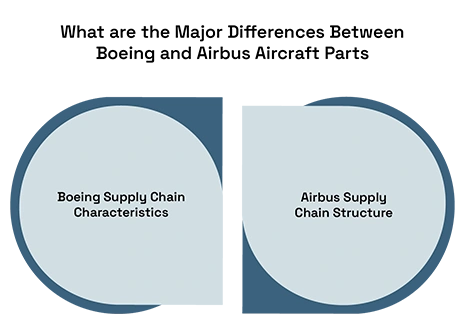
What are the Major Differences Between Boeing and Airbus Aircraft Parts
Also, industries work in the same air transport sector; their suppliers mainly work in the supply chain.
Boeing Supply Chain Characteristics
Boeing’s supply chain relies heavily on U.S.-based Tier-1 suppliers & includes components with defense-related technologies. As a result, electronics, guidence systems, & other sensitive parts often undergo stricter export reviews before global shipment.
Airbus Supply Chain Structure
Airbus follows a multi-country production model, with production and assembly activities spread across several European countries. Components are regularly transported across borders within Europe before final assembly. When products are exported outside the European Union, businesses must also meet additional licensing and export compliance requirements.
Why This Matters Under Dual-Use Rules
Components shared between civil and defense programs face stronger inspections. For example, flight control software or composite materials may require additional approvals, impacting international freight services timelines and increasing approval costs.
How New Dual-Use Technology Regulations Support Boeing and Airbus Goods Suppliers
While regulations increase approval work, they also create systematic advantages for compliant suppliers. Suppliers investing in supply chain optimization and automated inventory and order management systems are experiencing faster approvals and reduced customs delays. Organizations that clearly define the importer of record service and exporter responsibilities avoid disputes over dependability in the supply chain.
Role of Logistics and Trade Compliance
Modern logistics providers now give combined approval solutions. Many suppliers ask: Can a freight forwarder be an exporter of record? In some administrations, yes, but only when agreement and regulatory responsibilities are clearly assigned in global trade. Also, organizations frequently question whether a customs broker can manage both import and export documentation during customs clearance. Customs brokers provide complete services, helping aerospace suppliers manage permits, categorizations, and shipment tracking under new dual-use regulations for exporters.
Working Improvements Between 2025–2026
- Reduced shipment rejection rates through automated agreement checks
- Faster approvals using digital export licensing systems
- Improved clarity across the global aerospace supply chain

Major Benefits for Boeing and Airbus Aircraft Suppliers With New Dual-Use Technology Regulations
Despite initial challenges, suppliers worked with regulations secure long-term advantages:
- Approval certification improves trust with aerospace OEMs and government buyers.
- Correct HS code categorizations and systematic exporter of record services reduce penalties and shipment problems.
- Clear Incoterms agreements, such as DAP, reduce uncertainty over tax and delivery problems.
- Advanced approval tools support supply chain optimization, helping suppliers manage geopolitical risks and export restrictions more effectively in the supply chain.
Industry analysts projected that approval technology acceptance among aerospace suppliers increased by nearly 28% globally between 2023 and 2025, showing how regulation is seeing digital transformation.
Conclusion
New dual-use technology regulations are changing aerospace trade rather than restricting it for exporters in the global trade. For Boeing and Airbus suppliers, success now depends on combining approval into everyday operations, from product categorizations and customs clearance to logistics work with importer/exporter responsibilities. Suppliers that require trade approval software, systematic documentation, and clear logistics partnerships are better positioned to benefit from growing aircraft shipments with Boeing and Airbus. As aviation production grows globally, regulatory arrangement is becoming just as important as engineering capability in maintaining a competitive aerospace supply chain.
DID YOU KNOW?
In 2025–2026, the European Commission further strengthened export controls by updating the EU dual-use control list and enhancing coordination among Member States to improve oversight of sensitive technologies.
FAQs:
1. What are dual-use technology regulations in aerospace?
Dual-use regulations control products that can be used for both civilian and military purposes. Authorities such as the U.S. Department of Commerce and the European Commission improve export licensing rules for sensitive aircraft technologies like avionics, sensors, and semiconductor electronics.
2. Why are aerospace suppliers affected by new export controls?
Aircraft components frequently overlap with defense technologies. This means suppliers must verify end users, classify goods correctly, and secure export licenses before shipping globally.
3. Do exporters need licenses for all aircraft components?
No. Licensing depends on product categorizations, destination country, and end use. Also, advanced electronics, navigation systems, and composite goods frequently require additional approvals.
4. Can freight forwarders act as exporters of record?
Yes, but only when contractual responsibility and regulatory dependability are clearly defined. Exporters remain responsible for approval accuracy.
5. How do trade preference programs interact with export controls?
Programs such as the Generalized System of Preferences (GSP) reduce tariffs, but exporters must still follow export control laws. Tariff benefits never override security regulations.