Overview
Global trade is entering a new era of continuous variability. Frequent tariff revisions, changing trade agreements, and regional approval rules are making global shipping difficult. For organizations operating across IT hardware, aviation components, medical devices, and automotive parts, tariff volatility directly affects landed costs, customs clearance support, and regulatory approvals. In this trade, Importer of Record Service providers are becoming necessary partners, helping businesses maintain approval, manage risk, and confirm supply chain continuity despite changing duties and trade guidelines.
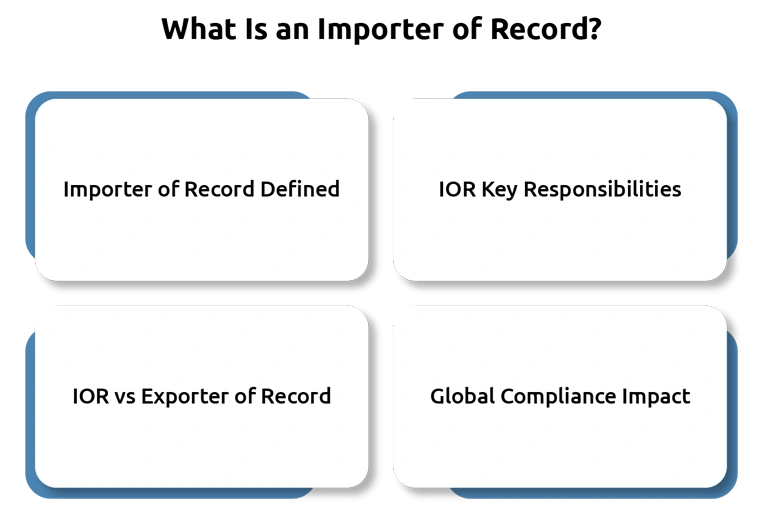
What Is an Importer of Record?
Understanding the IOR Role
An Importer of Record is the legally designated organization responsible for confirming that imported goods comply with all local laws and regulations. This includes accurate categorizations using the HS code and HTS Harmonized Tariff Schedule, payment of duties and taxes, and completion of customs documentation.
IOR vs Exporter of Record Services
While exporter of record services focus on export compliance from the country of origin, the IOR assumes responsibility at the destination. In complex international shipping terms governed by Incoterms such as DAP and DAPs, the IOR plays a crucial role in defining who supports customs dependability and import problems.
Why Use an Importer of Record Service After Tariff Volatility?
Managing Regulatory and Cost Uncertainty
Tariff volatility makes it difficult for importers to predict duty rates, mainly when preferential programs such as the generalized system of preferences (GSP) are in place. An expert IOR service continuously tracks regulatory updates and confirms that shipments are declared correctly to avoid fees or shipment holds.
Supporting Approval
In industries such as medical and aviation, even small documentation issues can delay shipments vital to work or patient care. IOR providers have industry expertise, confirming approval with both customs and goods laws while working with broader logistics and international freight services.
The Role of IOR Services in Risk Mitigation and Compliance Stability
In a highly volatile tariff environment, Importer of Record (IOR) services play an important role in minimizing compliance risks & maintaining operational stability. Businesses importing across multiple regions usually face challenges like inconsistent duty structures, sudden regulatory updates, & strict paperwork requirements. IOR providers help to mitigate these risks by ensuring accurate HS code classification, proper valuation, & alignment with country-specific import rules & regulations before shipments reach the border. This proactive approach minimizes the chances of customs delays, fines, or shipment rejections. Along with this, by integrating with International freight services & Customs clearance processes, IOR services create a more predictable and controlled supply chain environment, allowing organizations to respond quickly to tariff changes while maintaining compliance and cost efficiency.
Keeping International Shipments Moving Without Delays
When businesses follow with import rules, global shipping becomes easier. An Importer of Record (IOR) prepares customs documents, handles tariffs & taxes, and allows fast customs clearance. Shipments can avoid delays, save costs, and reach safely and on time if they are carefully planned for globally. It also helps companies in following with local import rules in other countries. This makes the complete import process easier, smoother, and more reliable.
How Tariff Volatility Impacts the Importer of Record Role
Increased Scrutiny and Classification Accuracy
With the government’s strong execution during tariff changes, correct goods categorizations under the correct HS code and tariff schedule are required. The Importer of Record must confirm consistency across invoices, packing lists, and customs completion.
Change in Supply Chain Systems
Tariff volatility frequently pushes organizations to look into sourcing and routing decisions. IOR services now contribute to supply chain optimization, advising on complete entry plans that balance cost, speed, and regulatory risk across borders.
Importer of Record Services: Key Responsibilities After Tariff Volatility
Customs Clearance and Broker Coordination
A core responsibility of the IOR is managing customs clearance, frequently working closely with a licensed Customs Broker to confirm the timely release of goods. This is mainly necessary for high-value IT equipment, automotive components, and regulated medical devices.
Inventory and Order Management Alignment
New IOR services mainly work with inventory and order management systems, confirming that imports work with production schedules and customer delivery responsibilities. This is vital because just-in-time manufacturing methods are the same in the automotive and aviation sectors.
Supporting Premium and Time-Critical Deliveries
For urgent shipments, such as replacement aircraft parts or critical IT infrastructure, IOR providers support premium delivery service methods. By confirming approval upfront, they reduce the risk of border delays that can stop operations.
Guiding International Shipping Terms
Understanding international shipping terms and their implications is another major responsibility. Under DAP arrangements, for example, the Importer of Record must be clearly defined to stop issues over duty payment and dependability at destination ports.
Conclusion
As tariff volatility becomes a permanent part of global trade, the role of the Importer of Record is developing from an approval work to a major trade. For businesses working in IT, aviation, medical, and automotive industries, IOR services provide regulatory certainty, cost control, and flexibility. By managing customs issues, adapting to changing tariff systems, and supporting optimized logistics methods, Importer of Record services are no longer optional; they are vital to permanent global trade work.
DID YOU KNOW?
In fact, in the USA Association of Manufacturers’ first-quarter 2025 outlook survey, 73% of respondents cited trade uncertainties, including tariffs and trade negotiations, as their biggest business concern, which is higher than the 56% and 37% figures from the previous two quarterly outlook surveys.
FAQs:
1. What does an Importer of Record (IOR) do?
An Importer of Record is legally responsible for ensuring imported goods comply with local customs laws, including HS classification, duty payment, tax settlement, and documentation accuracy.
2. Why are Importer of Record services important during tariff volatility?
Frequent tariff changes increase the risk of misclassification and unexpected costs. IOR services help businesses stay compliant, avoid penalties, and manage duty fluctuations effectively.
3. How does tariff volatility affect customs clearance?
Tariff volatility increases customs scrutiny and enforcement, making accurate documentation and classification essential to prevent shipment delays or fines.
4. What industries benefit most from Importer of Record services?
Industries such as IT hardware, aviation, medical devices, and automotive manufacturing benefit most due to strict regulatory requirements and time-critical deliveries.
5. How is an Importer of Record different from an Exporter of Record?
The Exporter of Record handles export compliance at the origin, while the Importer of Record is responsible for import compliance, duties, and regulations at the destination country.