Overview
Medical device exporters are facing a quickly developing regulatory and cost environment across North America. The United States, Canada, and Mexico have all improved their regulatory systems, increasing the economic and working load on organizations required in cross-border trade. For businesses working in medical, IT, aviation, and automotive supply chains, these changes are improving how international freight services, customs clearance, and supply chain optimization are planned for export.
Growing compliance expectations have now risen goods safety, including digital tracking, cybersecurity, correct documentation, and stronger customs guidelines, combined with HS code categorizations and valuation. Also, exporters must invest massively in regulatory expertise, an importer of record service, and inventory and order management systems to remain competitive.
Major Impacts of Rising Compliance Costs Across North America
Increased Regulatory Documentation Inspections
Exporters of medical devices are experiencing higher costs connected to product checking, technical documentation, and post-market scrutiny. Regulatory officials increasingly require good clinical evidence, real-time reporting, and traceable logistics shipping. This has a direct impact on premium delivery service methods, as shipments are frequently delayed pending approvals, inspections, or random inspections by a customs broker or health authority.
Operational Pressure on Global Supply Chains
Compliance problems now increase international shipping terms, packaging standards, and labeling formats. Businesses must use Incoterms correctly with insurance, dependability, and customs responsibilities to avoid unexpected penalties. This is specifically necessary for organizations managing combined supply chains across medical, aviation, automotive, and IT components, where a single shipment can stop multi-sector operations.
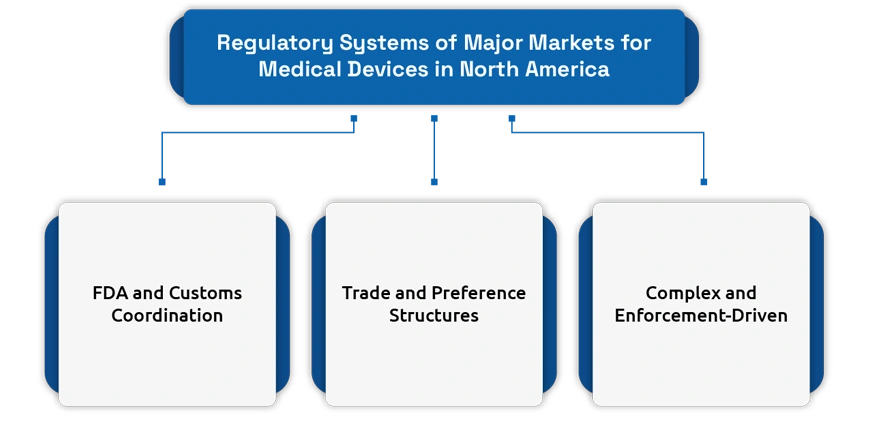
Regulatory Systems of Major Markets for Medical Devices in North America
United States: Complex and Enforcement-Driven
FDA and Customs Coordination
The U.S. regulatory system is combined with Customs and Border Protection enforcement. Medical device exports must follow requirements while also following the HTS harmonized tariff schedule categorizations. Incorrect HS code or incomplete customs clearance documentation may hold shipments, extra duties, or re-export orders.
Trade and Preference Structures
While programs like the generalized system of preferences (GSP) and DAP or DAPs-based delivery arrangements can change landed costs, they do not remove the requirement of importer of record service support. Exporters increasingly depend on exporter of record services to manage regulatory risk, valuation, and approval representation.
Canada and Mexico: Alignment with Local Standards
Canada’s Medical Device Licensing Methods
Canada is using a systematic permits and quality management system. Compliance costs grow through mandatory inspections, labeling, and good tracking rules. These problems affect logistics planning and frequently require region-specific inventory and order management systems.
Mexico’s Evolving Import Controls
Mexico continues to modernize its medical device import systems, increasing documentation accuracy, local registrations, and customs broker involvement. Exporters must work with international freight services closely with in-country partners to stop clearance delays.
Why Medical Device Export Costs Increase Across North America
Regulatory Convergence and Technology Requirements
One major cost driver is the convergence of regulatory and digital compliance. Authorities now expect electronic records, serialized tracking, cybersecurity disclosures, and integration with national tracking platforms. For exporters, this means investing in IT infrastructure alongside traditional compliance resources.
Tariff Classification and Valuation Risks
Incorrect HTS harmonized tariff schedule usage or HS code goods exposes exporters to retroactive duties, penalties, and shipment seizures. As execution becomes more data-driven, classification accuracy directly impacts profitability and working continuity.
Logistics and Agreement Difficulty
Growing insurance fees, specialized storage requirements, and sensitive logistics increase costs. Exporters must also guide the mainly difficult international shipping terms and the Incoterms system to clearly allocate risk between buyers, sellers, and logistics providers.

Conclusion
Medical device exports across North America are entering a new era where compliance is no longer a back-office work but a central business strategy. Rising regulatory expectations, good customs scrutiny, and digital traceability requirements are increasing the cost of doing business. For companies working across medical, IT, aviation, and automotive industries, success now depends on building flexible compliance systems supported by strong customs broker relationships, dependable importer of record service partners, and advanced supply chain optimization tools.
DID YOU KNOW?
According to Banco de México (Banxico), in the first eight months of the year, the total value of exports of scalpels, blood pressure monitors, and stethoscopes was US$4.68 billion, which accounted for 1.1% of Mexico’s total exports.
FAQs:
1. Why are compliance costs increasing for medical device exports in North America?
Compliance costs are rising due to stricter regulatory enforcement, expanded documentation requirements, digital traceability systems, and closer coordination between health authorities and customs agencies.
2. How do regulatory changes affect medical device exporters?
They increase the need for detailed technical files, accurate HS code classification, cybersecurity disclosures, and stronger coordination with customs brokers and importer of record service providers.
3. What role does customs clearance play in rising export costs?
Customs clearance now involves more inspections, data verification, and valuation reviews, which can delay shipments and increase operational and logistics expenses.
4. How are the U.S., Canada, and Mexico different in their regulatory approaches?
The U.S. follows a more enforcement-driven model, Canada focuses on structured licensing and quality systems, and Mexico is strengthening import controls and local registration requirements.
5. How can exporters manage rising compliance and logistics costs?
Exporters can reduce risk by investing in regulatory expertise, using advanced inventory and order management systems, partnering with reliable customs brokers, and improving supply chain optimization.