Overview
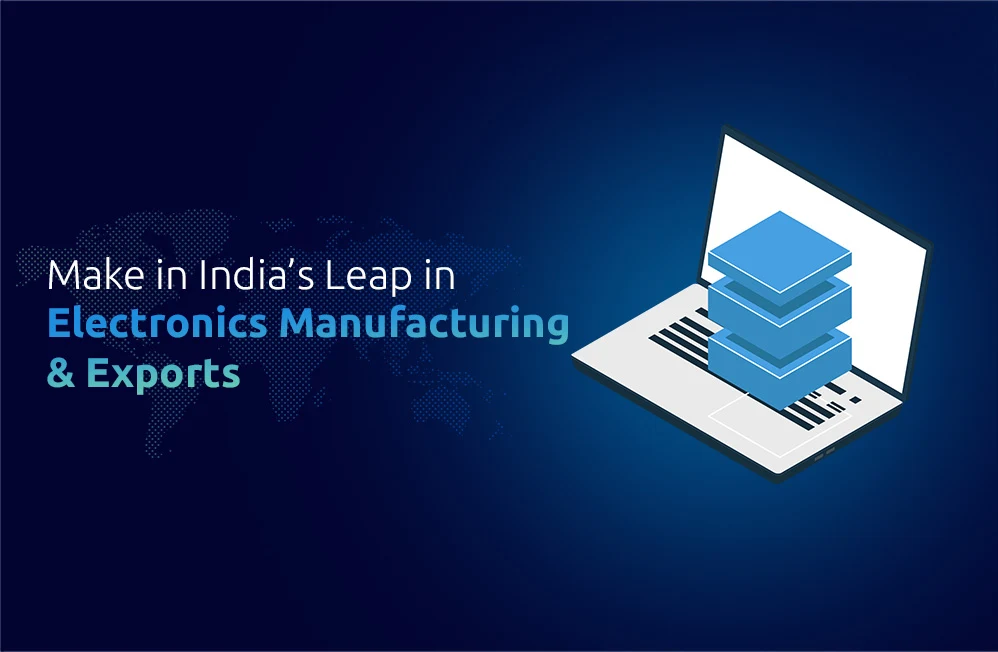
India’s electronics sector is undergoing a critical change under the Make in India initiative of the government. Once largely dependent on imports, the country is now positioning itself as a competitive global manufacturing and export hub for electronics. Backed by policy reforms, growing local demand, and expanding export hub, electronics manufacturing has become a major pillar for India’s broader trade aspirations across IT, aviation, medical devices, and automotive industries. This change is also improving India’s role in global supply chains, supported by developing trade systems and simplified logistics ecosystems.
Major Progress Made by Electronics Manufacturing in India
Growth of Manufacturing Capabilities
Over the past year, India has seen huge progress in electronics manufacturing, specifically in mobile phones, semiconductors, consumer electronics, and industrial parts. Global organizations are increasingly developing assembly productions and manufacturing units, driven by cost-effective and policy incentives for electronics industries.
Export Growth and Market Access
Electronics exports from India have grown, with goods now reaching major markets in North America, Europe, and Asia. Trade facilitation mechanisms, including approval with HS code categorizations and used with the have improved export efficiency. Preferential access under systems such as the generalized system of preferences (GSP) has further increased India’s export cost efficiency in select markets.
Projections Indicate That India’s Electronics Production Will Reach USD 300 Billion by 2026
Growing Across Industries
Estimation shows India’s electronics production could reach USD 300 billion by 2026, showing quick capacity expansion. This growth is not limited to some electronics but extends into valuable goods such as avionics, medical imaging equipment, automotive electronics, and IT hardware.
Role of Trade and Logistics Infrastructure
Getting this growth requires effective logistics, strong customs clearance, and clarity on international shipping terms. The usage of systematic Incoterms, including DAP and DAPs, is helping exporters and importers define delivery responsibilities more clearly. Businesses are also depending on combined international freight services and customs broker support to reduce logistics delays and approval risks.
Government Schemes for the Electronics Boom in India
Policy Support and Incentives
Government initiatives such as the Production Linked Incentive (PLI) scheme, semiconductor missions, and electronics manufacturing clusters have been instrumental in growing investments. These programs aim to reduce import dependency and increase value addition within India.
Allowing Trade Compliance
For exporters, agreement systems such as exporter of record services and importer of record service methods are simplifying cross-border operations. These services help organizations manage regulatory problems while focusing on production and market expansion. Improved inventory and order management systems further support just-in-time manufacturing and premium customer responsibilities.

India’s Next Electronics Leap: Moving Further Assembly to Core Manufacturing
From Assembly to Value Creation
While assembly has been the entry point, India’s next leap depend in core manufacturing design and component production. These changes are crucial for sectors such as medical devices, automotive electronics, and aviation systems, where accuracy and agreement are non-negotiable.
Supply Chain Optimization and Premium Delivery
As electronics exports become more complex, organizations are prioritizing supply chain optimization to increases dependance and cost efficiency. Advanced international freight services and premium delivery services are supporting time-sensitive shipments, mainly for IT hardware and medical equipment. These capabilities improve India’s reputation as a dependable global manufacturing partner in global trade.
Why are global companies shifting their electronics supply chains to India?
Global companies are increasingly adopting a “China+1” strategy, where they expand their manufacturing bases outside China. India is becoming a selected destination due to its large skilled workforce, supportive government policies like the PLI scheme, improving infrastructure, and rising domestic demand in electronics. This shift is significantly boosting India’s role in the global electronics manufacturing ecosystem.
Conclusion
Make in India’s progress in electronics manufacturing marks a systematic change in the country’s industrial and trade landscape. With production expected to touch USD 300 billion by 2026, India is slowly moving from assembly-led growth to good manufacturing industries. Supported by government schemes, standardized trade methods, effective customs processes, and modern logistics systems, the electronics sector is becoming a vital for India’s import-export ecosystem. For businesses working across IT, aviation, medical, and automotive industries, this development opens new opportunities to integrate into global supply chains and compete at a higher value level.
DID YOU KNOW?
In the first half of the financial year 2026 alone, electronics exports reached approximately $22.2 billion, a 42% increase compared to the previous year, putting this sector on track to challenge traditional giants in the export sector.
FAQs:
1. What is the role of Make in India in electronics manufacturing?
Make in India has encouraged electronics manufacturing by providing policy incentives, simplifying regulations, and attracting global companies to set up production and assembly units in India.
2. How fast is India’s electronics manufacturing sector growing?
India’s electronics production is projected to reach USD 300 billion by 2026, driven by strong local demand, export growth, and expanding manufacturing capabilities.
3. Which electronics segments are growing the fastest in India?
Mobile phones, semiconductors, consumer electronics, IT hardware, automotive electronics, and medical devices are among the fastest-growing segments, driven by both domestic production and export opportunities.
4. How do government schemes support electronics exports?
Schemes like the Production Linked Incentive (PLI) and electronics manufacturing clusters help reduce costs, increase value addition, and improve export competitiveness.
5. Why is India moving beyond assembly to core electronics manufacturing?
Moving into core manufacturing allows higher value creation, better supply chain control, and stronger global competitiveness, especially in sectors requiring precision and compliance.