Overview
The global automotive industry is going through a period of changing variability as protectionist guidelines and higher import duties are changing global trade. From tariff growth to changing trade agreements, automakers are being pushed to look at how vehicles, components, and raw materials ship across borders. As global protectionism increases, automotive supply chains must be used to have cost efficiency, regulatory approval, and delivery dependability in an increasingly volatile trade environment.
How Are Automakers Redesigning Supply Chains to Handle Tariff Uncertainty?
Auto manufacturers are changing their global supply networks to reduce the impact of changing tariffs & trade restrictions. Many companies are expanding suppliers, expanding regional production hubs, & enhance supply chain visibility to control costs & maintain stable vehicle production. These plans help production respond faster to trade changes while keeping deliveries reliable.
Understanding Protectionism and Tariffs’ Impact
Protectionism is related to government policies such as tariffs, quotas, and trade barriers related to protect local industries. In the automotive sector, tariff wars have a direct impact because vehicle manufacturing depends heavily on cross-border trade of components categorized under specific HS codes and HTS Harmonized Tariff Schedule categories of goods.
Trade preference programs such as the generalized system of preferences (GSP) once helped reduce duties on automotive inputs sourced from developing economies. Also, the restricted clearance or renegotiation of such programs has raised landed costs for manufacturers in the supply chain. As duties changes such as international shipping terms and correct tariff categorizations has become necessary to avoid fees and shipment delays in global trade.
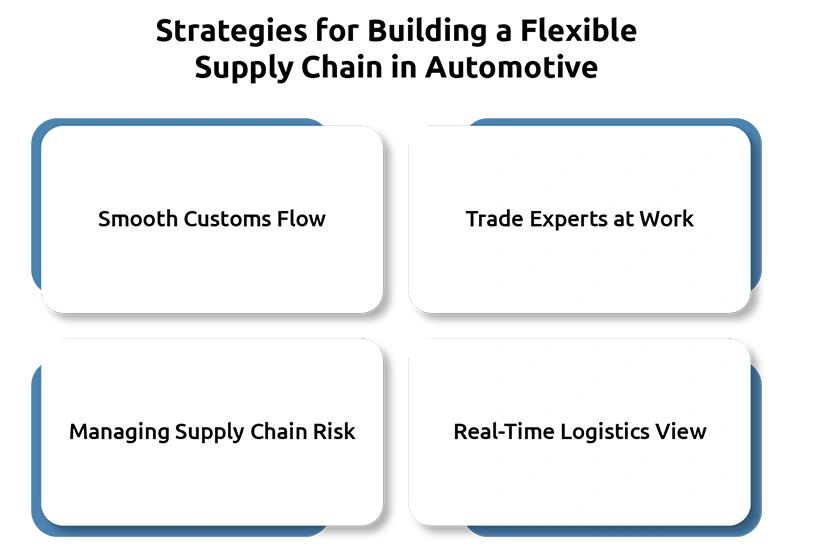
Strategies for Building a Flexible Supply Chain in Automotive
Improving Trade Agreement and Documentation
Automakers are investing heavily in approval systems to confirm smooth customs clearance processing. Accurate use of Incoterms, such as DAP (Delivered at Place), helps define cost and risk ownership clearly between buyers and sellers. For difficult, multi-country shipments, clearly structured DAP’s agreements help avoid issues at the border trade.
Using Third-Party Trade Expertise
To manage growing regulatory pressure, many manufacturers now depend on exporter of record services and Importer of Record Service providers in the automotive supply chain. These services confirm that shipments meet local regulatory requirements, mainly when automakers lack a legal business in the destination country. This approach reduces customs risk while supporting growing market entry in the supply chain.
Optimizing Logistics and Inventory
Advanced supply chain optimization plans are helping automakers balance cost and speed. This includes combining inventory and order management systems with real-time logistics visibility in global trade. By working with production schedules with international freight services, manufacturers can reduce backup inventory while still seeing changing market demand in global trade.
How Automaker Supply Chains Responded to US Tariffs
Regionalization of Manufacturing
In response to US tariffs on automotive dashboards, maintenance tools, and automotive components, many automakers localized production closer to end markets. Nearshoring and regional hubs reduced showing to tariff changes while improving delivery lead times in the supply chain.
Alternative supplier development
Manufacturers expanded their supplier base across multiple regions to reduce dependence on single-country trade. This strategy also helped to reduce customs risks related to changing tariff categorizations under the HTS systems.
Increased Customs Management
Automakers improved their relationships with expert customs broker partners to confirm smoother customs clearance. This reduced border delays and confirmed accurate duty calculations during periods of continuing regulatory changes.
The Challenges of Seeing Automotive Supply Chains Today
Rising Costs and Tariff Pressure
Higher duties, increased freight rates, and approval expenses continue to constrain profitability. Even premium automaker organizations are reevaluating pricing plans to stop higher landed costs related to global trade restrictions.
Complex Regulatory Landscape
Automotive supply chains must guide developing trade rules, product origin requirements, and safety regulations across multiple administrative approval processes. Errors in tariff categorizations or documentation can result in costly delays or execution actions in shipments.
Customer Expectations for Ontime shipments
Despite trade issues in the supply chain, customers still expect fast and dependable delivery. This has increased demand for premium delivery service, providing that balance of quickness with approval, mainly for aftermarket automotive parts.

Conclusion
As global protectionism changes international trade, automotive supply chains are under pressure to develop in the supply chain. Higher duties and a difficult tariff system are no longer short-term problems; they are systemic factors. By improving agreement, using expert trade services, and investing in flexible logistics and inventory plans, automakers can guide uncertainty while maintaining competitiveness. In a world of changing trade policies, visibility across the supply chain will define long-term success.
DID YOU KNOW?
South Korea’s automobile exports reached a record $72 billion in 2025, with eco-friendly vehicle exports contributing $25.8 billion. This growth shows how automotive supply chains are adapting to changing global trade conditions and increasing demand for advanced vehicles.
FAQs:
1. How does protectionism affect the automotive supply chain?
Protectionism increases tariffs and trade barriers, increasing costs for automotive components and vehicles while complicating cross-border logistics and customs agreements.
2. Why are tariffs a major issue for automakers?
Automotive manufacturing relies on global sourcing of parts, and higher tariffs directly increase landed costs and stop just-in-time production methods.
3. What role does the generalized system of preferences (GSP) play in automotive trade?
The GSP helped reduce duties on automotive inputs from developing countries, but changes or restrictions have increased costs for global manufacturers.
4. How are automakers adapting to changing trade policies?
Automakers are regionalizing production, changing suppliers, improving customs management, and using trade approval experts to reduce risk.
5. Why is supply chain visibility critical in today’s automotive industry?
With developing tariffs and regulations, real-time visibility helps manufacturers manage delays, control costs, and meet customer delivery expectations.