Overview
The advanced India-UK Free Trade Agreement sees a huge step in improving the long-term trade between the two major economies. This agreement is expected to unlock new export opportunities, simplify trade processes, and increase supply chain efficiency from this trade deal. For businesses working across IT, aviation, medical, and automotive industries, the India-UK FTA could become an allowance for quick market access and long-term growth in global trade. As global supply chains become more connected, trade agreements such as this play a vital role in changing tariffs, customs processes, and international shipping terms, directly increasing exporters and logistics service providers in global trade.
Key Insights from the India-UK FTA
What are the Global FTAs
Past trade frameworks, including preferential systems such as the generalized system of preferences (GSP), show that reduced tariffs and regulatory alignment can hugely boost exports. While the India-UK FTA is more complete than GSP arrangements, it builds on similar guidelines of market access, tariff optimization, and simplifying customs clearance. One major insight from global FTAs is the importance of clear product categorizations using HS code and HTS Harmonized Tariff Schedule standards. These categorizations help exporters accurately calculate duties and follow import regulations, reducing delays at borders.
Trade Facilitation and Compliance
The agreement is expected to improve documentation processes and transparency, benefiting businesses that depend on precise Incoterms, systematic inventory and order management, and dependable customs broker support. For exporter of record and importer of record service providers, these changes could simplify approval while reducing working risk.
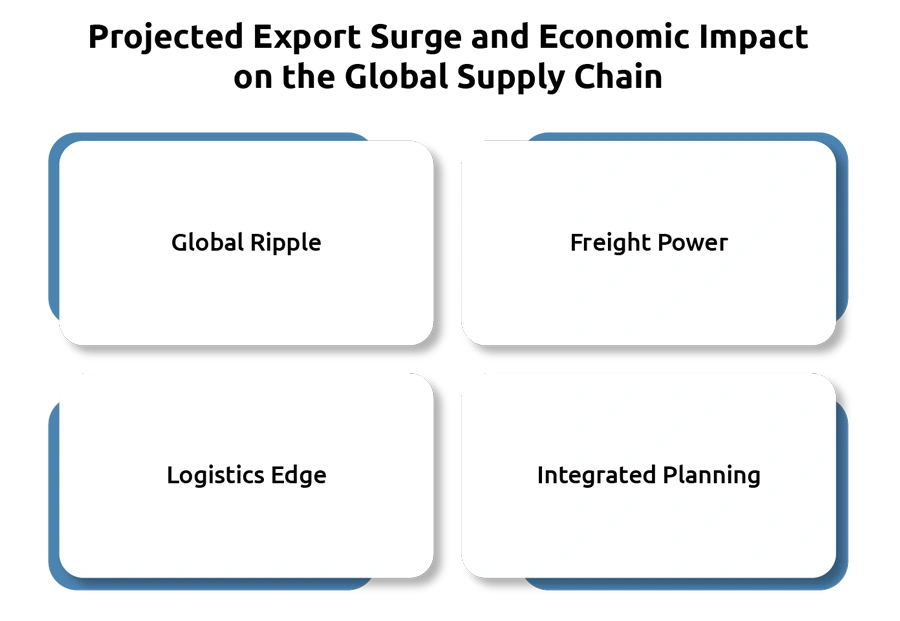
Projected Export Surge and Economic Impact on the Global Supply Chain
Improving Cross-Border Trade
India’s exports to the UK are projected to grow hugely once the FTA is fully implemented in the supply chain. Sectors such as software services, automotive components, aviation parts, and medical devices are likely to see increased demand due to tariff reductions and smoother customs procedures. This export growth will have a spread effect across the global supply chain. Increased supply chain optimization strategies supported by effective international freight services and premium delivery service options will be critical to meeting strong delivery schedules and higher volume expectations.
Logistics as a Growth Allowance
With increased trade sizes, logistics will move from a support role to a major advantage. International shipping terms, easy customs clearance, and combined logistics planning will help exporters maintain competitiveness in the UK market.
Major Areas Affected: A Wide Range of Opportunities in Global Trade
IT, Aviation, Medical, and Automotive Industries
- IT and digital services may benefit from improved mobility provisions and cross-border data cooperation.
- Aviation and automotive manufacturers can gain from reduced duties on components, improving cost efficiency across production cycles.
- Medical and healthcare exporters may see faster approvals and simplified import processes, especially when supported by strong importer of record services.
- In all these sectors, using DAP and DAPs delivery methods can help clarify responsibility, cost allocation, and risk transfer between buyers and sellers.

Benefits of the UK-India Free Trade Agreement for Exporters
Reduced Costs and Quick Market Access
Lower tariffs, predictable duty systems, and harmonized regulations can reduce landed costs for exporters. Correct use of HS codes and confirm to the HTS Harmonized Tariff Schedule will further reduce issues and delays.
End-to-End Trade Support
Exporters supported by combined services ranging from international freight services and customs broker expertise to inventory and order management will be better situated to grow operations. Dependable exporter of record services also helps businesses enter the UK market without starting a local legal business.
Conclusion
The India-UK FTA has the potential to change bilateral trade by growing export growth, improving logistics efficiency, and improving global supply chains. Insights from earlier FTAs show the importance of tariff clarity, regulatory alignment, and strong trade systems. For organizations working in IT, aviation, medical, and automotive sectors, the agreement shows a major opportunity to expand globally. By using improved logistics, complete customs processes, and well-defined international shipping terms, exporters can fully maximize the projected export growth and build flexible, future-ready trade work.
DID YOU KNOW?
Exports, which reached $2.05 billion in 2024, are projected to grow at a robust rate of 15-20 percent annually, reaching approximately $2.4 billion in 2025 and $2.8 billion by 2026.
FAQs:
1. What is the India-UK Free Trade Agreement (FTA)?
The India-UK FTA is a bilateral trade agreement aimed at reducing tariffs, improving market access, and simplifying customs procedures between India and the United Kingdom.
2. How will the India-UK FTA benefit exporters?
Exporters benefit through lower duties, faster customs clearance, predictable regulations, and improved access to the UK market without heavy approval burdens.
3. Which industries gain the most from the India-UK FTA?
Key sectors include IT services, aviation components, automotive manufacturing, medical devices, and healthcare exports.
4. How does the India-UK FTA improve global supply chains?
The agreement enhances supply chain efficiency by streamlining documentation, aligning regulations, reducing border delays, and supporting dependable international freight services.
5.What role do logistics and customs services play under the India-UK FTA?
Effective logistics, customs brokers, and exporter or importer of record services help businesses comply with regulations, manage shipping terms, and confirm smooth cross-border trade.