Red Sea Shipping Is Entering Another Phase
The Red Sea shipping network is change as major carriers review Suez Routes. In September 2026, Maersk & Hapag-Lloyd introduced four extra shared container services across the Suez route, changing direction some earlier rerouting around the Cape of Good Hope. Shipping companies are still identify local security before making further route changes.
For importers, route changes can impact on transit times, freight costs customs timing, inventory planning, or delivery plans. Changes in the Red Sea can also affect trade between Asia, Europe, or the Mediterranean.
Importers should therefore monitor how carrier route changes may affect their shipment, destination port, and delivery schedule.
Why the Suez Canal topics to global Freight Networks
The Suez Canal offer a direct sea route between the Red Sea or the Mediterranean. When ships avoid it, they usually travel around the Cape of Good Hope, adding distance and transit time.
The World Bank estimated that earlier rerouting around Africa could add about 3,000–3,500 nautical miles and seven to 10 days to an Asia-Europe journey. Longer routes also keep ships and containers in transit for more time.
These delays can affect later port calls and container availability, meaning European importers may face schedule changes even when their shipments are not directly linked to the Red Sea.
Transit Time Should Be Planned Around More Than Ocean Sailing
A shorter ocean route does not always mean the entire import process will become faster. The cargo still needs to move across origin handling, cargo loading, transshipment where applicable, destination port operations, customs clearance and final delivery.
For importers of technology equipment, industrial systems, automotive components or medical equipment, the customs stage can be particularly important because documentation, classification, permits or product-specific requirements may affect release timing. A cargo arriving earlier does not eliminate these requirements.
Route changes can also affect arrival forecasts used by warehouses and project teams. If a shipment is supporting an installation, replacement or deployment deadline, even a relatively small change in the ocean schedule can alter the downstream plan. Importers should therefore connect freight planning with customs and delivery planning rather than treating them as separate activities.
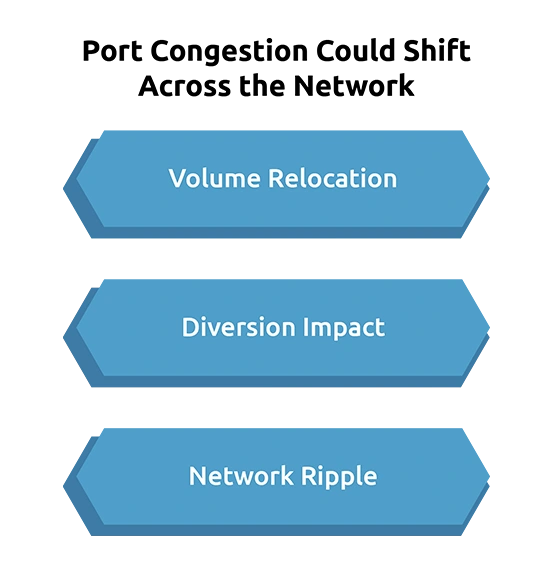
Port Congestion Could Shift Across the Network
Changes in ship routing can rellocate cargo volumes between ports & services. If a larger number of cargo ship return to the Suez route, ports or terminals along the revived services may see changes in arrival patterns. If diversions resume, extra cargo may again move across alternative routes and hubs.
The World Shipping Council has noted that major routing changes can create port delays & capacity-management issues, specifically when large network adjustments happen quickly. It also notes that carriers are making individual routing decisions based on operational conditions and risk assessments.
Customs Planning Still Matters When Routes Change
A change in the ocean route does not normally remove the importer’s customs requirements at the destination. Importers still need accurate commercial documentation, tariff classification, valuation information and any applicable permits or product approvals.
This is specifically essential when a company uses an Importer of Record arrangement. The IOR role is linked to the import transaction & destination-country requirements, not simply to the cargo maritime route. If a shipment is diverted its arrival port changes, the customs and delivery plan may also need to be reviewed.
Import teams should make sure the commercial invoice, packing information, buyer details, tariff classification and other customs data remain steady with the actual shipment. Any change in destination or delivery arrangement should be communicated to the relevant customs and logistics parties before the cargo arrives.

What Importers Should Watch Next
The next stage of Red Sea shipping will rely on security developments, carrier decisions or the capacity of shipping networks to handle stable schedules. The Global Maritime Companies has continued to warn that attacks on commercial shipping in the region threaten seafarers, maritime security or global supply chains.
At the same time, the return of extra Suez services shows that carriers are actively reviewing routing plans rather than treating the Cape of Good Hope diversion as a permanent solution.
Importers should therefore watch carrier service updates, cargo schedules, port conditions, freight-rate movements and regional security updates.
Conclusion
Red Sea route changes are becoming an essential factor in global freight planning because the shipping network is moving between different routing patterns rather than following one fixed model. The return of some services across the Suez Canal can reduce certain Asia-Europe voyages, while ongoing security concerns mean further change remain possible.
For importers, the practical focus should be on shipment clarity , flexible transit planning, inventory requirements, customs coordination and alternative logistics options. Ocean routing is only one part of the import process, or changes at sea can influence the wider chain from cargo schedules to final delivery.
Did You Know?
Rerouting ships around the Cape of Good Hope can add around 3,000–3,500 nautical miles and 7–10 days to a typical Asia–Europe voyage, according to the World Bank.
Frequently Asked Questions
How do Red Sea route changes affect importers?
Updates between Suez Canal & Cape of Good Hope routes can alter ocean transit times, cargo schedules, freight costs and following delivery planning. Importers should monitor the actual carrier service allocate to each shipment.
Why are ships staying rerouted around the Cape of Good Hope?
Security risk in the Red Sea have led some lines to avoid the corridor & use the longer route around southern Africa. The route adds sailing distance and can tie up cargo capacity for longer periods.
Are shipping companies restarting to the Suez Canal in 2026?
Yes. In September 2026, Maersk or Hapag-Lloyd said the return of four extra joint container services through the Suez Canal. They have also noted that future routing decisions will rely on local conditions.
Can Red Sea delay affect customs clearance?
The maritime route itself does not remove destination-country customs requirements, but update to arrival schedules, ports or delivery plans can affect the overall import process. Importers should keep customs documentation & logistics plans aligned with the actual shipment.
What should importers monitor during Red Sea route changes?
Importers should monitor operator routing announcements, cargo schedules, estimated arrival dates, destination-port conditions, freight costs & regional security developments. These factors can affect shipping and delivery planning even after a shipment has been confirmed.