Ready to simplify your shipping from China? Whether you’re importing IT hardware, medical goods, or auto parts, let expert freight forwarders handle the complexity from HS Codes to DDP delivery. Request a customized shipping quote today and reduce your delivery time and cost!
Overview of Key Hubs and Industries
China’s economic growth has been remarkably impressive. The country’s GDP has been growing slowly, reaching new heights year after year. For organizations, this has led to a growing purchasing power of the middle class. Exporting to China gives organizations entry to a market of over 1.4 billion customers, diversifying their revenue industries and reducing their dependence on the local trade. Major ports such as the Port of Shanghai are the busiest shipping ports in China, managing more than 40 million TEUs of cargo yearly. Ningbo-Zhoushan Port manages a wide range of cargo, from bulk goods, and Shenzhen Port manages electronics and high-tech goods. Along with international airports such as Beijing Capital International Airport, major goods for export are medical goods and electronics. Shanghai Pudong’s top imports include combined circuits/micro assemblies, and Guangzhou Baiyun works as an important gateway for exports. A huge chain of freight forwarding services and logistics systems supports these ports and airports.
The IT, aviation, medical, and automotive industries depend on Chinese exports. Shenzhen and Guangzhou ports are used in IT accessories shipments, while Shanghai and Tianjin are vital for automotive and aviation parts. The Generalized System of Preferences (GSP) also simplifies and reduces taxes for eligible developing nations importing from China, supporting global trade.

Key Services for China Logistics
Importer of Record
An Importer of Record (IOR) is a critical service for companies shipping goods into China, mainly for IT, medical, aviation, or IT equipment that requires a strong agreement. The IOR is legally responsible for confirming that all imported goods follow local laws, including proper categorization under HS Codes, payment of duties and taxes, and accurate documentation.
Exporter of Record
An Exporter of Record (EOR) handles the legal responsibilities for exporting goods from China. For businesses without a local Chinese organization, an EOR provides the necessary export licenses, documentation, and agreement with Chinese export controls.
DDP
Delivered Duty Paid (DDP) is a shipping agreement under Incoterms where the seller takes full responsibility for delivering goods to the buyer’s door, such as export and import duties, taxes, and customs clearance. DDP is frequently used for shipments from China to confirm a easy experience for buyers.
Data Centers
Modern supply chains depend heavily on data operations. Partnering with local data centers in China supports real-time tracking, data storage, cloud computing, and secure transfer of sensitive business data, mainly for IT, aviation, and medical sectors.
Data Centers
Modern supply chains depend heavily on data operations. Partnering with local data centers in China supports real-time tracking, data storage, cloud computing, and secure transfer of sensitive business data, mainly for IT, aviation, and medical sectors.
How “In Transit” Status Affects Your Shipping Timeline from China
Many importers often worry when their shipment shows the “in transit” status during international shipping. In global logistics, “in transit” simply means your cargo has departed the warehouse and is moving between checkpoints—whether by air freight, sea freight, or multimodal transport. This phase is crucial in the telecommunication supply chain strategy, IT hardware imports, and automotive supply chain solutions, as real-time visibility helps businesses forecast delays and manage inventory efficiently. Modern freight forwarders now use AI-powered demand forecasting tools and digital tracking systems to give importers complete visibility from origin to destination, improving planning, reducing bottlenecks, and keeping compliance aligned with global trade regulations.
Tips for Cheaper Shipping from China
- Pick the accurate Incoterm: If you want easy shipping, select DDP shipping, where the seller manages tax and delivery.
- Work with Dependable Freight Forwarders: They confirm improved routes and help you secure the lowest shipping rates.
- Bundle Shipments: Combining small orders into larger ones helps unlock cheap international delivery discounts.
- Understand Your Product’s HS Code: Accurate classification avoids delays in customs.
- Use Express Services for Urgent Shipments: Though not the cheapest way to mail a package, they save valuable time.
- Check for GSP Eligibility: Some goods may be imported at lower tax rates if eligible.
Short CTA?
In 2023, China imported $2.91 billion worth of aircraft spare parts, making it the eighth largest importer of aircraft spare parts in the world.
The Shipping Process and Timeframes
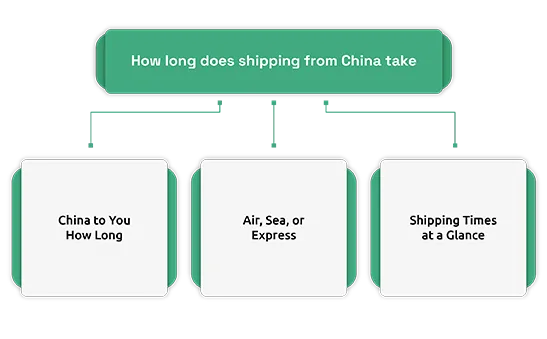
China offers multiple storage and warehousing services, including public, private, and bonded warehouse facilities that support faster and safer cargo handling. Once goods enter the facility, they move through customs clearance, where proper HS Code classification, HTS checks, and Incoterms understanding—especially DDP shipping or DAP terms—ensure smooth processing. Partnering with a professional freight forwarder or customs broker reduces delays by managing documentation, import tariffs, and compliance. Depending on your chosen mode—air, sea, or rail—the total transit time varies, with additional in-country delivery taking another 3–7 days. These streamlined warehouse solutions are essential for importers handling high-value products like IT hardware, aviation components, and medical devices.
- Air Freight: three to seven days (perfect for urgent or small goods)
- Sea Freight: twenty to forty days (best for bulk shipping with low urgency)
- Rail Freight: fifteen to twenty-five days (mostly to Europe)
Clearance and delivery within the destination country add 3–7 days more. Charges also include handling fees, local warehousing, and freight forwarding service costs.
DID YOU KNOW?
Shanghai Port world’s busiest container port, which exceeded 49 million units, an increase of 3.6% in volume compared to the previous year, which shows the continuous dominance of Shanghai in global maritime trade. China exported $2.32 billion in aircraft spare parts, making it the eighth-largest exporter of aircraft spare parts in the world. In the same year, aircraft spare parts were the 250th most exported product in China.
FAQs:
Q1: How fast is air freight from China?
Air freight is the fastest option, usually taking 3–7 days. It is ideal for lightweight, high-value, or urgent shipments like electronics and medical supplies.
Q2: How do HS Codes affect shipping from China?
HS Codes classify goods for customs. Using the wrong code can cause delays, extra duties, or rejected shipments.
Q3: What is DDP shipping, and should I use it?
DDP (Delivered Duty Paid) means the seller handles all duties, taxes, and delivery. It is ideal for importers who want a hassle-free shipping experience.
Q4: How much does it cost to ship one cubic meter from China to the USA?
Sea freight costs around $380–$480 with a 30-day delivery. Air freight is faster but more expensive, ranging from $780–$1,180 for 5-day delivery.
Q5: Do I need a customs broker for shipments from China?
Yes, especially for bulk or regulated goods. A customs broker ensures proper documentation, correct HS classification, and smooth customs clearance.