
Overview
The India–US trade deal marks a significant step toward improving long-term trade ties between two of the world’s largest economies, with an 18% tariff reduction. Simplifying trade barriers and reducing tariff pressures, the agreement creates new changes for cross-border trade and long-term trade deals. For businesses operating in import-export activities, specifically across the IT, aviation, medical, and automotive industries, the deal signals a more predictable, growth-oriented trade environment. Beyond headline tariff reductions, the agreement shows a common purpose to simplify trade processes and boost investor confidence in this trade deal.
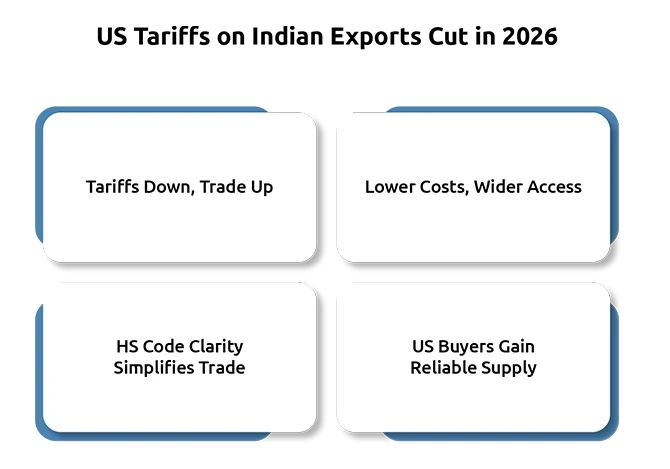
US Tariffs on Indian Exports Cut in 2026
A Strategic Change in Trade Policy
Starting in 2026, the US will implement targeted tariff reductions on many Indian export categories. This move is expected to increase cost affordability for Indian goods while providing US buyers with a broader and more dependable supplier base in trade. Although trade systems such as the generalized system of preferences (GSP) have conventionally changed market access, the current deal focuses more on sector-specific rather than huge preference programs in trade deals.
Export Growth Opportunities
Lower tariffs reduce landed costs and ease approval challenges connected to HS code and HTS harmonized tariff schedule classifications in trade. This clarity benefits exporters planning long-term agreements and production stages, mainly in high-value manufacturing goods in this trade deal.
What’s in the Deal: Key Tariff Changes and Economic Terms
Focused Tariff Optimization
The agreement introduces selective tariff cuts rather than extensive reductions. Priority sectors include technology hardware, automotive components, aviation parts, and medical devices in these trade deals. These changes work with developing trade deals and laws while supporting fair market access in India-US trade deals.
Trade simplification policies
The deal also improves coordination on trade documentation and categorization standards in trade. While international shipping terms and Incoterms continue to govern transaction responsibilities, the simplified tariff structure reduces uncertainty at entry points and during customs clearance processes of shipments.
Trade and Investment Cooperation System
In addition to tariff changes, the agreement advances regulatory usage, investment protection, and dispute resolution systems. This broader system supports smoother trade execution without disrupting existing trade methods, such as importer of record service or exporter of record services, in this trade deal.
How the India–US Trade Deal Increases Investment Outlook
Increasing Investors trade
Reduced tariffs and clearer trade rules improve cost predictability, which is a major factor for investors evaluating manufacturing and sourcing locations in trade deals. The agreement comforts global organizations that India remains a stable partner for long-term production and technology collaboration in us-india deal.
Sector-Specific Investment Growth
- IT and electronics benefit from lower input costs and expanded access to US markets.
- Aviation and automotive manufacturers gain from simplified component sourcing and reduced approval friction.
- Medical technology organizations see faster market entry opportunities, supporting innovation and growth in this trade deal.
These developments mainly support supply chain optimization plans without forcing companies to overhaul existing operational methods.

Benefits Beyond Tariffs on Technology and Electronics
Increased Technology Collaboration
Beyond cost savings, the trade deal increases research, innovation, and digital infrastructure development in both countries, reducing tariffs on India. This is specifically valuable for electronics and IT organizations managing difficult inventory and order management systems across borders in the supply chain.
Operational Efficiency Gains
Simplified procedures reduce delays frequently related to customs broker work and premium delivery service requirements. While international freight services remain a critical support of trade in these deals, improved policy alignment helps reduce disruptions and compliance risks.
Competitive Edge for Exporters
The agreement allows Indian manufacturers to compete more effectively in the US market while maintaining quality and regulatory standards. Reduced friction also supports better planning across international shipping terms and demand cycles of trade and shipments.
Conclusion
The India–US trade deal is more than a tariff-cutting trade; it is a forward-looking system designed to increase trade dependence, investment in countries, and industrial collaboration. For businesses working across IT, aviation, medical, and automotive sectors, the agreement creates visible advantages through cost efficiency, regulatory clarity, and improved market access in both countries. As trade shipments strengthen and the investment outlook improves, organizations working in global trade are positioned to use this developing partnership for sustainable growth of both countries in this trade deal.
DID YOU KNOW?
India’s expanding electronics and semiconductor manufacturing sector is likely to receive a boost after the United States (US) agreed to a significant reduction of up to 18 percent in reciprocal tariffs on Indian goods, which had increased from 25 percent to 50 percent in recent months.
FAQs:
1. What is the main objective of the India–US trade deal?
The primary objective is to reduce tariff barriers, simplify trade procedures, and increase long-term economic and investment cooperation between India and the United States.
2. When will the US tariff cuts on Indian exports take effect?
The targeted tariff reductions under the agreement are scheduled to begin in 2026 across selected export categories.
3. Which sectors benefit the most from the India–US trade deal?
Key beneficiaries include IT and electronics, aviation parts, automotive components, and medical devices due to lower tariffs and improved regulatory clarity.
4. How does the trade deal improve the investment outlook?
By providing predictable trade rules, reduced costs, and better regulatory coordination, the agreement increases confidence for long-term manufacturing and sourcing investments.
5. Does the trade deal replace existing trade frameworks like GSP?
No, the agreement focuses on sector-specific tariff optimization rather than broad preference programs, while existing trade systems continue alongside it.