Overview
When businesses search for shipping solutions, the first instinct is often to choose the lowest quoted price. On the surface, the cheapest option appears to protect margins and reduce shipping costs. Also, in international freight services, the cheapest shipping rate rarely shows the true cost of moving goods across borders. Hidden charges, weak service networks, documentation issues, and customs delays can quietly turn a “cheap” shipment into an expensive issue. Understanding how pricing works and how it impacts your supply chain is necessary before committing to any shipping partner for global trade.
Understanding How Cheapest Shipping Rates Are Calculated
Why Cheap Shipping Rates Often Become Expensive in Global Trade
Cheap shipping rates can end up costing more when they don’t include all parts of the service. In many cases, the low price only covers basic transport and leaves out important things like customs clearance, paperwork, taxes, and final delivery. Because of this, businesses later face extra charges like storage fees, demurrage, customs fines, or urgent re-routing costs.
Delays can also happen if the HS code is wrong or if the shipment does not fully meet HTS Harmonized Tariff Schedule rules. This can lead to inspections or goods being held at customs. In the end, what looks like a cheap option at first can increase the total cost and create problems in the supply chain.
The Role of International Shipping Terms and Compliance
International shipping terms like Incoterms define responsibility for costs, risks, and delivery points. A cheap DAP (Delivered at Place) quote, for example, may look attractive, but without strong importer of record service or exporter of record services, businesses can face unexpected duties, approval gaps, or release delays. Also, inaccurate HS code or HTS Harmonized Tariff Schedule categorizations can show penalties and inspections that far outweigh any upfront savings.

Risks Associated with Cheapest Shipping Providers
Service Gaps and Hidden Costs
Cheapest shipping providers frequently depend on exploded carrier networks, limited tracking tools, and minimal customer support. This can lead to surprise fees, storage charges, demurrage, and urgent re-routing expenses. Businesses searching for “freight forwarding companies near me” sometimes discover too late that local presence alone doesn’t confirm global capability.
Compliance and Documentation Risks
Experts in freight forwarding and customs teams, shipments are more vulnerable to documentation issues, misdeclared cargo, or missing regulatory approvals. These issues can slow customs clearance, disrupt inventory supply, and create agreement exposure, mostly when shipping regulated goods or high-value parts.
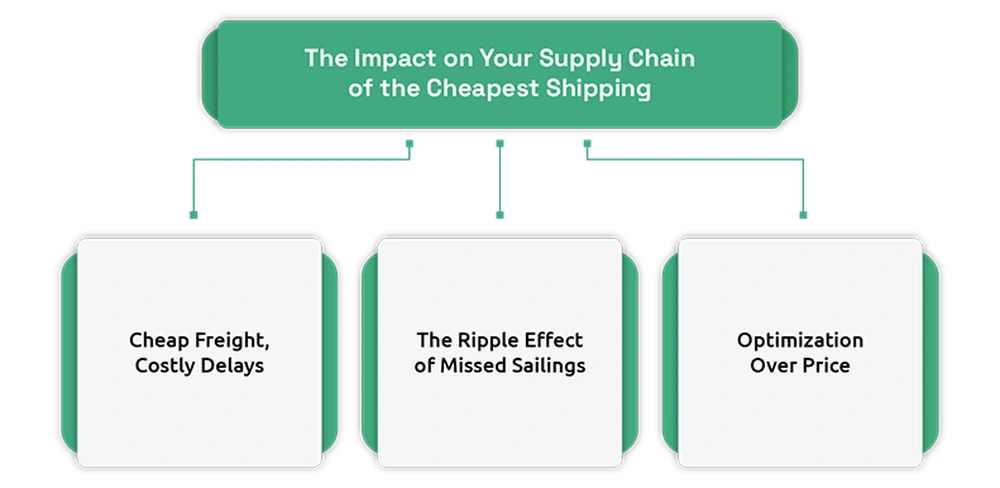
The Impact on Your Supply Chain of the Cheapest Shipping
Delays, Issues, and Inventory Challenges
The real cost of cheap shipping is frequently paid in time. Missed sailings, extended logistics windows, and unreliable delivery schedules disrupt inventory and order management. Stockouts, production stoppages, and lost sales opportunities can ripple across your complete supply chain.
Why Supply Chain Optimization Matters
True supply chain optimization focuses on continuous tracking and risk control, not just freight cost. A slightly higher shipping rate paired with dependable international freight services can reduce buffer stock requirements, improve planning accuracy, and increase customer trust. Over time, this stability usually delivers far greater savings than chasing the lowest possible quote.
How One Union Solutions Help You
Integrated International Freight Services
One Union Solutions goes beyond basic transportation by providing end-to-end logistics support related to protecting both cost efficiency and operational continuity. Their international freight services combined logistics planning, documentation management, and proactive shipment tracking.
Expert Importer and Exporter of Record Support
With specialized importer of record service and exporter of record services, we help businesses guide difficult regulatory environments, reduce compliance risk, and simplify customs clearance. This confirms that shipments move smoothly across borders without costly interruptions.
Premium Delivery and End-to-End Visibility
Through premium delivery service options and a coordinated global chain, we support time-critical cargo, difficult routing requirements, and controlled delivery environments. This approach transforms shipping from a transactional expense into a major advantage.
Conclusion
The cheapest shipping option frequently focuses only on freight cost, ignoring the broader realities of global trade. When documentation errors, customs delays, or unreliable carriers enter, the financial and operational impact can far exceed any initial savings. Selecting experienced partners who understand international shipping terms, approval requirements, and supply chain optimization, businesses gain predictability, flexibility, and long-term value. In global logistics, the real measure of “cheap” is not the estimation, it’s the total cost of success.
DID YOU KNOW?
Depending on your package size and destination, this service offers delivery within two to three days, starting from $9.35. The USPS flat-rate box is a convenient and cost-effective option here.
FAQs:
1. Why is the cheapest shipping option often risky?
The lowest shipping quote usually excludes critical services like customs clearance support, documentation handling, tracking, and last-mile delivery. These gaps often lead to hidden charges, shipment delays, and compliance problems that increase the total cost.
2. What hidden costs are common with cheap international shipping?
Common hidden costs include destination port fees, storage charges, demurrage, customs penalties, re-documentation costs, urgent re-routing, and inventory losses caused by delivery delays.
3. How do international shipping terms affect total shipping cost?
International shipping terms, such as Incoterms, define who is responsible for freight, duties, risks, and delivery. Misunderstanding terms like DAP can leave businesses exposed to unexpected customs charges and regulatory obligations.
4. How does cheap shipping impact the supply chain?
Unreliable low-cost shipping can disrupt inventory and order management, cause stockouts, delay production schedules, and reduce customer satisfaction due to unpredictable transit times.
5. Why should businesses focus on supply chain optimization instead of just freight cost?
Supply chain optimization prioritizes reliability, compliance, and visibility. This reduces operational risks, lowers long-term costs, improves planning accuracy, and creates a more stable international trade operation.