During the import process, customs officials often ask a simple question: “What is this used for?” Even though it sounds basic, this question is very important in international trade. The answer affects how a shipment is classified, how much tax is charged, what rules apply, & whether the goods are allowed to enter the country. For businesses involved in global trade, understanding this question can help avoid delays & compliance problems.
Customs authorities do not depend only on a product’s name or appearance. Instead, they focus on the actual purpose of the product to decide how it fits under national trade laws & international standards.
The Purpose of Customs Controls
Customs authorities manage & control goods at global borders. Their work adds collecting import duties, enforcing trade laws, protecting consumers, & ensuring that incoming goods do not pose safety or security risks. To do this properly, customs officials need to know how imported products will be used after they arrive.
When customs understands a product’s purpose, they can check whether it follows local laws, whether it belongs to a restricted category, & whether extra documents or approvals are needs before release.

Why Product Usage Matters in Customs Clearance
Product usage plays a main role in customs clearance because it affects how goods are treated under tariff & regulatory systems. Two products that look exactly the same may be manage differently depending on how they are used.
The Role of Usage in HS Code Classification
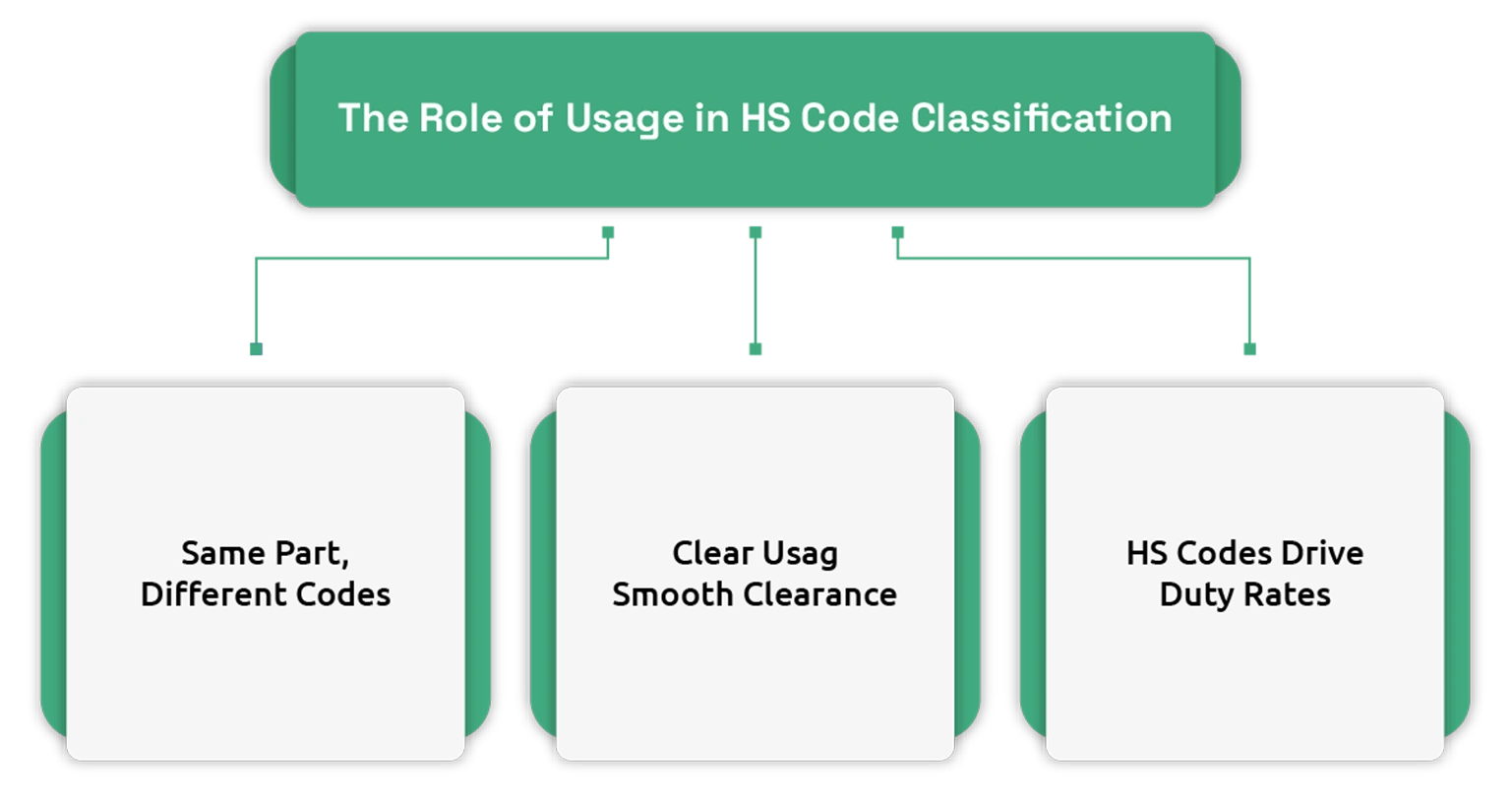
Customs uses the Harmonized System (HS) to classify goods & decide duty rates. In many cases, customs cannot assign the correct HS code without knowing the product’s intended use. For example, a component imported for medical equipment may be classified differently than the same component imported for general industrial purposes. If usage details are unclear, customs may question the declaration or hold the shipment for clarification.
How Usage Affects Duties and Taxes
Import duties & taxes depend on product classification, value, & usage. When usage details are missing or incorrect, customs may apply the wrong duty rate or ask for additional checks. Incorrect declarations can lead to extra charges, penalties, or unexpected payments later. Clear usage information helps ensure duties are calculated correctly & minimize financial disputes after clearance.
Regulatory Compliance and Safety Checks
Many products are subject to strict rules, especially when they are meant for sensitive or high-risk uses. Customs must confirm that these goods meet local safety & quality standards before allowing them into the country.
Why Intended Use Is Important for Regulated Goods
Products used in healthcare, aviation, or telecommunications are often regulated differently based on how they are used. A device meant for clinical use, for example, may need approvals or certifications that are not needed if the same device is imported for research or training. Customs asks about usage to ensure the correct regulatory process has been followed.
National Security and Controlled Imports
Some goods receive special attention because they could affect national security. These include products that can be used for both civilian and military purposes, often called dual-use items. Knowing the end use helps customs decide whether a shipment needs special permits or closer inspection. This is especially important for advanced electronics, communication equipment, and specialized materials.
Preventing Misdeclaration and Trade Fraud
Customs also reviews product usage to prevent trade fraud. Unclear or inconsistent usage details may raise concerns about under-valued goods, wrong classification, or misuse of trade benefits. If the declared usage does not match technical documents, customs may carry out verification. Correct declarations help build trust & minimize delays.
Importance of Clear and Consistent Documentation
Clear documentation is one of the best ways to answer customs questions about product usage. Detailed descriptions, technical information, & supporting documents help customs officers understand the shipment quickly. Vague descriptions often lead to delays, as customs may ask for more details. Good documentation helps shipments clear customs faster.
Why Shipments Get Delayed at Customs
Many customs delays happen because businesses do not provide clear usage details. When documents are incomplete or unclear, customs must stop the clearance process until correct information is given. These delays can disrupt supply chains and increase costs.
Conclusion
Customs asks “What is this used for?” because product usage affects classification, duty calculation, regulatory approval, & security checks. Giving clear & honest usage information helps customs clear shipments easily & protects businesses from delays, penalties, & compliance risks. In global trade, clearly stating product usage is not optional it is essential.
Did You Know?
The Harmonized System (HS) is used by more than 200 countries and economies and covers nearly 98% of global trade, making product usage a critical factor in customs classification worldwide.
FAQ
1. Why does customs ask about the intended use of a product?
Customs asks about product usage to correctly classify goods, apply the right duty rates, and ensure compliance with local regulations. The intended use helps authorities determine whether a product requires special approvals or falls under restricted categories.
2. Does product usage affect the HS code?
Yes, product usage can directly affect the HS code. In many cases, the same product may be classified under different HS codes depending on how it is used, which can change duty rates and regulatory requirements.
3. What happens if the product usage is declared incorrectly?
Incorrect usage declarations can lead to shipment delays, reassessment of duties, penalties, or even rejection of goods. Customs may also carry out inspections if the declared use does not match the product’s specifications.
4. Which products are most affected by usage-based customs checks?
Products such as medical devices, electronics, telecommunications equipment, and dual-use items are most commonly reviewed based on their intended use due to safety, regulatory, and security concerns.
5. How can importers avoid delays related to usage questions?
Importers can avoid delays by providing accurate product descriptions, clearly stating the intended use, and submitting complete technical and compliance documentation that matches the declared usage.