
Overview
Encryption is now a standard feature in modern IT hardware, from secure servers and networking devices to smart sensors and integrated systems. While encryption strengthens data protection, it can also trigger export control reviews in many countries. Governments regulate encrypted products because of their potential dual-use, valuable trade, yet sensitive from a national security perspective.
For manufacturers, distributors, and global traders, overlooking encryption controls can disrupt international freight services, delay customs clearance, and complicate international shipping terms. Understanding how export authorities evaluate encrypted hardware is necessary to keep cross-border shipments compliant and commercially applicable.
Key Aspects of Encryption Export Controls for IT Hardware
What makes encryption-controlled hardware different
Export control authorities focus on how encryption is implemented, not just whether it exists. Authorities assess factors such as encryption strength, key length, user accessibility, and whether cryptographic functions can be modified. Hardware that allows user-configurable encryption or secure key management frequently faces higher scrutiny than devices with fixed security features.
Where classification errors often begin
Misinterpretation frequently happens at the export classification stage. Teams may focus only on product functionality and miss integrated cryptographic modules in chipsets or operating systems. These oversights can affect downstream processes such as inventory and order management, where incorrect product HS Code spreads across documentation, agreements, and shipping records.
Even when businesses work with freight forwarding companies near me, responsibility for correct export classification still depends on the exporter, making internal technical reviews necessary.

UK/EU Export Controls on Encryption IT Products
Dual-use regulations and licensing expectations
The UK and EU regulate encryption hardware mainly under dual-use export control systems. These rules require exporters to determine whether a product falls under controlled encryption categories and whether an export license or registration is needed before shipment.
Trade operations and compliance alignment
For organizations working in European trades, encryption reviews can directly affect logistics planning and route selection. Shipments subject to control may require additional documentation, impacting delivery schedules and even the viability of a premium delivery service. Businesses that work in contract manufacturing or distribution should also consider whether an exporter of record services or an importer of record services method best supports approval and responsibilities.
While preferential trade programs like the generalized system of preferences (GSP) may reduce duties, they do not cancel encryption licensing obligations. Export controls apply regardless of tariff benefits.
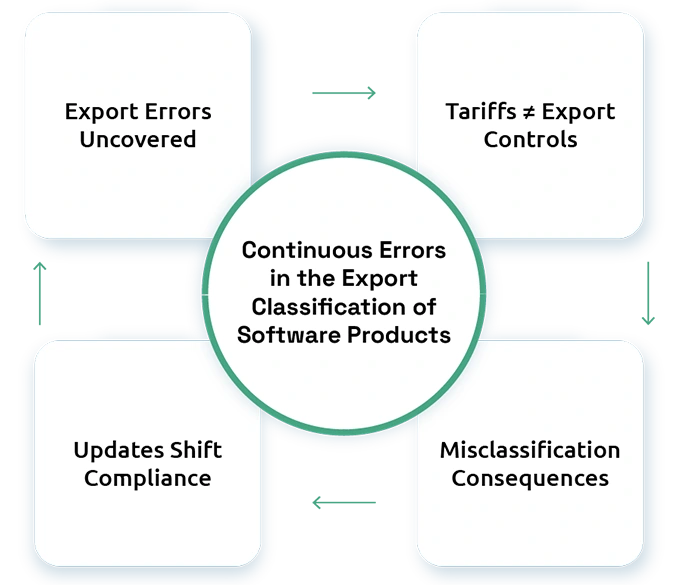
Continuous Errors in the Export Classification of Software Products
How IT hardware complicates reviews
Encryption hardware rarely works alone. Software updates, device management platforms, and software can introduce additional cryptographic work after export. This creates ongoing risk, as products originally shipped under one classification may later fall under stricter controls.
Documentation, tariffs, and shipping exposure
Errors also arise when businesses depend completely on tariff references, such as an HS code or the HTS Harmonized Tariff Schedule. These systems categorize goods for customs duties, not export controls. Confusing customs categorizations with export control status can lead to rejected filings, shipment holds, and regulatory penalties.
These challenges frequently surface during customs clearance, when authorities collect technical documentation with declared export categories.
How One Union Solutions Help You in Encryption Hardware Export Control
Technical review meets trade execution
One Union Solutions supports companies by closing the gap between product engineering and global trade operations. Their approach integrates encryption assessment into export workflows, confirming products are reviewed before shipment planning begins.
End-to-end compliance support
From validating encryption status to coordinating compliant shipment under correct international shipping terms such as DAP, their teams align export control checks with international freight services and cross-border processes. This reduces friction across supply chain optimization, helping organizations maintain delivery responsibilities while staying compliant.
Conclusion
Encryption in IT hardware is no longer a technical detail; it is a central approval factor that can trigger export control reviews across major markets. UK and EU regulations, specifically, demand careful evaluation of cryptographic features, ongoing product monitoring, and precise documentation. Businesses that combine encryption evaluation early can prevent shipment disruptions, avoid reclassification costs, and protect long-term trade operations. With the right support, companies can align secure product design with complete global distribution, confirming that innovation moves forward without regulatory issues.
DID YOU KNOW?
According to the authors of this study, each American supplier affected by such controls suffered an average loss of $857 million in the form of market capitalization losses, and the total loss for all suppliers amounted to approximately $130 billion.
FAQs:
1. Why does encryption in IT hardware trigger export control reviews?
Because encryption can be used for both commercial and sensitive security purposes, governments treat it as “dual-use” technology. This means encrypted hardware may require export classification, reporting, or licensing before shipment.
2. Are all encrypted IT products subject to export controls?
Not all, but many are reviewed. Authorities look at factors such as encryption strength, key management, and whether users can modify cryptographic functions to decide if controls apply.
3. Do HS codes determine whether encryption controls apply?
No. HS codes are for customs duties and tariffs, not export controls. Encryption status is determined under export control regulations, which are separate from tariff classifications.
4. How do UK and EU regulations affect encrypted hardware exports?
The UK and EU regulate encrypted hardware under dual-use rules. Depending on the product, exporters may need registration, technical documentation, or an export license before shipping.
5. How can companies reduce the risk of shipment delays due to encryption controls?
Reviewing encryption features early, involving technical teams in export classification, and aligning agreements checks with logistics and international freight services before shipment.