Overview
The global logistics sector is undergoing rapid transformation as smart systems become central to operational efficiency and major decision-making in global trade. For import–export businesses working across IT, aviation, medical, and automotive industries, the pressure to deliver faster, safer, and more compliant logistics has never been higher in the supply chain. Smart logistics systems combine automation, data analytics, and digital approval tools to simplify international freight services, simplify customs clearance, and improve supply chains. As cross-border trade becomes more regulated and competitive, smart logistics growth is no longer optional; it is necessary in the supply chain.
Major Highlights from the Smart Logistics Growth Report
Market volatility and Digital usage
Recent industry reports indicate that smart logistics usage is accelerating due to rising global trade sizes and increasingly difficult international shipping terms. Technologies supporting inventory and order management, real-time tracking, and automated documentation are helping businesses reduce errors related to HS code classification, HTS Harmonized Tariff Schedule agreement, and Incoterms selection for global trade.
Trade Agreement as a Growth Increase
Smart systems are also increasing trade compliance by supporting accurate documentation for DAP and other delivery methods. With automated checks around exporter of record services and importer of record service requirements, businesses can reduce shipment delays and regulatory risks while improving clarity across borders in the supply chain.
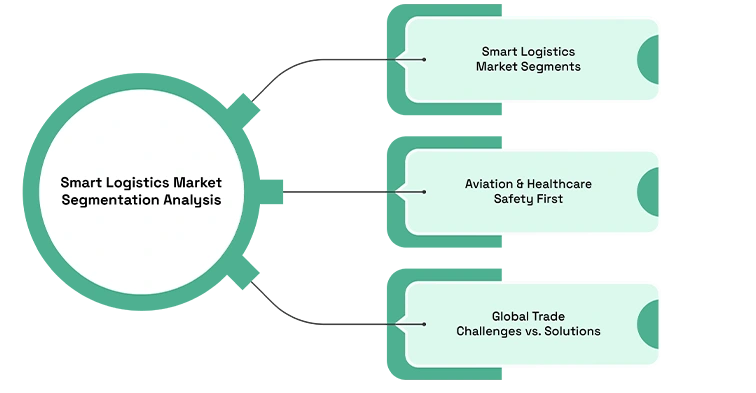
Smart Logistics Market Segmentation Analysis
IT and Electronics Logistics
In the IT sector, smart logistics systems allow faster, premium delivery service options while managing sensitive, high-value cargo in global trade. Automated customs broker integrations help confirm approval with developing tariff systems and customs regulations in the supply chain.
Aviation, Medical, and Automotive Supply Chains
In the aviation and healthcare industries, where correctness and safety are necessary in global trade, smart logistics supports visibility and urgent international freight services. Automotive supply chains benefit from integrated inventory and order management systems that reduce maintenance and improve manufacturing continuity.
Service Types that use technology
Smart logistics approach cross customs clearance automation, international shipping documentation, and combined supply chain optimization tools. These services support both huge manufacturers and mid-sized exporters, guiding difficult global trade environments.
Growing Opportunities in the Smart Logistics System
One of the biggest opportunities in smart logistics depends on predictive analytics. Through analysis of shipping patterns, customs data, and logistics performance, businesses can completely manage risks related to tariffs, HS code issues, or incorrect Incoterms usage in shipments during global trade.
Expansion of Trade Facilitation Services
Smart systems are allowing logistics providers to expand valuable services such as importer of record service and exporter of record service. These provisions are mainly valuable for organizations entering new markets where regulatory expertise is limited in the supply chain.
Improved Cost and Time Efficiency
Automation reduces manual intervention in customs broker processes, leading to faster customs clearance and lower operational costs. This efficiency directly supports the growing global shipping plans of trade.
Rise of Usage Smart Systems in Logistics
Automation Across the Supply Chain
Smart logistics platforms are changing conventional logistics into interconnected digital ecosystems of the supply chain. From booking international freight services to managing DAPs and final-mile delivery, automation confirms consistency and accuracy across border trade.
Improving Customer Experience
For import–export businesses, smart systems allow real-time shipment visibility and dependable premium delivery service options. Customers benefit from a predictable shipment delivery schedule, while logistics providers gain better control over inventory and order management in the supply chain.
Regulated Logistics Operations
With the development of new global trade regulations, smart logistics systems help to follow the HTS Harmonized Tariff Schedule, customs documentation, and international shipping terms. This reduces problems to penalties and shipment disruptions in the supply chain.

Conclusion
Logistics growth improves by smart systems shows a broader change toward digital-first global trade operations. For import–export businesses working in IT, aviation, medical, and automotive industries, smart logistics provides a powerful system to manage difficulties, improve customs clearance, and optimize international freight services. Using automation in logistics, regulatory problems, and informative insights, businesses can improve their supply chain optimization in shipment while remaining flexible in a quickly changing global trade ecosystem. As smart systems continue to develop, they will play a vital role in changing global logistics.
DID YOU KNOW?
Last year, nearly 199 billion parcels were processed in China, which was 13.7 percent more than the previous year, generating a revenue of 1.5 trillion yuan (216 billion dollars).
FAQs:
1. What is smart logistics in global trade?
Smart logistics refers to the use of automation, data analytics, and digital platforms to manage international freight services, customs clearance, and supply chain operations more effectively and accurately for shipments.
2. How do smart logistics systems improve customs clearance?
Smart logistics automates documentation, HS code categorizations, and approval checks, helping reduce errors, shipment delays, and regulatory risks during customs processing.
3. Which industries benefit most from smart logistics?
Industries such as IT and electronics, aviation, medical, and automotive benefit mostly due to their need for accuracy, speed, approval, and real-time supply chain visibility.
4. How does smart logistics support trade compliance?
Smart systems help align shipments with HTS Harmonized Tariff Schedule requirements, Incoterms like DAP, and importer or exporter of record regulations, confirming smoother cross-border trade.
5. Why is smart logistics important for supply chain optimization?
Reducing manual processes, improving shipment visibility, and using predictive analytics, smart logistics lowers costs, saves time, and increases decision-making across global supply chains.