India is fast becoming a key beneficiary of changes in global trade patterns. Given the current trends and the country’s economic reforms, India is actively being considered by companies seeking to balance the need for efficiency and lower costs with the need for supply chain resilience and global diversification.
Depending too heavily on one manufacturer leaves companies at risk of unforeseen risks. Global issues in recent times have proved just how risky supply chains are. It is for this reason that companies are seeking other markets to secure their operations & India is quickly developing as a top contender. With its developing industrial sector, cost benefits, & pro-business policies, India presents genuine opportunities for global manufacturers. Read on as we discuss why India is changing as the future of global manufacturing & what relevance it will have in global diversification.
India as a Strategic Supply Chain Partner
Sourcing from India isn’t just economical, it’s mainly aligned with long-term business resilience & growth objectives. As part of a China plus one strategy, India offers unique advantages that increase beyond cost savings to include market access, talent availability, & geopolitical diversification. The companies that succeed in India are those that respect the difficult, invest in proper setup, & work with partners who can navigate both the opportunities & challenges. Whether you’re exploring India as a production hub or creating full supply chain operations, the right strategy & support make all the difference.
India Evolves as a Strong Contender in Supply Chain Development
Expansion of India’s Role in Supply Chain Development
The improvement of India’s position in the supply chain change shows a changing journey shaped by economic reforms, global transportation, & important initiatives. Historically known for its huge labour force, India has moved from mainly serving as a source of affordable labour to becoming an important player in global supply chains. The need for change & easy supply chain management for a logistics company became apparent as the world recorded increasing geopolitical & economic uncertainties. India’s strategic geographic location & growing consumer market started drawing attention from many corporations seeking similar to past manufacturing hubs. Government-led initiatives like “Make in India” further propelled this development by promoting domestic production & encouraging foreign companies to develop a manufacturing presence there. India’s improved digital network, logistics services, & regulatory changes make it an even more attractive choice for supply chain development.

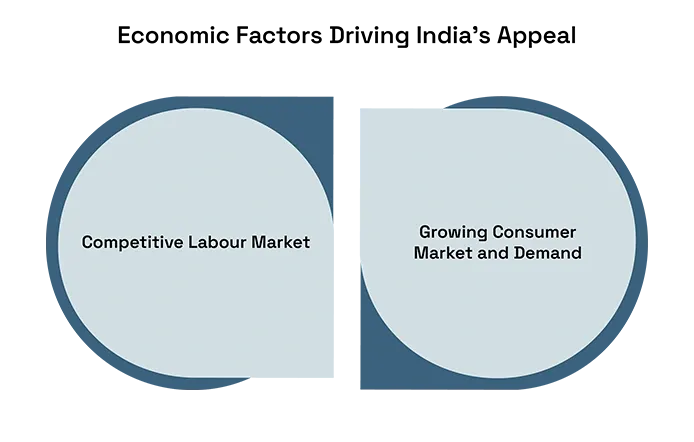
Economic Factors Driving India’s Appeal
Some economic factors contribute to India’s supply chain development. A few of them are:
Competitive Labour Market
India offers a complete labour market characterised by a huge & skilled workforce. The country’s large pool of skilled & semi-skilled workers supports change in industries & offers cost-friendly solutions. This attractiveness to businesses is enhanced by the adaptability & flexibility of the Indian workforce, making it an appealing destination for companies seeking efficiency & productivity.
Growing Consumer Market and Demand
India’s important population size & the development of a growing middle class provide a growing customer market. Consumers’ increasing purchasing power has created a robust demand for a huge range of goods & services. This booming market presents an attractive prospect for businesses looking to develop their reach & utilized on the potential for sustained growth.
Economic Reforms & Policy Support
India’s commitment to economic reforms & policy support is important in attracting businesses. Initiatives such as the “Make in India” campaign & many policy reforms focus on enhancing the ease of doing business, supporting development, & creating a favourable business environment. The government’s proactive approach to economic support enhances India’s overall appeal as a destination for investments & business operations, giving a stable & supportive situation for growth.
Conclusion
India is turning into a major part of international supply chain growth importance as businesses future for greater usability, cost efficiency, & minimizes dependence on single production locations. Supported by economic upgrades, a large workforce, growing industrial development, & government programs, India continues to attract global manufacturers & investors. Although challenges related to network, laws, & operational difficulties still exist, the country offers strong long-term growth capacity. As companies start to changing supply chains, India is expected to play a larger role in converting the future of global production & trade.
Did you know?
India’s fintech ecosystem has evolved into one of the most dynamic in the world, driven by rapid digital adoption, government-backed digital initiatives, and a growing startup landscape.
FAQ
1. Why is India becoming important for supply chain diversification?
India is becoming important because of its large workforce, competitive manufacturing costs, expanding infrastructure, government support, and growing domestic market, making it an attractive alternative manufacturing destination.
2. What is supply chain diversification?
Supply chain diversification is the process of expanding manufacturing, sourcing, and supplier networks across multiple countries or regions to reduce risks and improve business stability.
3. How does India benefit from the China Plus One strategy?
Many companies adopting the China Plus One strategy are expanding manufacturing beyond China to reduce dependency on a single market. India benefits through increased investments, manufacturing expansion, and growing export opportunities.
4. Which industries are driving India’s manufacturing growth?
Industries such as electronics, automotive, semiconductors, renewable energy, and consumer goods are contributing significantly to India’s manufacturing growth.
5.What challenges does India face in becoming a global manufacturing hub?
India still faces challenges related to infrastructure gaps, logistics efficiency, regulatory complexity, workforce development, and supply chain coordination.