Introduction
In 2026, trade around global markets is quickly changing. Companies that deliver goods to different countries now have to deal with issues like supply chain issues, port congestion, changing trade rules, & customs delays. Delivery delays and cost increases may result from these problems. Companies require improved supply chain visibility before their goods travel in order to avoid these issues. Businesses can make better decisions and maintain smooth cross-border trade when they are fully informed of possible risks before. The digital twin is one technology that makes it possible. A digital twin is an electronic copy of a real supply chain. Before products are shipped, it analyzes shipping routes, customs processes, and transport using real-time data. This allows companies to verify different cases without impacting actual shipments. Businesses may reduce shipping risks, improve trade compliance, improve logistics, and avoid delays by using digital twin technology. Digital twins are becoming an important device for creating more smart, efficient, and reliable global supply chains as global trade grows more difficult.
What Is a Digital Twin in Supply Chain Management?
A digital twin is an electronic copy of an actual supply chain. It shows the flow of goods from one location to another using real-time data. Companies can manage to track every step of their delivery process without having to transport the real product. Because of this, digital twin technology can be used to plan shipments and improve digital logistics. Traditional supply chain planning usually depends on figures, manual changes, and previous data. A supply chain digital twin differs in that it is replaced with current data. It helps companies respond to changes more quickly by showing what is going on in warehouses, shipping, customs, and delivery routes. Before goods are shipped, businesses may review multiple shipping possibilities with a virtual supply chain. They can track what happens, for example, if a package is delayed or there is a customs issue. This helps companies choose better routes, reduce risks, improve trade compliance, and making better choices for cross-border logistics.
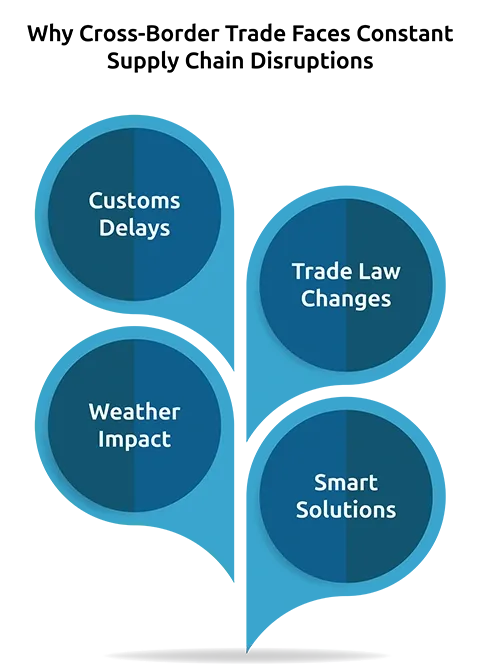
Why Cross-Border Trade Faces Constant Supply Chain Disruptions
Businesses can move goods between countries with the help of cross-border logistics, but the process is not always easy. Delays in supply chains can be caused by many types of reasons, making it challenging for products to arrive at their location on time. The entire supply chain may be affected by even minor issue. Delays at customs are a common problem. Customs clearance may take longer than usually if import documents is missing, incorrect, or incomplete. Shipments may also be delayed by border checks, mainly for goods that need extra review. Additionally, businesses might have to follow up with new regulations due to changing import and trade laws. Poor weather, port congestion, and delays in transit caused on by a lack of shipping capacity or sudden events are more challenges to global shipping. Delivery times and logistics costs are increased by these issues. In order to reduce delays and maintain smooth cross-border trade, companies must plan ahead, increase cargo visibility, and use more intelligent logistics solutions.
How Digital Twins Simulate Supply Chain Risks Before Shipping
Businesses can review their supply chain before products get delivered by using a digital twin. Using real-time data, it develops virtual models of the shipping process. By using this supply chain model, companies can test different conditions and find solutions before they have an impact on actual shipments. Businesses can review different transportation choices and develop actual shipment routes with logistics a model. To identify the fastest, safest, and most economical path for foreign deliveries, they can test multiple shipping methods. Additionally, a digital twin helps predict a supply chain by detecting possible risks before to transport. It can project shipping issues, port congestion, customs delays, and route changes that could cause shipments to be delayed. Businesses can avoid unexpected problems and develop backup plans with the help of this risk model. Businesses can use digital twins to better plan shipments, reduce delays, save money on logistics, and make more informed decisions for global trade. A supply chain that is more reliable and effective results from this.
Using Digital Twins to Improve Customs and Trade Compliance
For international shipment to go well, compliance with trade and customs rules is important. A digital twin helps companies get ready before products are shipped by checking important data and reducing the chance of mistakes. A digital twin can review customs documents, including packing lists, business invoices, and product details, before a shipment. In order to find missing or incorrect details, it can also match shipping data with import regulations. Early detection of these issues allows companies to fix them before the shipment is processed by customs. By showing possible delays or compliance problems that may happen during cross-border compliance checks, digital twins also help in improved customs planning. This helps companies prepare the required documents before time and choose the best delivery plan. Digital twins help reduce delays in customs processing, avoid extra costs, and speed up and improve cross-border trade by increasing the correctness of documents and fulfilling import rules. Businesses are able to transport goods with more trust and fewer issues as a result.
Conclusion
Digital twins help companies in providing safer and easier cross-border trade. They help in identifying issues before to shipment, improve supply chain management, support trade compliance, and reduce customs delays. Digital twins are becoming an important tool for quicker, more intelligent, and more reliable international shipping as global trade gets increasingly complex.
Did you know
The global digital twin market size was valued at USD 24.48 billion in 2025 and is projected to grow from USD 33.97 billion in 2026 to USD 384.79 billion by 2034, exhibiting a CAGR of 35.40% during the forecast period
FAQ
What is a digital twin in supply chain management?
A digital twin is a digital copy of an actual a supply chain. Before goods are shipped, it helps companies in checking, tracking, and improving shipments.
Why are digital twins important for international shipping?
They help companies in better planning shipments, avoiding supply chain problems, reducing delays, and improving overall shipping efficiency.
What types of risks can digital twins identify?
They can identify customs delays, shipments problems, port congestion, route changes, & documents mistakes.
What is the biggest advantage of digital twins?
The biggest advantage is that they help businesses predict problems early, reduce risks, & improve the complete supply chain.
Do digital twins improve inventory management?
Yes, They help companies with inventory planning, stock level control, and avoiding shortages or excess stock.