
Overview
Understanding why the importer is legally responsible for compliance is critical in today’s regulated global trade environment. Regardless of whether businesses depend on international freight services, or exporter of record services, authorities mainly hold the importer responsible. Good declarations to customs clearance, the importer must confirm that every shipment meets national regulations. Even when using DAP, DAPs, or other international shipping terms under Incoterms, the legal responsibility for compliance remains with the importer. This responsibility protects the government’s economy, consumer safety, and national security while improving the importer’s central role in trade work.
What Is Import Compliance & Why Does It Matter?
Understanding Import Compliance
Import compliance refers to the importer’s issues to follow all laws governing cross-border trade. This includes correct product categorizations using the HS code and the HTS Harmonized Tariff Schedule, correct valuation, and proper documentation. Eligibility under programs like the Generalized System of Preferences (GSP) must also be correctly supported.These requirements make compliance a critical responsibility that only the importer can legally fulfill.
The Legal Framework Behind Importer Responsibility
In global trade, the law clearly says that the importer is responsible for following all rules & regulations. The importer must declare the goods, select the correct HS code, confirm the right value, and follow the HTS Harmonized Tariff Schedule. They also need to check if the shipment qualifies for programs like the Generalized System of Preferences (GSP).
Even if the importer works with international freight services, exporter of record services, or an Importer of Record Service, the responsibility still stays with them. They must make sure all papers, duties, and taxes are correct.
Under Incoterms like DAP or DAPs, the seller may handle shipping, but the importer is still responsible for customs clearance and compliance. This system helps keep trade transparent, reduces fraud, and supports smooth logistics and supply chain operations.
The Business Impact of Non-Compliance
Non-approval can stop logistics work, delay customs clearance, and create economic issues. Errors in documents, misuse of international shipping terms, or incorrect tariff categorizations can get inspections, penalties, and shipment holds. Also, financial loss, repeated violations damage an importer’s credibility with authorities and business partners.
Compliance as a Major Advantage
When importers manage agreements effectively, they improve supply chain optimization, increase supplier relationships, and support easy inventory and order management. Compliance is no longer just a legal issue; it is a competitive strength in global trade.

The Role of Technology in Compliance for Importers
Digital Transformation in Import Operations
Modern importers increasingly depend on digital platforms to manage data related to logistics, documentation, and regulatory reporting. Technology supports real-time tracking of shipments managed through international freight services and helps work with logistics partners more efficiently.
Automation and Accuracy
Automated tools reduce manual errors in product categorization, valuation, and documentation. They also help importers validate information required for customs clearance and internal audits.
Data Integration Across the Supply Chain
Advanced systems combined compliance workflows with inventory and order management platforms. This allows importers to link purchasing, transportation, and recordkeeping into one approval process, supporting clarity and faster decision-making.
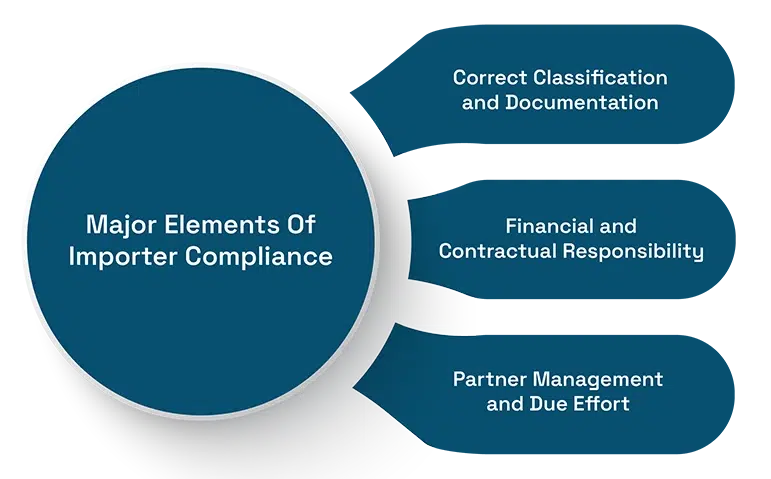
Major Elements Of Importer Compliance
Correct Classification and Documentation
Accurate use of HS code references and working with the HTS Harmonized Tariff Schedule are necessary. Supporting documents must clearly show good value, origin, and regulatory approval.
Financial and Contractual Responsibility
Even when goods move under Incoterms such as DAP or DAPs, the importer retains responsibility for regulatory accuracy. Working with an Importer of Record Service may support operations, but it does not reduce the importer’s legal responsibility.
Partner Management and Due Effort
Importers frequently work with an exporter of record service, international freight services, and freight forwarding companies near me. Also, compliance requires continuous tracking of partners, service agreements, and internal controls to confirm continuous regulatory agreement.
Emerging Trends in Import Compliance for 2026
Technology Related Oversight
Officials are expanding digital review systems, increasing the speed and depth of approval checks. Importers must prepare for more data-driven audits affecting logistics work, documentation processes, and customs clearance procedures.
Integrated Supply Chain Compliance
Compliance is becoming strongly connected with supply chain optimization. Importers will combine regulatory controls into sourcing, logistics planning, and inventory and order management systems.
Rising Expectations for clarity
In 2026, regulators are expected to demand deeper visibility into trade data, contract systems, and shipment of goods under international shipping terms. This is why the importer is legally responsible for compliance, as transparency will define regulatory trust in global trade.
Conclusion
Understanding why the importer is legally responsible for compliance is foundational to successful international trade. Even when supported by Importer of Record Service providers, exporter of record services, or international freight services, the importer remains the legally accountable party. Using technology, managing partners carefully, and working in compliance with logistics and supply chain optimization strategies, importers can reduce risk, improve efficiency, and create long-term working flexibility in a mainly regulated global trade.
DID YOU KNOW?
When a 40-foot container of electronic goods arrived at Chennai port on August 12, the importer expected it to be cleared within two days. However, the consignment, worth approximately $23,000, is still lying there today.
FAQs:
1. Why is the importer legally responsible for compliance?
Only the importer can legally declare goods, confirm classification, valuation, and origin, and ensure shipments meet all national customs and regulatory requirements.
2. Does using an Importer of Record service remove the importer’s responsibility?
No. An Importer of Record service can support operations, but the legal responsibility for compliance remains with the importer.
3. How do Incoterms like DAP affect importer compliance?
Incoterms define trade responsibilities, but they do not transfer legal compliance obligations. The importer remains responsible for regulatory accuracy and customs declarations.
4. What happens if an importer fails to comply with regulations?
Non-compliance can result in shipment delays, inspections, penalties, cargo holds, financial losses, and damage to business credibility.
5. How does technology help importers stay compliant?
Digital platforms improve classification accuracy, automate documentation, integrate supply chain data, and support real-time tracking and audit readiness.