Introduction
In today’s global trade environment, businesses are under huge pressure to meet customer expectations, reduce operational costs, and simplify the shipment of goods across borders. As international trade grows more difficult, organizations are realizing that traditional warehousing methods are no longer enough to manage the demands of modern trade. The change toward integrated 3PL ecosystems is becoming more global because these systems combine storage, logistics, and end-to-end working capabilities into one combined network. This change is driven by a growing need for coordination, visibility, and smooth handling of international and domestic cargo, mainly as organizations guide processes that require import duties and tariffs, international freight services, and customs clearance.
What are Traditional Warehousing and combined 3PL Ecosystems?
It mainly focuses on storing goods in a committed facility, where inventory is managed through manual or semi-automated processes. While this method worked for businesses for decades, its restrictions became clear when organizations were required to manage Bulk shipments, varied product categories, or cross-border trade. Also, integrated 3PL ecosystems function as a connected operational system that combines storage, logistics, real-time shipment tracking, Delivered Duty Paid service when required, and smooth handling of global goods. These ecosystems provide warehousing solutions for import and export goods that go beyond simply keeping goods in storage. They used technology, data, and operational expertise to help businesses move goods from origin to destination with greater speed and accuracy.
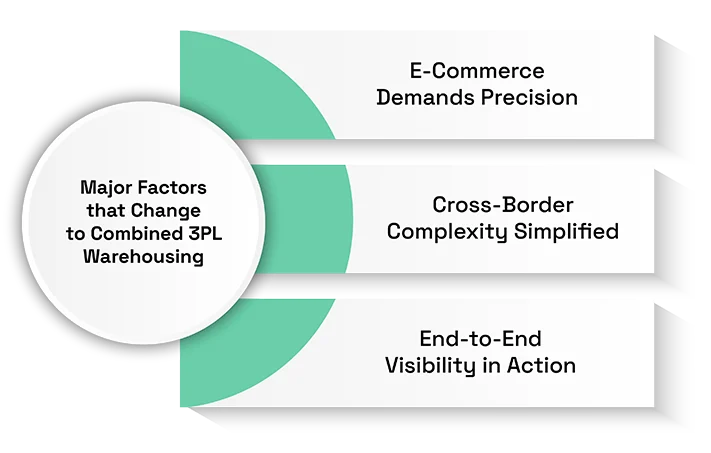
Major Factors that Change to Combined 3PL Warehousing
One of the main reasons companies are moving away from traditional warehousing is the required for higher efficiency in global supply. Businesses that previously depended on spread-out work now prefer unified systems where logistics and warehousing work together. The demand for precise work has increased due to the growing e-commerce industry and customer expectations for quick turnaround. Many organizations also look at supply chain optimization to reduce delays and errors during cross-border shipments. Factors such as managing customs clearance, working with international freight services, and knowing the flow of import duties and tariffs require specialized expertise. Integrated 3PL ecosystems provide this expertise in one place, reducing dependency on multiple service providers. As trade regulations develop in different regions, businesses benefit from having end-to-end solutions that support IOR services, real-time shipment tracking, and proper management of goods throughout every shipping stage.
Operational Benefits of Integrated 3PL Ecosystems Warehousing
A major advantage of these systems is improved flexibility in the shipment of goods. Live shipment tracking allows businesses to track their cargo at every stage, which reduces unwanted delays. Combined systems also support quick last-mile delivery services, confirming good reach to customers without unexpected delays. When international shipments require Delivered Duty Paid service or specialized documentation, the 3PL network works these processes more effectively than a traditional warehouse setup ever could. Another working benefit is the reduction in overall costs. When storage, logistics, and approval management work within a single ecosystem, organizations avoid duplication of processes and reduce unnecessary third-party involvement. This directly increases profitability and strengthens the supply chain warehousing expert.
How Has Warehouse Technology changed in the future?
Warehousing technology has changed significantly from simple inventory registers to advanced digital systems. New warehouses work only on basic storage requirements, but modern systems depend on automation, combined software, and intelligent expectations. Today, advanced technologies increase transportation and warehousing work, connecting everything from inbound shipments to final delivery routes. Businesses can manage import export documentation, plan logistics chains, assess import duties and tariffs, and simplify last-mile delivery services with greater accuracy. Over time, technology has developed to support international freight services, faster processing of goods, and better work for warehousing solutions for import and export goods.
Conclusion
As international trade grows more varied, traditional warehousing can no longer keep pace with business requirements. Integrated 3PL ecosystems provide a powerful, technology change that connects storage, logistics, agreement, and tracking into a single shipping flow. Organizations that use these ecosystems gain higher efficiency, better control over cross-border shipments, and improved customer satisfaction. This change shows a broader change in how global supply is managed as businesses look for smarter, more dependable ways to move goods globally.
DID YOU KNOW?
They are non-asset-based, meaning they primarily provide organizational expertise. However, about 75% of all 3PLs also provide 4PL services.
FAQs:
- Why are businesses shifting from traditional warehousing to integrated 3PL ecosystems?
Integrated 3PL ecosystems offer better coordination, faster operations, real-time tracking, and end-to-end management, something traditional warehousing cannot provide.
- How do integrated 3PL ecosystems improve cross-border shipments?
They manage customs clearance, import duties, tariffs, documentation, and freight services under one system, reducing delays and compliance risks.
- What technologies power modern 3PL warehousing?
Automation tools, real-time tracking systems, digital inventory management, connected logistics platforms, and AI-based forecasting tools.
- Are integrated 3PL solutions cost-effective for businesses?
Yes. By unifying logistics, warehousing, and documentation, businesses avoid duplicate processes, reduce errors, and cut overall supply chain costs.
- Can integrated 3PL systems handle both domestic and international shipments?
Absolutely. They are built to manage inbound/outbound logistics, international freight, Delivered Duty Paid services, and last-mile delivery seamlessly.